How to Set Up a Play Corner in a Small Maltese Apartment
You do not need a playroom. A low shelf, a rug and a few well-chosen toys can turn one corner of a Maltese flat into a calm place to play.
4 min read
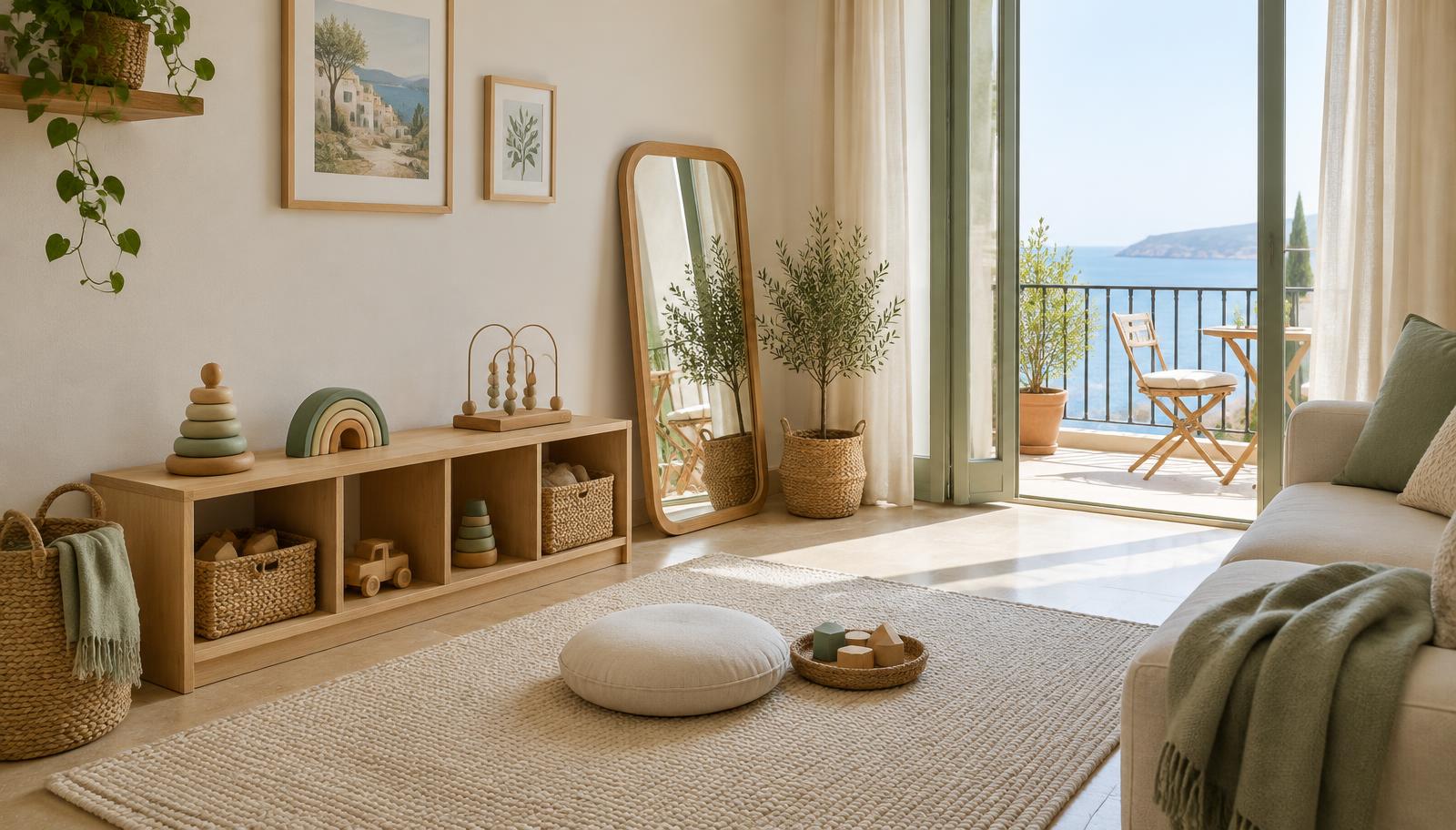
Most families in Malta do not have a spare room for a playroom. We live in apartments, maisonettes and townhouses where every square metre counts, and the living room is often also the dining room, the office and the place where the washing dries. Yet children need a place to play, and parents need a home that does not feel overrun.
The answer is a play corner: one small, well-planned space that belongs to your child. It does not have to be big. It needs to be calm, accessible and simple. Here is how we set one up, inspired by Montessori principles but adapted for real Maltese homes.
Choose the right corner
Look for a spot with natural light, near where you spend time, but away from the busiest paths through the room. Near a window is lovely, but in summer, think about heat and direct sun. A corner of the living room is often best, because young children want to play near their parents.
Avoid placing the play corner near a television if you can. Even when it is off, it pulls attention away from play.
Start with the floor
Maltese homes often have tiled floors, which are cool in summer but hard and chilly in winter. A soft rug or play mat defines the space and makes it comfortable. Natural fibres like cotton or wool are lovely; a washable cotton rug is practical for spills and for the dust that seems to come in through every shutter.
A low, open shelf
The heart of a Montessori-inspired play corner is a low, open shelf. Your child should be able to see everything and reach it without help. A simple wooden shelf two or three levels high is ideal. Secure it to the wall, especially if your toddler is a climber.
Place six to eight toys on the shelf, with space around each one. Each toy should have its own place. This makes it easier for children to choose, concentrate and tidy away.
Fewer toys, more play
This is the part most parents find hardest, and the part that makes the biggest difference. When too many toys are available, children flit from one to the next. With fewer, they settle. Keep the rest in a cupboard or under a bed and rotate them every week or two. Our toy rotation guide explains how.
Baskets and trays
Use baskets and trays to hold sets: blocks in a basket, a puzzle on a tray, animals in a little bowl. They make the shelf look calm and help children understand where things go. Natural materials like seagrass, wood and cotton fit beautifully into most homes. We share more ideas in our natural toy storage guide.
A place for books
Add a small front-facing book ledge or a basket of four or five books. Children are drawn to covers, so displaying books facing forward invites them to choose. A floor cushion beside it makes a cosy reading nook. Our book nook guide has more detail.
Something for movement
If you have a little extra space, a small climbing triangle, a balance board or a low mirror with a pull-up bar can be wonderful for babies and toddlers. If not, do not worry. Toddlers will find plenty of ways to move.
Keep it beautiful
A play corner does not need to look like a toy shop. Natural wood, soft colours and a plant out of reach make it feel like part of your home. A framed print at your child's eye level, a small wooden animal on display, a basket of pine cones: these small touches make the corner feel loved.
Adapting as your child grows
- Babies: a soft mat, a mirror, a few grasping toys and a treasure basket
- Young toddlers: a low shelf, posting toys, stacking cups, a few books
- Older toddlers: blocks, small world play, simple puzzles, art supplies on a tray
When space is very tight
If you truly have no corner to spare, a single low shelf against a wall and a rug you can roll away at night works well. Even a large tray with a few toys on the coffee table can be a play space. What matters is that it is consistent and calm.
Living with it
At the end of the day, invite your child to help put things back. It does not need to be perfect. A quick reset each evening keeps the corner inviting for the next morning. Over time, many toddlers begin to tidy without being asked, because they know exactly where everything lives.
For more on making family life work in a small home, read raising a Montessori baby in a modern Maltese flat and our guide to balcony and courtyard play. Little Curio is a small shop for families in Malta, and you can preview the shop as we prepare our first collection.
More from the Journal: Buying Second-Hand Toys in Malta: What to Check and What to Skip, Getting Ready for Kindergarten in Malta: Play That Builds Confidence.