Raising a Montessori Baby in a Modern Maltese Flat
You don’t need a playroom. Practical ideas for a Montessori home in a Sliema or Swieqi apartment.
5 min read
Montessori photos on social media often show vast, light-filled playrooms with rows of beautiful wooden shelves and a single toy on each. Beautiful — and for most families in Malta, unrealistic. Many of us live in apartments in Sliema, Gżira, Swieqi, San Ġwann or Birkirkara, where the living room is also the dining room, the office and the play space.
The good news is that Montessori was never about space or expensive furniture. Maria Montessori developed her ideas working with children in poor neighbourhoods of Rome. At its heart, the approach is about respect for the child, a prepared environment and freedom within limits. All of these fit perfectly well into a small Maltese flat.
The core ideas, simply
- Follow the child: observe what your baby is interested in and offer activities that match.
- A prepared environment: arrange the space so your child can safely explore and do things for themselves.
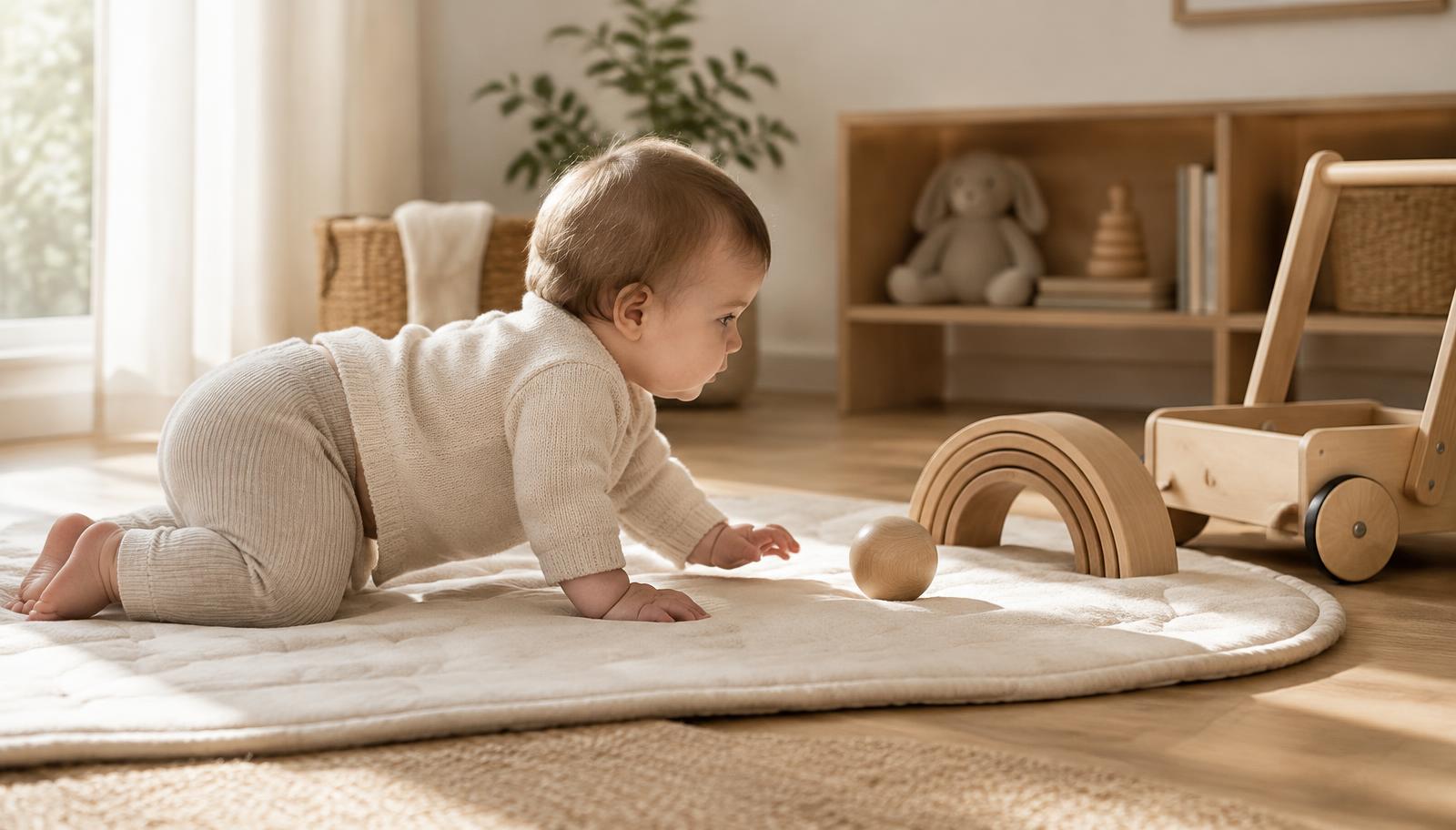
- Freedom of movement: give babies time on the floor rather than in containers like bouncers and seats.
- Fewer, better materials: offer a small number of real, beautiful objects rather than many.
- Independence: from early on, include children in everyday life in age-appropriate ways.
Carve out a ‘yes’ space
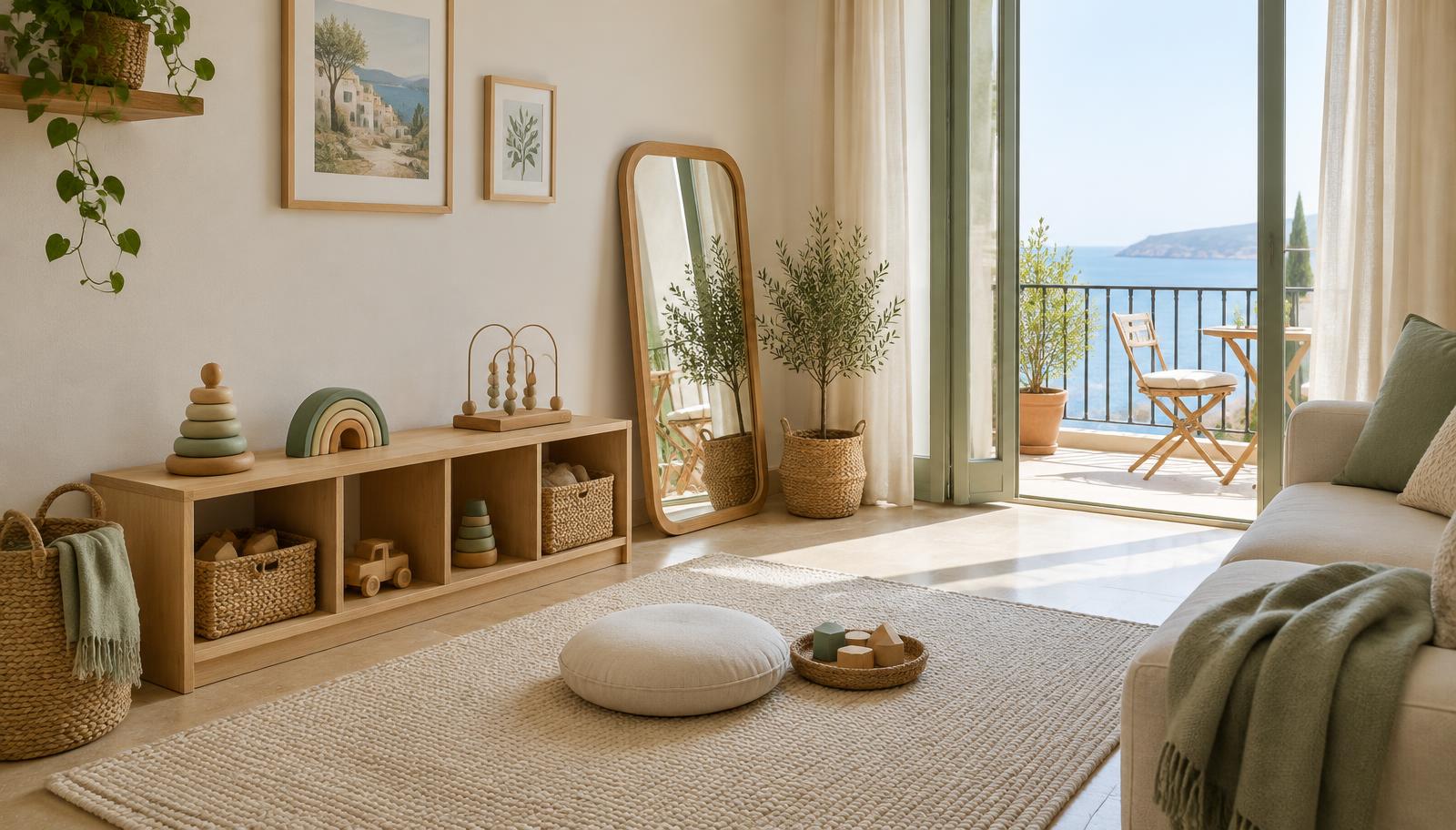
Choose one corner of your living area where everything is safe for your baby to touch. This becomes their movement and play zone. It might be as small as two square metres. Lay a washable cotton rug or play mat over the tiles, fix a low, unbreakable mirror to the wall, and add one low shelf.
A ‘yes’ space means you don’t need to say ‘no’ constantly. Your baby can explore freely while you cook or work nearby. In very small flats, this space can be folded away in the evening: roll up the mat, place the toys in a basket and the room returns to adult use.
One low shelf, a few toys
Instead of a toy box where everything is tipped together, use a low, sturdy shelf with four to six items displayed clearly. Each item has its place. This helps babies focus, makes tidying easier and lets toddlers learn to return things. A simple wooden shelf, or even a sturdy wooden crate turned on its side, works.
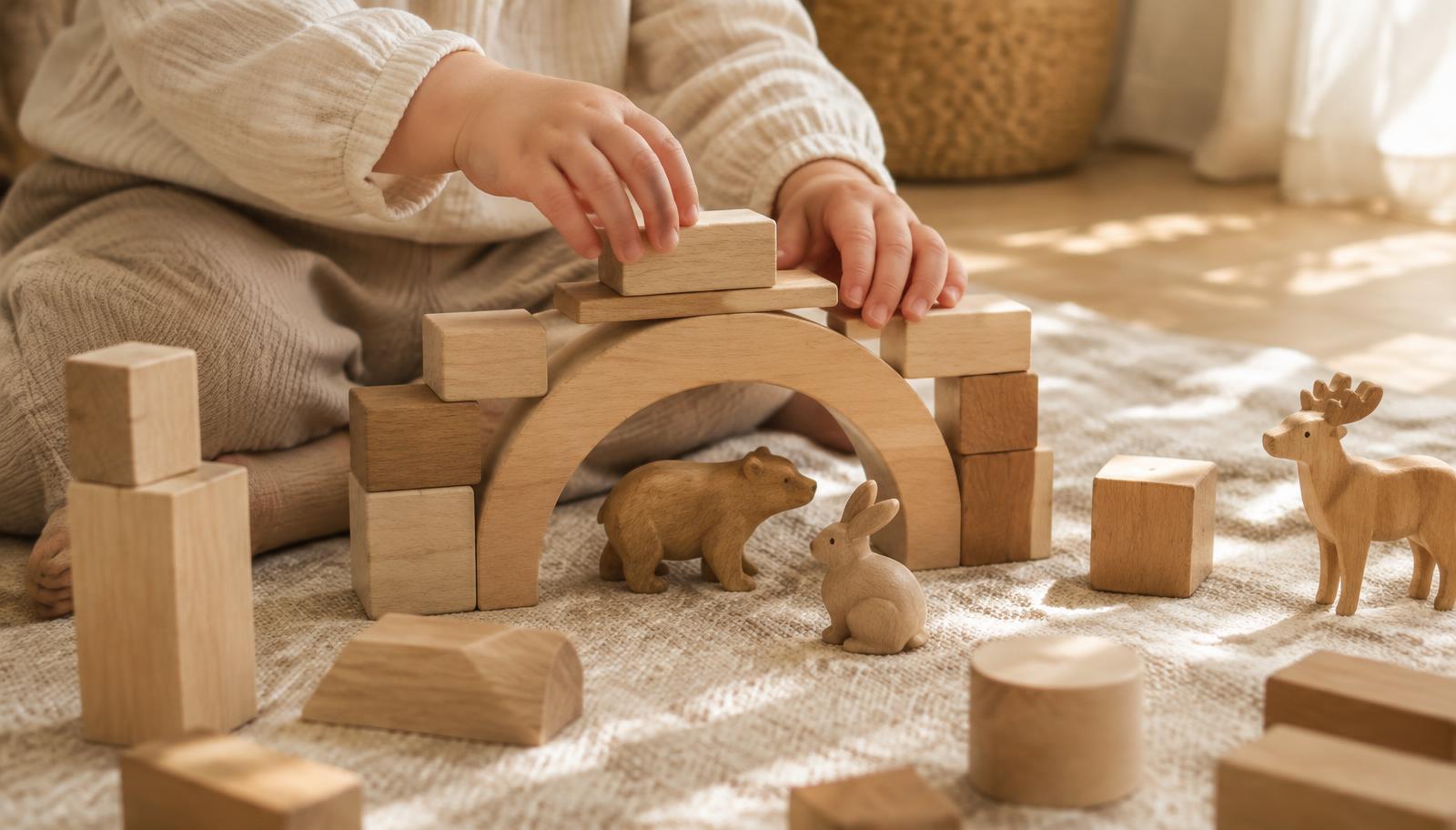
What goes on the shelf depends on the stage: for a six-month-old, a rattle, a ball, a treasure basket; for a one-year-old, a stacker, a posting box, a book; for a two-year-old, animals for small-world play, a simple puzzle and crayons. Our Little Landscape Rainbow and Gathering Basket are natural shelf favourites.
Small spaces encourage what Montessori already teaches: choosing less, and choosing well.
The magic of toy rotation
Toy rotation is a small-flat superpower. Keep most toys stored out of sight — in a cupboard, under the bed or in a box on top of the wardrobe — and display just a few at a time. Every week or two, swap some out based on what your child is interested in.
Rotation keeps toys feeling new, reduces clutter dramatically and helps children play more deeply. It also means you can say yes to gifts from relatives without your living room disappearing. For guidance on gentle gifting, see Baby’s First Birthday in Malta.
Floor bed or cot?
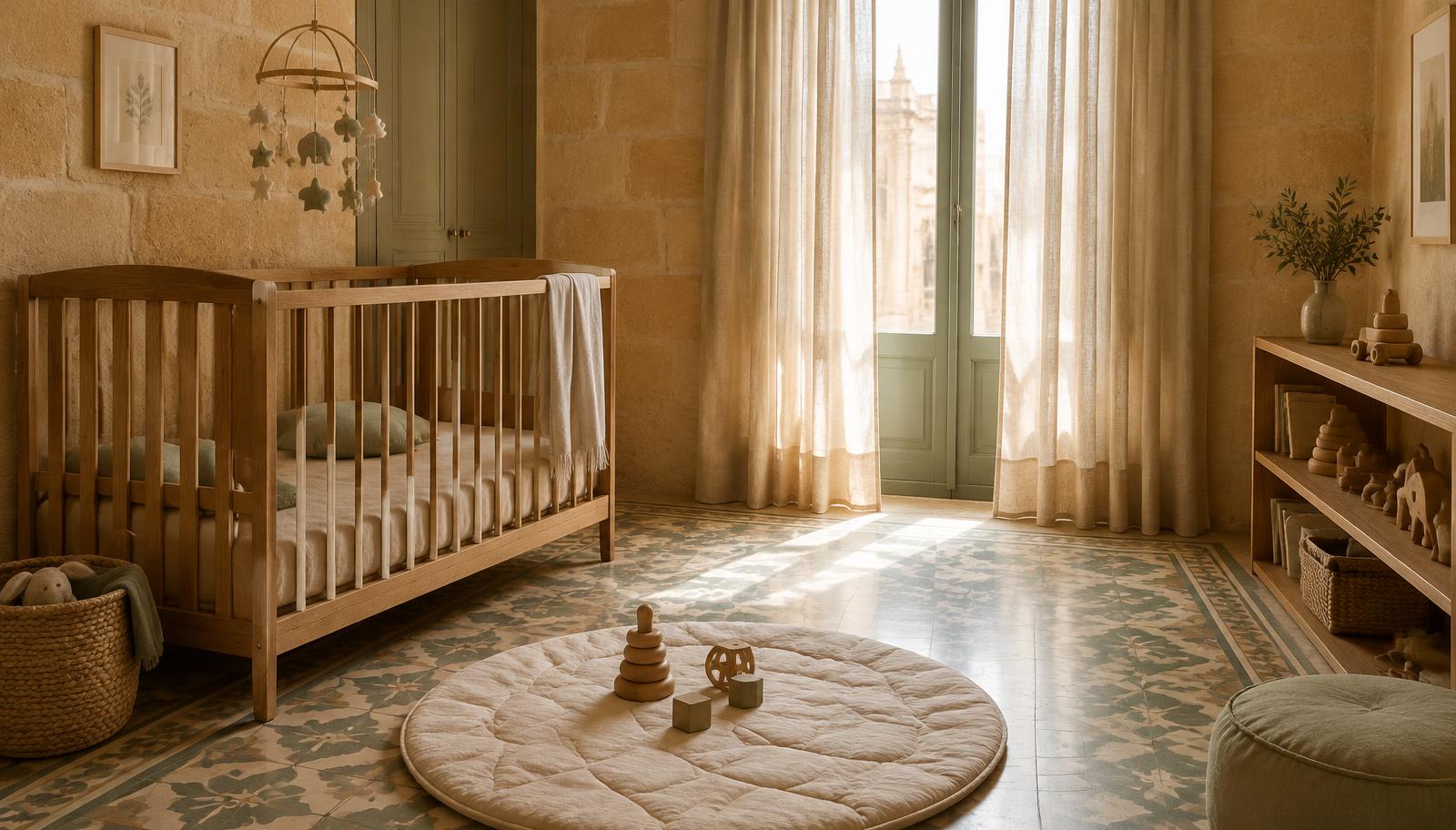
Many Montessori families use a floor bed, allowing babies to get in and out independently once mobile. In a small Maltese bedroom, a floor bed can actually save space and be pushed against the wall. Others prefer a cot for the first year and transition later. Either is fine — what matters is a safe sleep space that follows current safe-sleep guidance. Our natural nursery guide covers the rest of the room.
Including your baby in daily life
Montessori encourages children to participate in practical life from early on. In a flat, the kitchen is the heart of this. A sturdy learning tower lets a toddler stand at the counter safely and help wash vegetables, stir, or tear lettuce. Babies love watching from a high chair as you cook, while you narrate what you are doing.
Small tasks build confidence: putting a nappy in the bin, carrying a napkin to the table, putting shoes on a low rack by the door. These moments matter more than any toy.
Movement, even without a garden
Few Maltese flats have gardens, but babies still need lots of movement. The floor is your friend. Avoid keeping babies in seats and bouncers for long periods. Use corridors for crawling races, cushions for climbing, and a wooden arch for crawling under. Our guide From Tummy Time to First Steps explains how to support each stage.
Then get outside daily: a balcony, a nearby garden, the promenade or a playground. Early mornings in summer and sunny afternoons in winter are ideal. For ideas, read The Malta Stroller Walk.
A calm, natural palette
Small spaces fill visually very quickly. Choosing toys in natural wood and soft, muted colours helps the play area blend with your home rather than dominating it. This is not only an aesthetic choice; calm surroundings support calm play. Bright, noisy plastic toys can be overwhelming in a small room for both children and adults.
Storage that looks beautiful
Woven baskets, wooden crates and linen bags are your friends. They look at home in a living room and make tidying simple. Label baskets with pictures for older toddlers so they can help put things away.
Books within reach
A front-facing book display — a simple wall-mounted ledge or a small basket — lets children see covers and choose for themselves. Rotate a few books at a time, just like toys. For suggestions, see Building a Small, Beloved Library.
Letting go of perfection
Montessori at home doesn’t have to look like the photos. Your shelf may be a repurposed bookcase; your mirror may be leaning on a wall; your toddler may ignore the beautiful activity you prepared and play with a saucepan instead. That is fine. The principle is respect and observation, not a perfect room.
Summer in a small flat
Hot months are especially challenging in apartments without much airflow. Our guide to beating the Maltese summer with a baby has ideas for calm, cool indoor play during the hottest hours.
A Montessori home in Malta is not measured in square metres. It is measured in how free your child feels to explore, how calm the space feels, and how much you trust them to learn. Start with one corner, one shelf and a handful of beautiful things. Find thoughtfully chosen pieces in our shop.