The Maltese Nursery: Creating a Calm, Natural Space for Baby’s First Year
Limestone light, soft linen and a few wooden things: a gentle guide to setting up baby’s first room in Malta.
6 min read
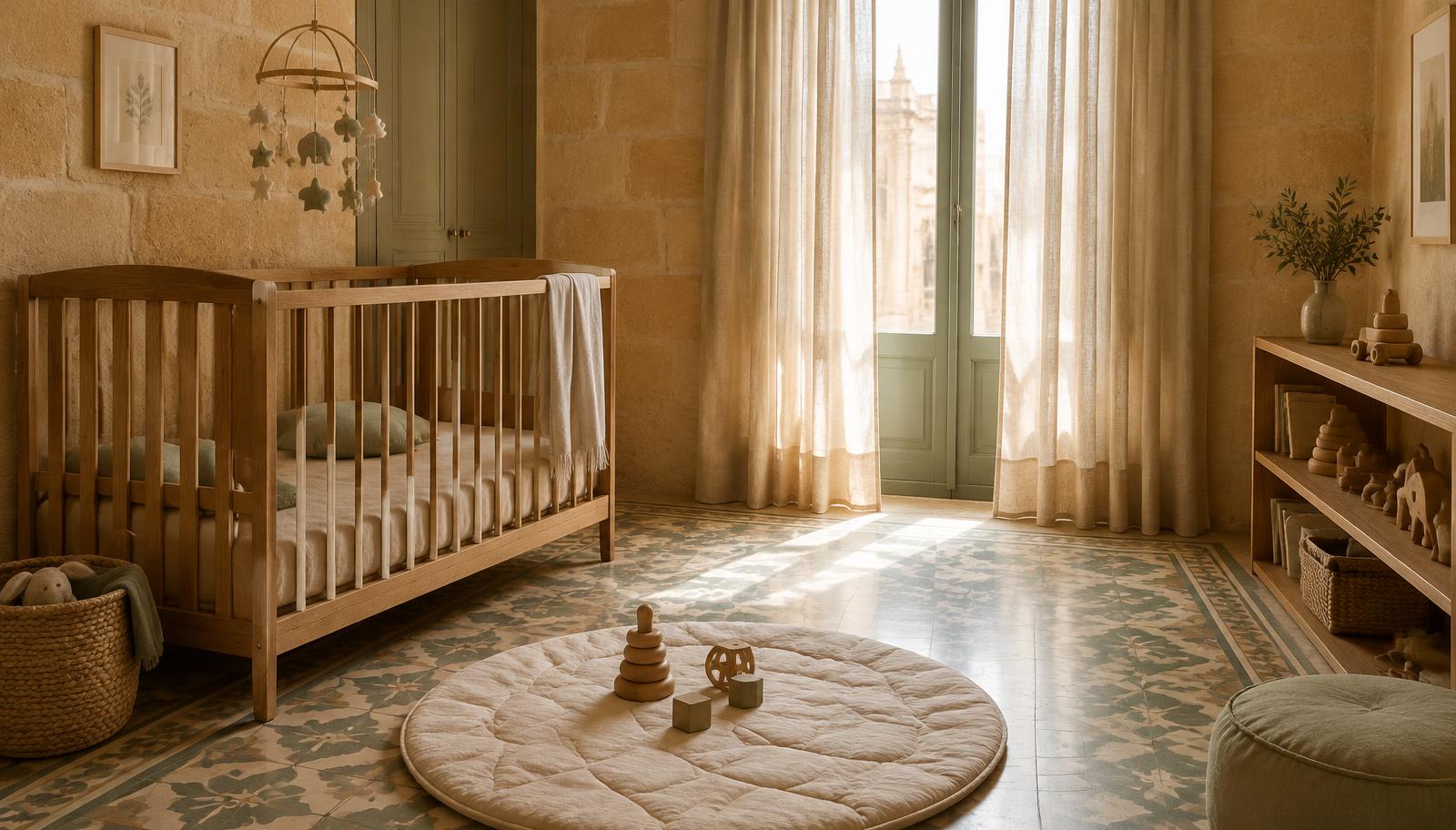
Before a baby arrives, most of us picture the nursery first. In Malta, that room might be a high-ceilinged space in an old townhouse in Żebbuġ, a converted corner of a farmhouse in Gozo, or the second bedroom of a modern flat in Swieqi with a view of cranes and sea. Whatever the shape, the question is the same: how do you make a room that feels calm for a brand-new person — and for the tired adults who will spend many nights in it?
At Little Curio we believe the answer is less about buying and more about choosing. A baby’s first year is spent mostly lying, looking, listening and, later, reaching. They do not need a room full of things. They need light, warmth, safety, a few beautiful objects and you. This guide walks through how we would set up a natural, largely plastic-free nursery for island life.
Start with the light you already have
Malta’s light is one of its quiet gifts. Even in winter, many rooms receive a soft, golden brightness in the afternoon. In summer, that same light can become harsh and hot. For a nursery, think about filtering rather than blocking. Unbleached linen or cotton curtains soften strong sun beautifully during the day, while a separate blackout layer — ideally in a natural fibre — helps with naps when the midday heat arrives.
Position the cot away from the window to avoid direct sun and draughts, and away from any shutters or blind cords. If your home has traditional wooden shutters (persjani), they are wonderful for regulating light and air; simply make sure the latches are out of reach once your baby begins to pull up.
Let the walls stay quiet
Maltese homes already carry so much texture — globigerina limestone, patterned cement tiles, timber beams. You do not need busy wallpaper or bright murals on top. Soft, warm neutrals such as ivory, oat, sand and pale sage let the architecture breathe and give a baby’s developing eyes a restful backdrop. Babies are drawn to contrast at close range, so it is better to offer high-contrast cards or a simple mobile within their view than to paint the whole room in strong colour.
If you are painting, choose low-VOC or mineral paints and finish well before the baby arrives so the room can air out. Old townhouses can be prone to damp; a good dehumidifier, used regularly in the humid months, will protect both your baby’s lungs and any natural materials in the room.
Choose natural materials that suit our climate
Humidity and salt air are hard on cheap materials. Soft plastics can become sticky, painted surfaces can flake, and synthetic fabrics often trap heat. Natural materials, chosen well, handle our climate gracefully: solid wood, organic cotton, linen, wool and rattan. They also age with dignity — a beech wood toy that has been mouthed, dropped and loved for three years looks warmer, not worse.
- Bedding: breathable organic cotton or linen sheets, a fitted mattress with no loose pillows or bumpers.
- Floor: a washable cotton rug or play mat over cool tiles — essential for tummy time.
- Storage: open wooden shelves or woven baskets instead of plastic tubs.
- Seating: a comfortable chair for feeding, with a small side table for water and a dim lamp.
A baby’s room does not need to be finished. It needs to be calm enough to grow into.
The floor is the most important furniture
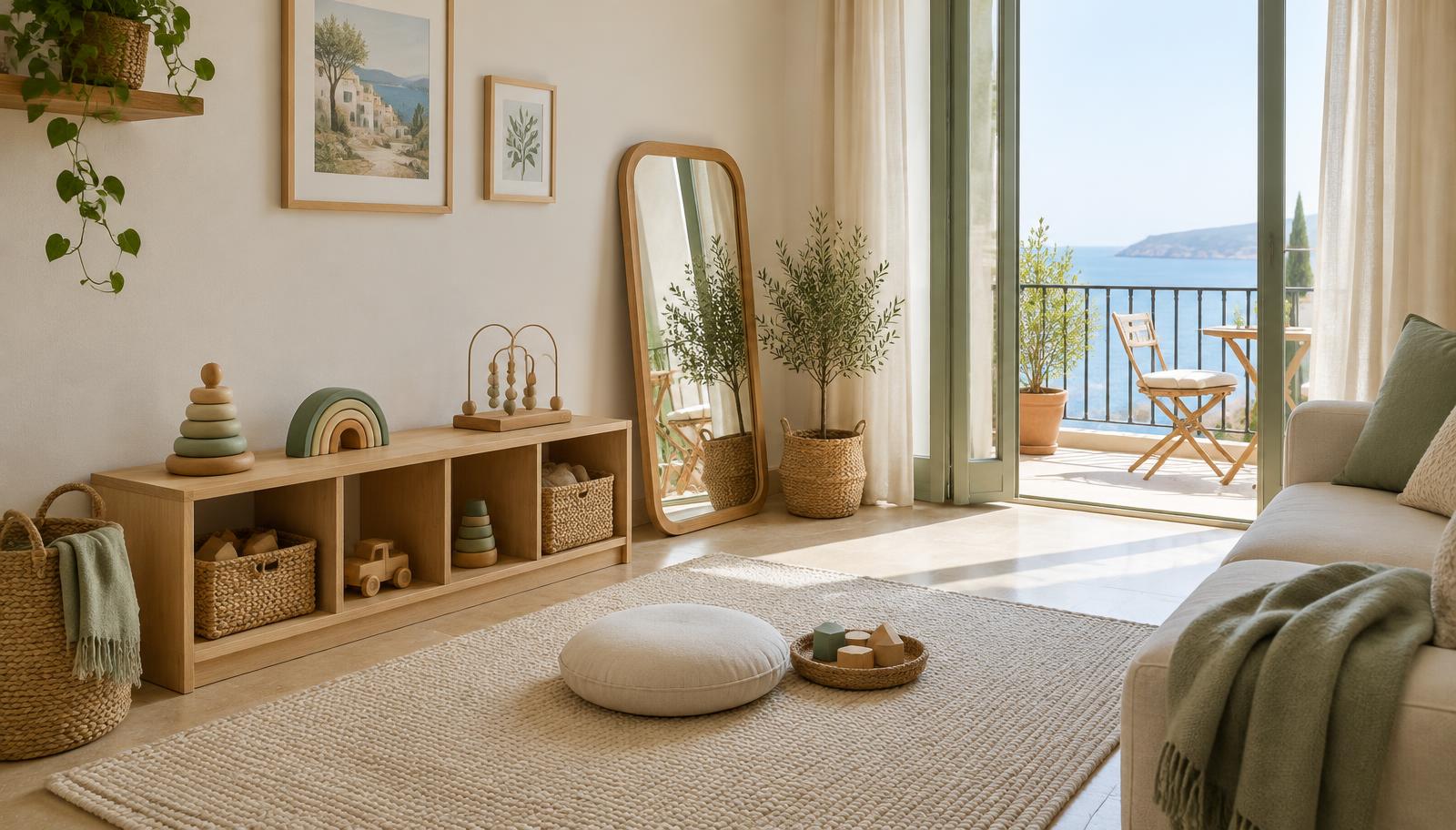
In Montessori-inspired homes, the floor becomes the baby’s first playground. From the early weeks, short periods of tummy time on a firm, soft surface help build neck and shoulder strength. Maltese tiles are beautiful but cold and hard, so a thick cotton mat or folded wool blanket makes all the difference. Place a low, unbreakable mirror along the wall at floor level, and your baby will spend surprising amounts of time studying the friendly face that looks back.
As they grow, this floor space can expand into a small movement area. We go deeper into this in Raising a Montessori Baby in a Modern Maltese Flat, including how to make it work when square metres are limited.
A few toys, beautifully placed
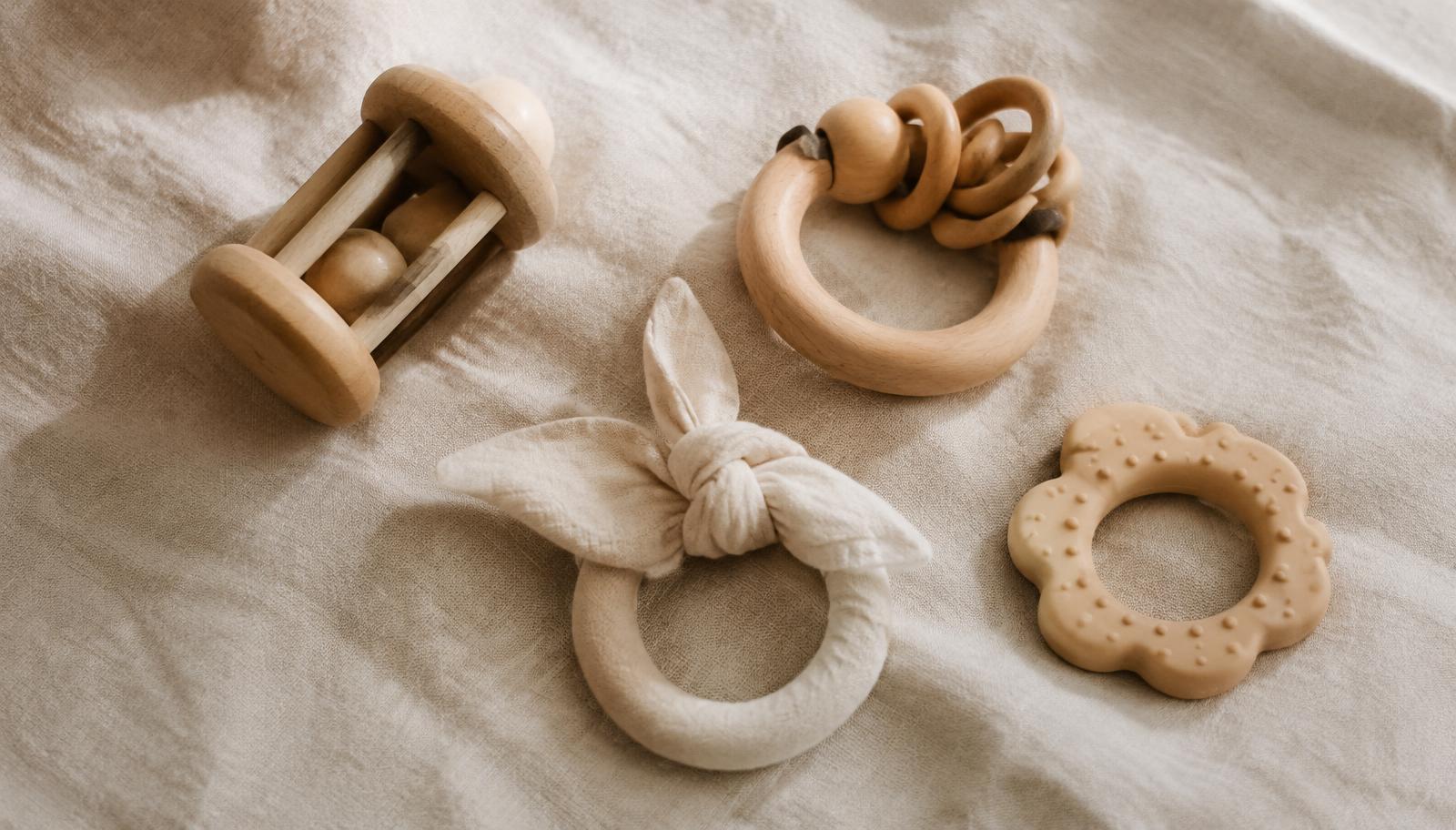
In the first months, toys are almost secondary to faces, voices and touch. When you do introduce objects, choose a small number and display them on a low shelf where they can be seen. A simple wooden rattle, a soft organic cotton toy, a grasping ring and a basket of different textures is plenty for the first half-year. Rotate them every week or two rather than adding more.
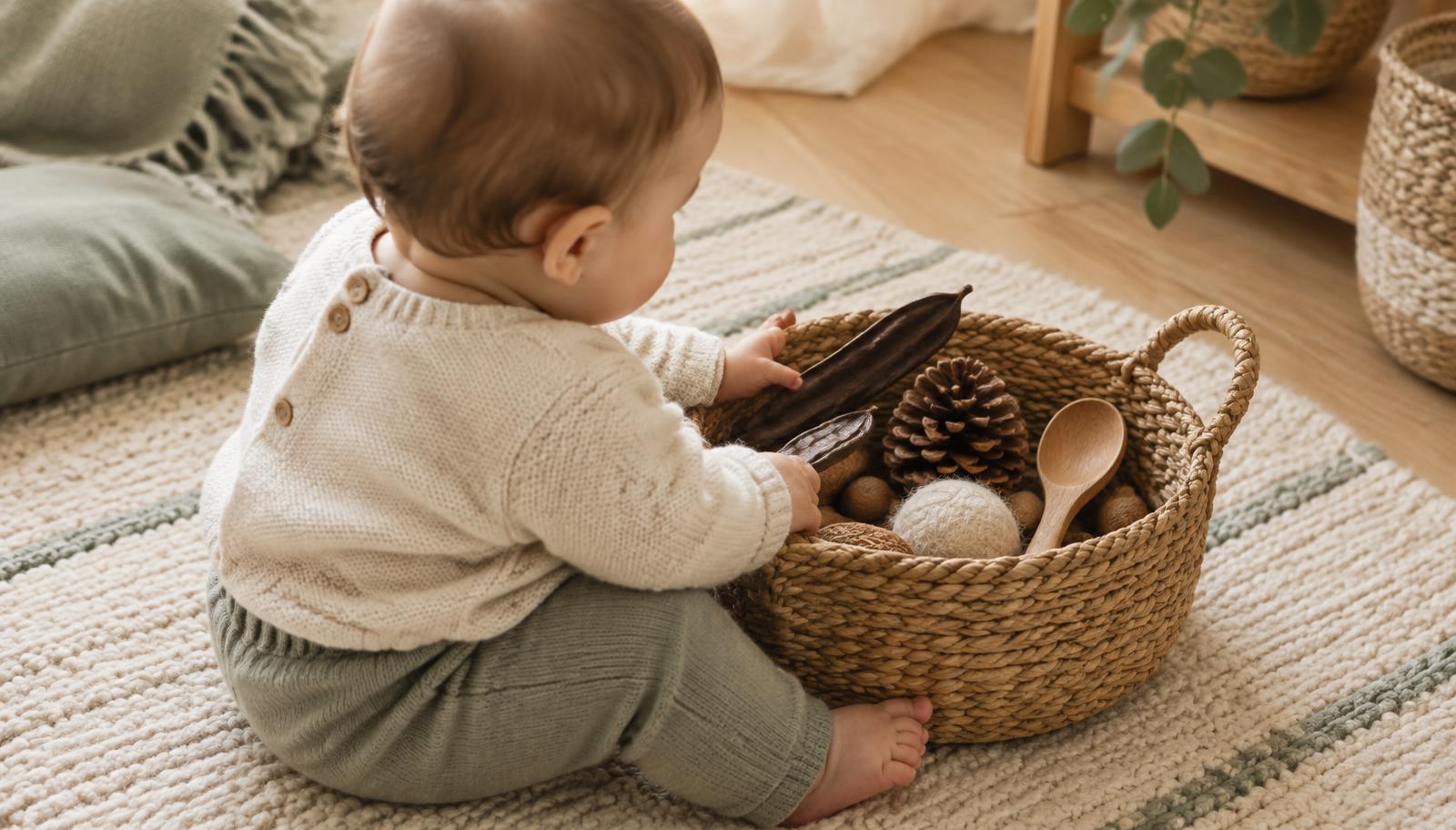
Later, a piece such as our Little Landscape Rainbow becomes a nursery anchor — first something to look at, then something to grasp, eventually a tunnel, a bridge and a cradle for small animals. Our Gathering Basket is another quiet companion, offering natural textures to explore under supervision once your baby sits.
If you are wondering which materials are safest for the mouthing stage, read our guide to plastic-free baby teethers and rattles in Malta.
Sound, scent and temperature
A calm nursery is not only visual. Keep sounds gentle: a fan or soft white noise during hot summer nights can mask street noise, festa fireworks and late-night scooters. Avoid strong fragrances, plug-in air fresheners and scented candles; fresh air from an open window in the cooler morning hours is far better.
Temperature matters enormously in Malta. Aim for a comfortable room — roughly 18–22°C is often recommended — and dress your baby in breathable layers rather than relying on heavy blankets. In August, that might mean a fan placed safely away from the cot and a single cotton layer. In January, when stone houses feel surprisingly cold, a sleep bag of the right weight keeps babies cosy without loose bedding. Always follow your paediatrician’s safe-sleep guidance.
Make room for the grown-ups
Night feeds and early mornings happen in this room too. A supportive chair, a soft dimmable light, a place for a glass of water and a basket of muslins will make those hours gentler. A small shelf of books — for you and for baby — turns feeding time into reading time. We share our favourite first stories in Building a Small, Beloved Library.
What to leave out
A natural nursery is defined as much by what is missing. You can skip the noisy electronic activity centres, the walkers, the towers of plastic packaging, and the many duplicate items that arrive as gifts. If family and friends ask what you need, consider pointing them gently toward a small wishlist of lasting pieces; our article on christening and baby shower gifts in Malta has ideas you can share.
A room that grows with them
The best nurseries are flexible. The changing area becomes a dressing corner; the mat becomes a play space; the low shelf holds more ambitious toys as months pass. When you choose fewer, better things, the room evolves naturally rather than needing to be redone at every stage.
Most importantly, remember that your baby’s world is you. The calmest nursery in Malta is simply one where a little person feels safe, warm and watched over — with a few beautiful things within reach. When you are ready to explore, you will find our curated pieces in the shop, each chosen with this kind of room in mind.