A Guide to Plastic-Free Baby Teethers & Rattles in Malta
Everything goes in the mouth. Here is how to choose teethers and rattles you can feel good about.
5 min read
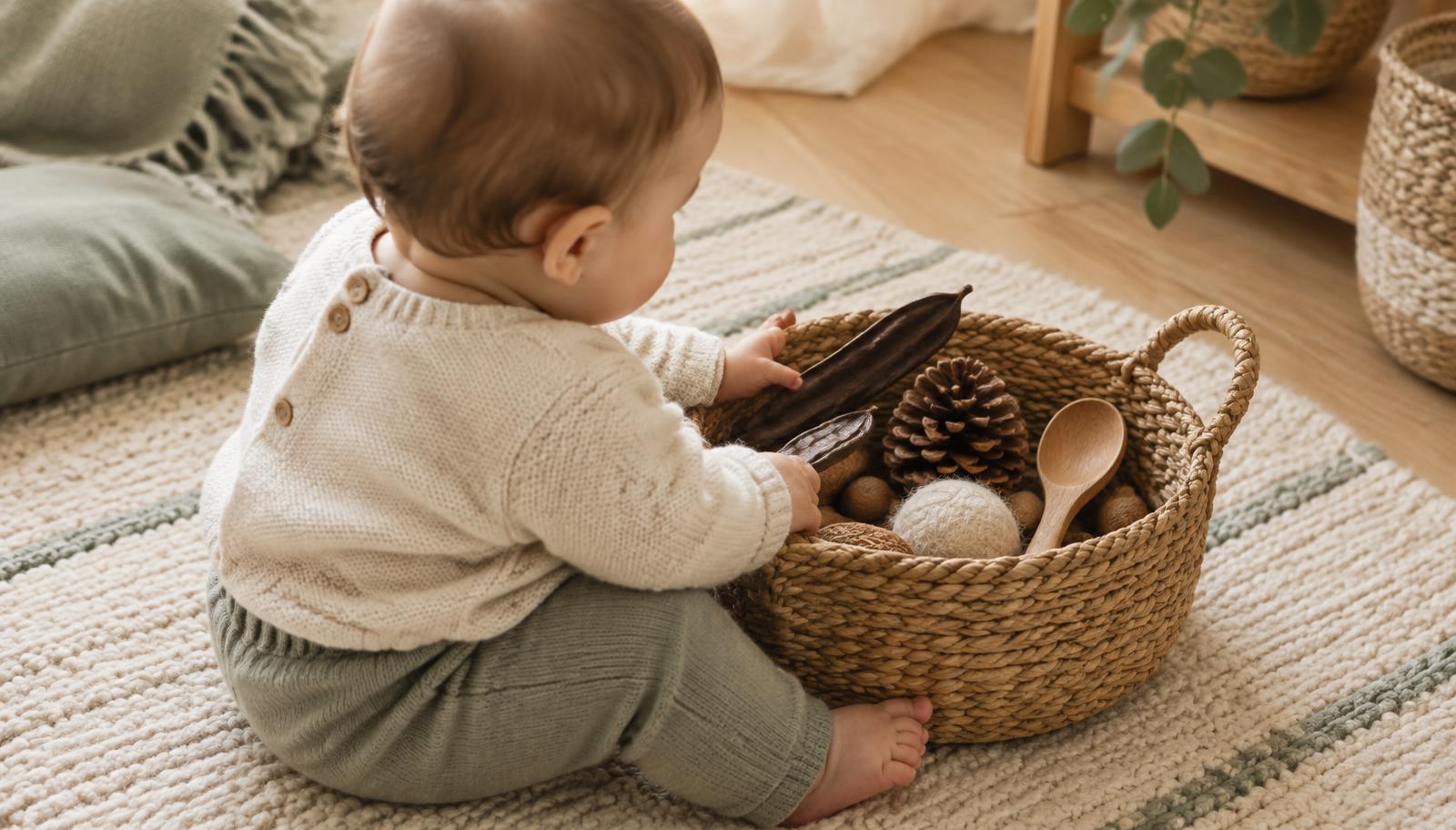
Somewhere around three or four months, it begins. Fists disappear into mouths, a muslin corner is chewed until soaked, and suddenly every object within reach is tested the same way. Mouthing is not a phase to endure; it is one of the richest ways a baby learns. The lips and tongue are packed with nerve endings, and through them a baby discovers shape, temperature, hardness and texture long before their fingers are skilled.
Teething usually follows — sometimes months later — bringing sore gums and the need for something firm to bite. Which means that the teethers and rattles you choose will spend a great deal of time in your baby’s mouth. For many Maltese parents, that is exactly when the question of plastic becomes personal.
Why parents are moving away from plastic
Not all plastics are the same, and many baby products today are made to strict standards. Still, families increasingly prefer to limit plastic in the mouthing years for a few reasons: concern about chemical additives in lower-quality items, the way soft plastic degrades and becomes tacky in heat, and the simple fact that so much of it ends up as waste. On an island where you see discarded plastic on beaches and roadsides, that last point feels very close to home.
The good news is that wonderful natural alternatives exist, and many of them are older than plastic itself.
Solid wood: the classic choice
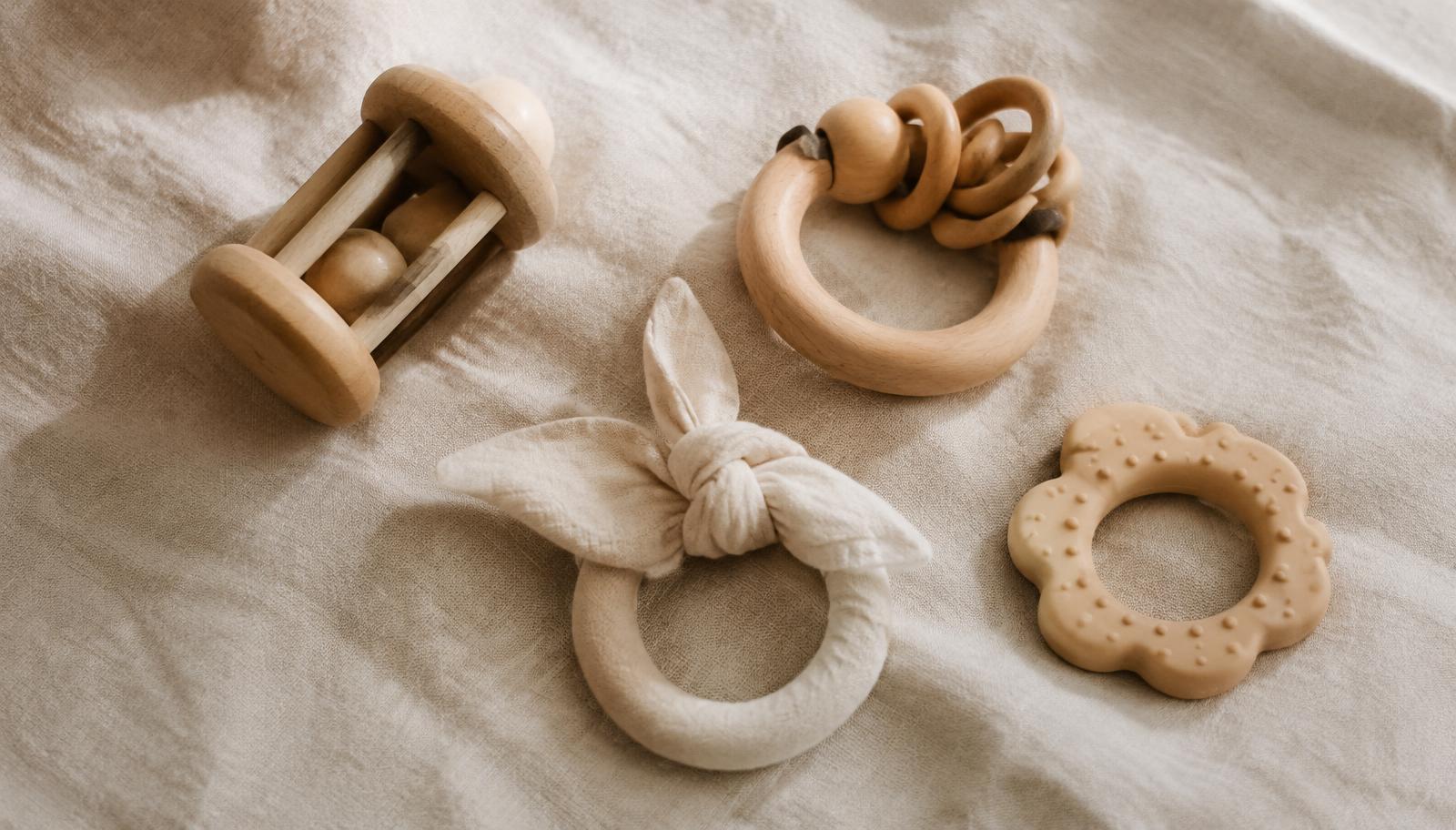
Untreated or naturally finished hardwoods — especially beech and maple — have been used for baby toys for generations. They are dense, smooth and hard enough to withstand chewing without splintering when well made. Look for:
- Solid hardwood, not composite or MDF.
- Raw wood or finishes of food-safe oils and beeswax.
- Smooth, rounded edges with no small parts or loose rings.
- Sizes too large to be a choking hazard, and from makers who comply with EN 71 European toy safety standards.
Wood has a lovely warmth in the hand and a gentle sound when knocked together, which makes it ideal for simple rattles. It is also naturally less slippery than some plastics, so tiny hands find it easier to grasp.
Natural rubber
Natural rubber from the hevea tree offers a softer, more yielding bite, which some babies prefer during intense teething. It is plastic-free, but it is worth knowing that it derives from latex, so families with latex allergies should avoid it. Choose solid-moulded pieces without hidden holes where water can collect, especially in our humid climate where mould can form quickly.
Organic cotton and linen
Knotted cotton teethers, crinkle squares and soft rattles filled with a small wooden bell are wonderful for the earliest months. They are light, gentle on the face and easy to wash. A simple trick many grandmothers in Malta will recognise: dampen a clean cotton cloth, chill it in the fridge, and offer it to a teething baby to gnaw. Cold soothes; fabric comforts.
The best teether is often the simplest: something smooth, cool and safely sized, held by a hand that knows they are loved.
A note on silicone
Food-grade silicone is not plastic in the traditional sense and is a common alternative. It is durable and easy to clean. If you want a fully natural home, wood, rubber and cotton are your options; if you choose silicone, look for single-piece designs from reputable European brands. We keep our own collection focused on wood and natural fibres, because they age so gracefully and connect babies to real materials.
Cleaning natural teethers in a Maltese home
Humidity is the enemy of wood and rubber left damp. A few habits keep natural toys safe and beautiful:
- Wipe wood with a damp cloth and mild soap; never soak or put it in the dishwasher.
- Dry immediately and leave in an airy spot, not a closed plastic box.
- Refresh dry-looking wood occasionally with food-grade oil or a beeswax balm.
- Inspect regularly and retire anything cracked, splintered or loose.
In the height of summer, store teethers in an open basket rather than a drawer so air can circulate. Our article on keeping baby cool and calm during the Maltese summer has more ideas for hot-weather routines.
Rattles as first sensory tools
A rattle is often the first toy a baby can make do something. In the early weeks, you shake it gently to the side and watch them search for the sound. By four months, they grasp it themselves; by six, they pass it hand to hand. Wooden rattles produce a softer, more natural sound than electronic toys, which is far less overwhelming for a developing nervous system.
Offer just one or two at a time. Watch which ones your baby prefers — the bell inside a cotton ball, the clack of wooden rings, the weight of a solid shaker — and follow their lead. This kind of observation is at the heart of Baby’s First Sensory Year.
How many does a baby really need?
Fewer than you think. A sensible teething kit might include one wooden ring, one fabric teether, one natural rubber piece if your baby enjoys a softer bite, and a couple of rattles. Rotate rather than accumulate. Babies benefit far more from deep familiarity with a few objects than from a constant stream of new ones.
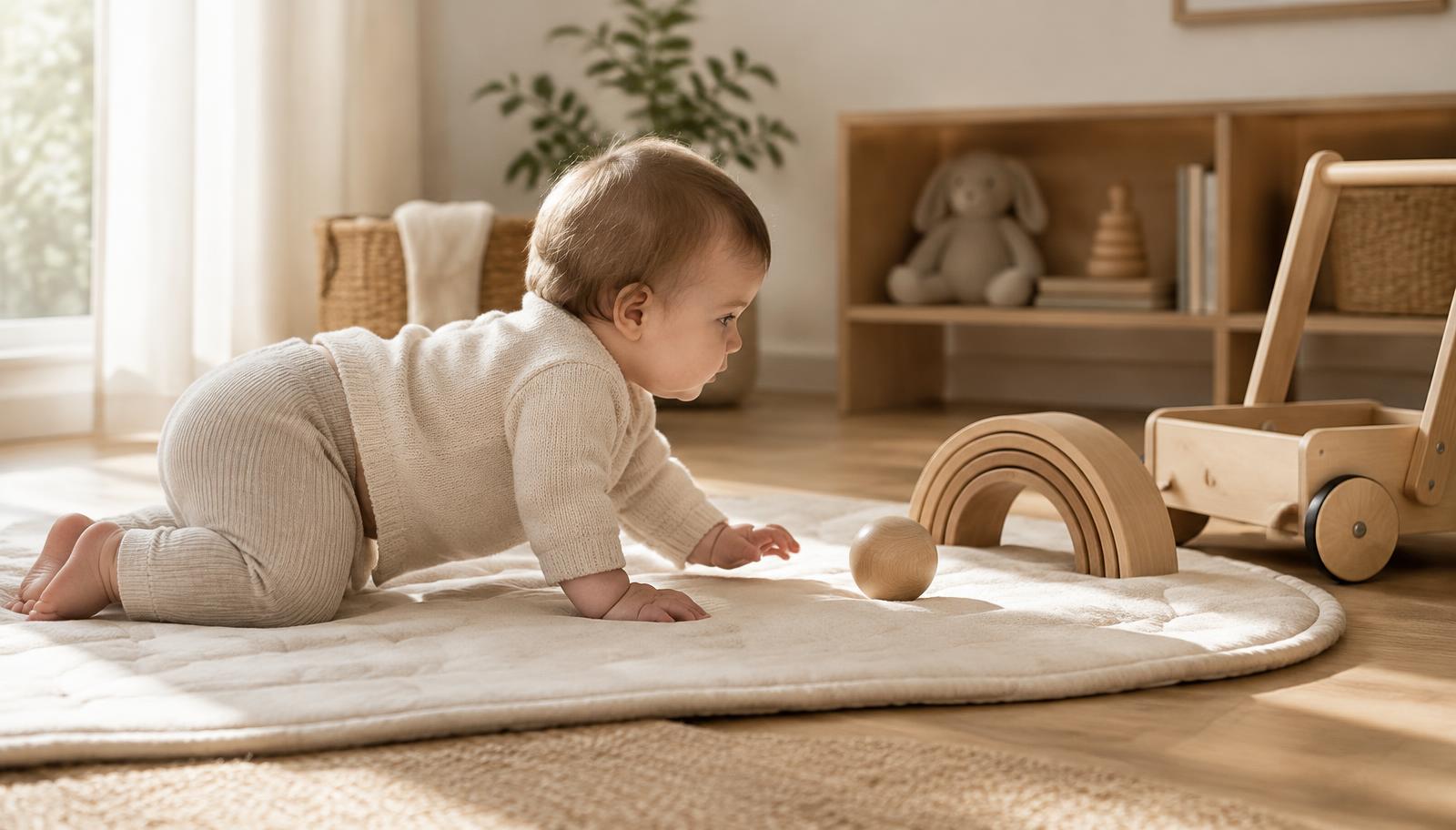
When your baby begins to sit and reach, those same grasping skills feed directly into the next milestones — stacking, transferring, rolling. We trace that journey in From Tummy Time to First Steps.
Gifting teethers and rattles
A beautiful wooden rattle is one of the loveliest gifts for a newborn in Malta: small, useful, lasting, and often kept long after the baby has outgrown it. Pair it with a soft cotton toy and a handwritten card and you have a gift that feels both practical and heirloom. You will find more ideas in our Gifts edit and in Christening & Baby Shower Gifts in Malta.
Safety, always first
Whatever material you choose, supervise mouthing play, check items before every use, and never tie teethers around a baby’s neck or attach them with long cords. Avoid amber necklaces and anything with small detachable parts. If teething seems to cause significant distress, fever or other symptoms, speak with your paediatrician.
Mouthing is how babies say hello to the world. By offering them real, natural materials — wood that warms in the hand, cotton that softens with washing — we let that first conversation be a gentle one. Explore our natural baby pieces in the Play collection.