From Tummy Time to First Steps: The Essential Wooden Play Milestones
Grasping, rolling, crawling, cruising: how simple wooden toys support each big moment.
5 min read
Few things are as moving as watching a baby learn to move. In just over a year, a newborn who cannot lift their head becomes a small person who stands, wobbles and takes their first steps across the kitchen tiles. Every stage in between — lifting, rolling, sitting, crawling, pulling up, cruising — is built through practice, play and an environment that allows freedom.
This guide follows the typical journey from tummy time to first steps, with the simple, natural toys that support each stage. Every baby develops at their own pace; the ages below are a gentle guide, not a timetable. If you have concerns, your paediatrician or health visitor is always the right person to ask.
0–3 months: tummy time and tracking
Tummy time builds the neck, shoulder and core strength that every later milestone depends on. Start with a few minutes several times a day, on a firm, comfortable surface. Many babies prefer tummy time on a parent’s chest at first.
On Maltese tiled floors, a folded wool blanket or thick cotton mat is essential. Place a high-contrast card or a low mirror in front of your baby to give them a reason to lift their head. Lie down facing them; your face is the most motivating thing in the room.
Babies also begin to track objects with their eyes. Slowly move a wooden rattle from side to side about 25 cm from their face and watch them follow.
3–6 months: reaching, grasping and rolling
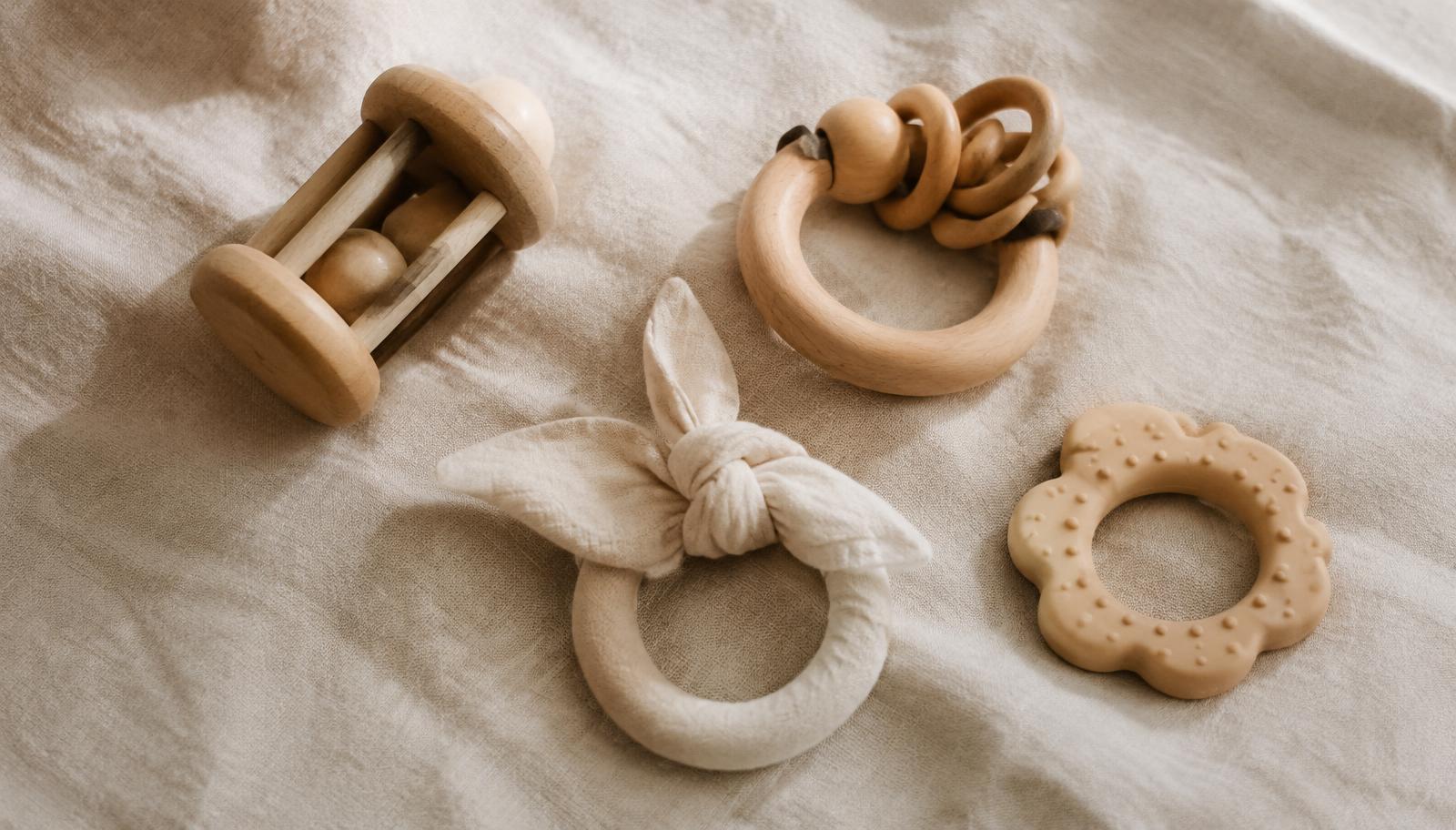
Hands come together, and soon they reach. Offer light, easy-to-grasp objects: a wooden ring, a cotton rattle, a smooth teether. Our guide to plastic-free teethers and rattles covers what materials work best for this mouthing stage.
Place a toy just slightly out of reach during tummy time. The effort to stretch towards it is exactly the practice that leads to rolling. Resist the urge to hand it over immediately — a little struggle is part of learning.
Freedom to move is the most important gift we can give a growing baby.
6–9 months: sitting and transferring
As core strength grows, babies sit — first with support, then independently. Sitting frees both hands, and play transforms. Babies now pass objects hand to hand, bang them together, drop them and look for them. This is the perfect time for a treasure basket and simple wooden objects of different shapes and weights.
A stacking rainbow like our Little Landscape Rainbow is wonderful now: the arches are easy to grasp, satisfying to knock down and gently rocking when placed on their sides.
Avoid propping babies in seats for long periods. Time on the floor, where they can roll, twist and pivot, builds the strength they need far more effectively.
7–10 months: crawling
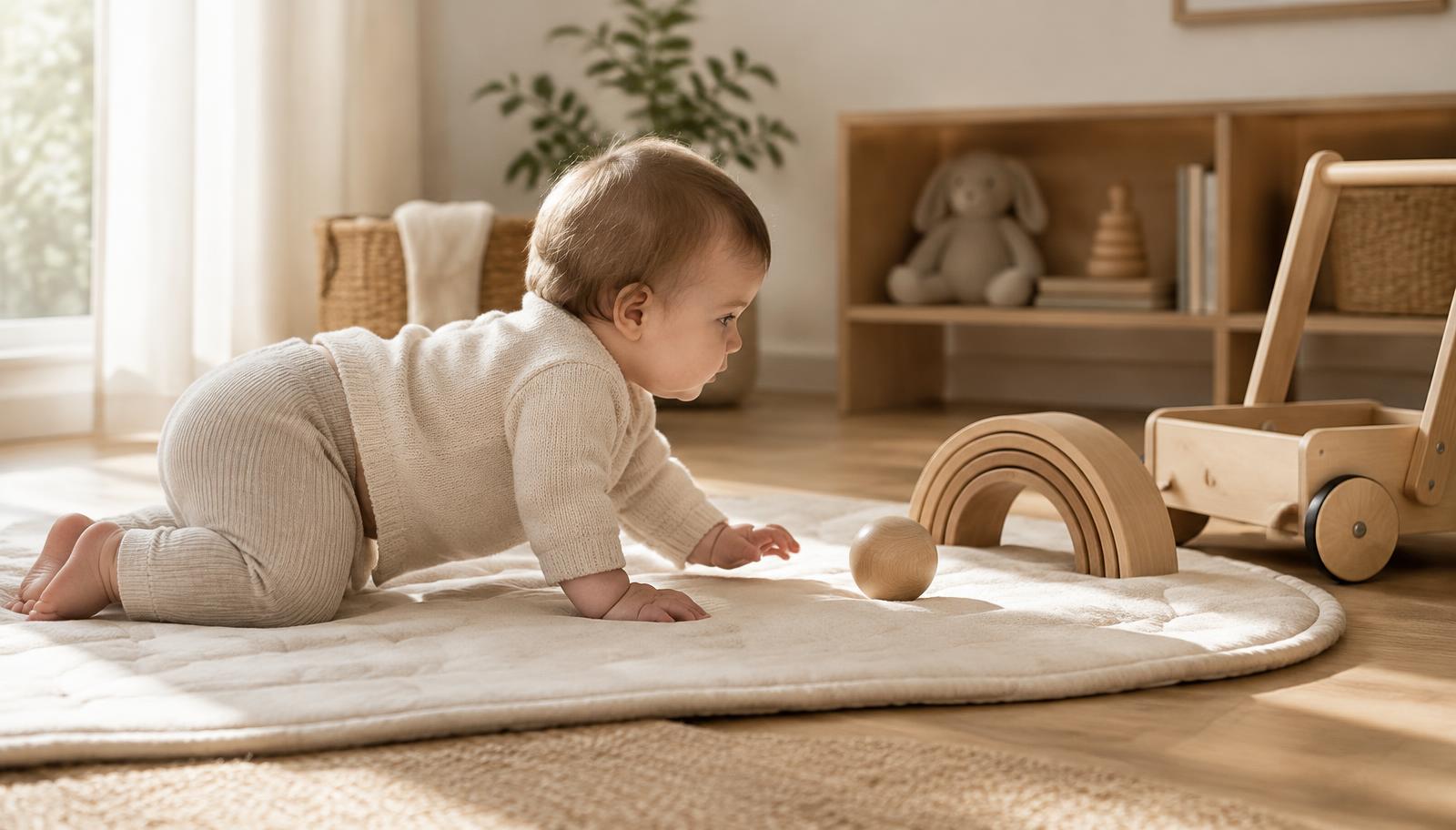
Crawling comes in many forms: commando crawling on the tummy, bottom shuffling, classic hands-and-knees. All are valid. Crawling develops coordination between the left and right sides of the body, strengthens the shoulders and wrists, and opens up a new world to explore.
Give your baby space and reasons to move. Roll a wooden ball gently away from them. Place an interesting object across the room. Create a soft obstacle course with cushions. A wooden arch to crawl under turns a living room into an adventure.
Now is also the time to babyproof properly: secure furniture, cover sockets, gate stairs and check for small objects on the floor — especially important in homes with older siblings and their tiny toys.
9–12 months: pulling up and cruising
Soon your baby will pull themselves up on the sofa, a low table, or you. Then they will begin to cruise, stepping sideways along furniture. A low, sturdy shelf or a stable ottoman is perfect for practice. In Montessori homes, a horizontal bar fixed securely along a wall beside a mirror gives babies a safe place to pull up and see themselves standing.
Barefoot is best indoors where safe. Babies grip with their toes and feel the floor, which supports balance. Maltese tiles can be slippery with socks, so either bare feet or soft-soled shoes with grip are ideal.
11–15 months: first steps
First steps can arrive any time from around nine months to well past fifteen. A sturdy wooden push walker, weighted so it doesn’t roll away too quickly, gives confidence. Pull-along toys become delightful once walking is established — a toddler loves to look back and see something following them.
We generally avoid sit-in baby walkers. They can be unsafe on stairs and uneven floors and don’t support natural walking development. Free movement on the floor, with plenty of time, is enough.
Fine motor milestones alongside
While big movements develop, so do small ones. Around nine months, babies begin to use a pincer grasp — thumb and forefinger — to pick up small things. Around a year, they may place a ring on a peg, drop a ball into a box or turn chunky book pages. Wooden puzzles with large knobs, posting boxes and nesting cups support these skills. Our Forest Friends Set offers wonderful practice in grasping and placing once babies are past the mouthing stage.
Why wooden toys suit movement play
Wooden toys have weight. That weight gives babies honest feedback: a block feels heavier than a cotton ball; a stack falls with a satisfying clatter. Solid wooden pieces are also more stable on tiled floors, less likely to skid away, and durable enough to withstand being thrown, chewed and stepped on.
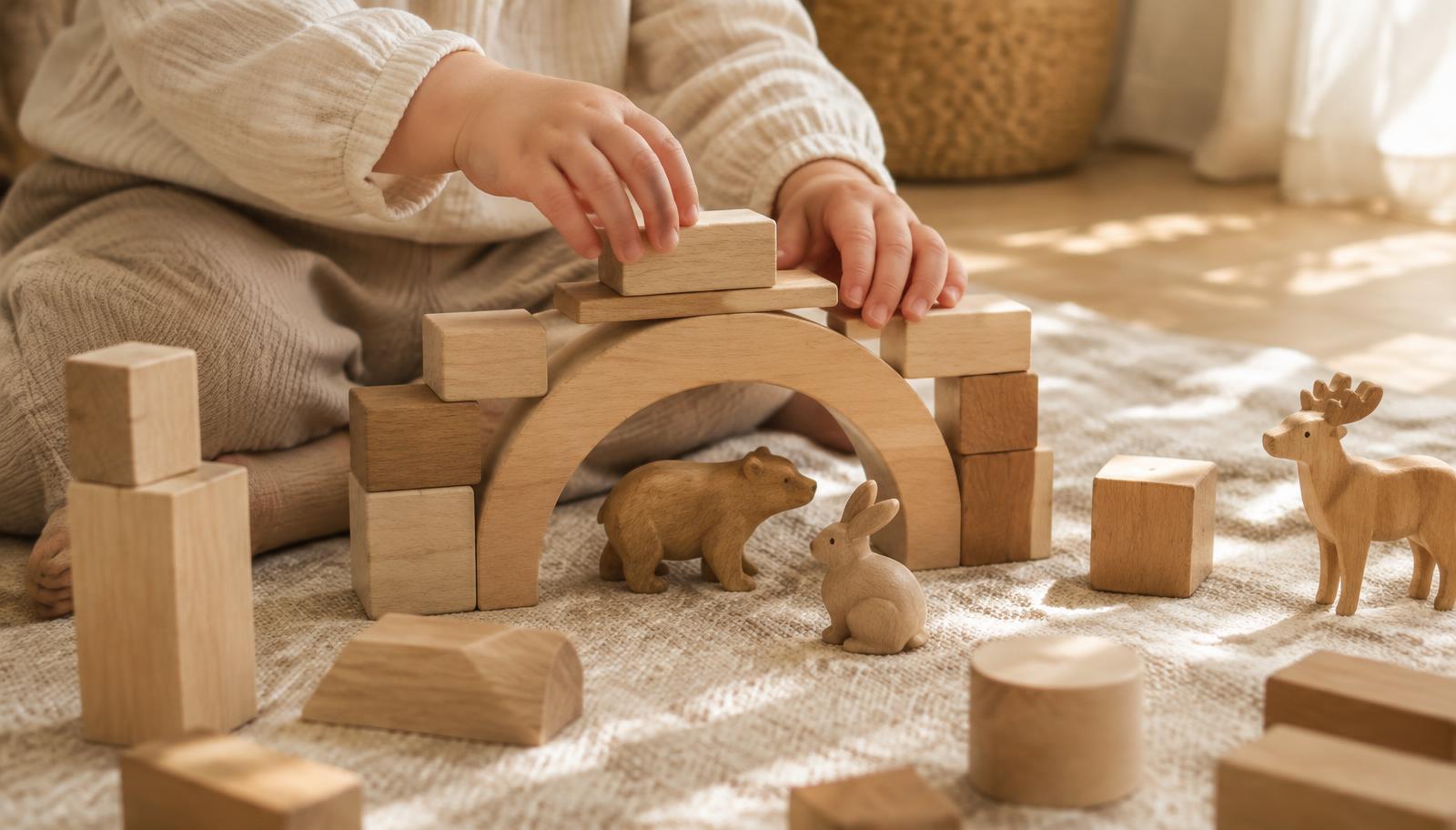
Just as importantly, simple wooden toys are open-ended. The same arch becomes a rocker at six months, a tunnel at nine, a bridge at eighteen and a stable for animals at three. We explore this idea in The Quiet Power of Open-Ended Play.
Creating a movement-friendly home
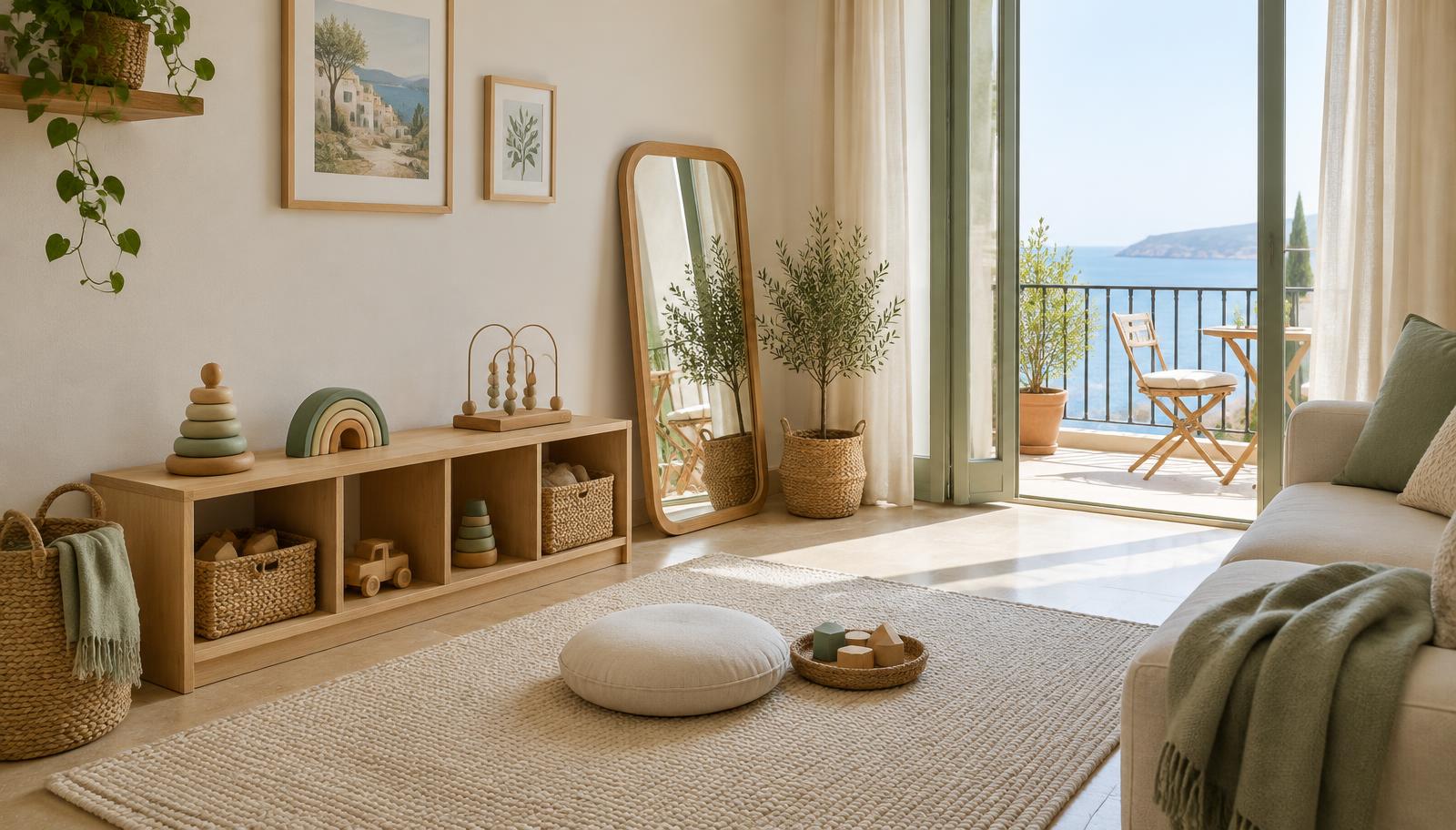
You don’t need a large playroom to support movement. A clear floor area, a mat, a low shelf with a few toys and a mirror can fit into almost any Maltese home. For practical ideas, read Raising a Montessori Baby in a Modern Maltese Flat, and for the earliest weeks, our natural nursery guide.
Outside, too
Movement grows when babies experience different surfaces: grass, sand, smooth stone, a gentle slope. A morning visit to a local garden gives crawlers and early walkers rich physical experiences. Our Malta stroller walk guide includes ideas for stopping along the way to let little ones explore on foot.
Trust the timing
Comparison is natural, especially in close-knit Maltese families where every cousin’s milestone is discussed over Sunday lunch. But development is not a race. Babies who walk late are not behind; they are often busy mastering other skills. Provide time, space and simple tools, and trust your baby to lead.
Explore our collection of simple wooden pieces for every stage in the shop.