The Malta Stroller Walk: Spotting Colours, Sounds & Shapes from the Pram
From the Sliema promenade to a quiet village pjazza: a slow walk is a world of discovery.
5 min read
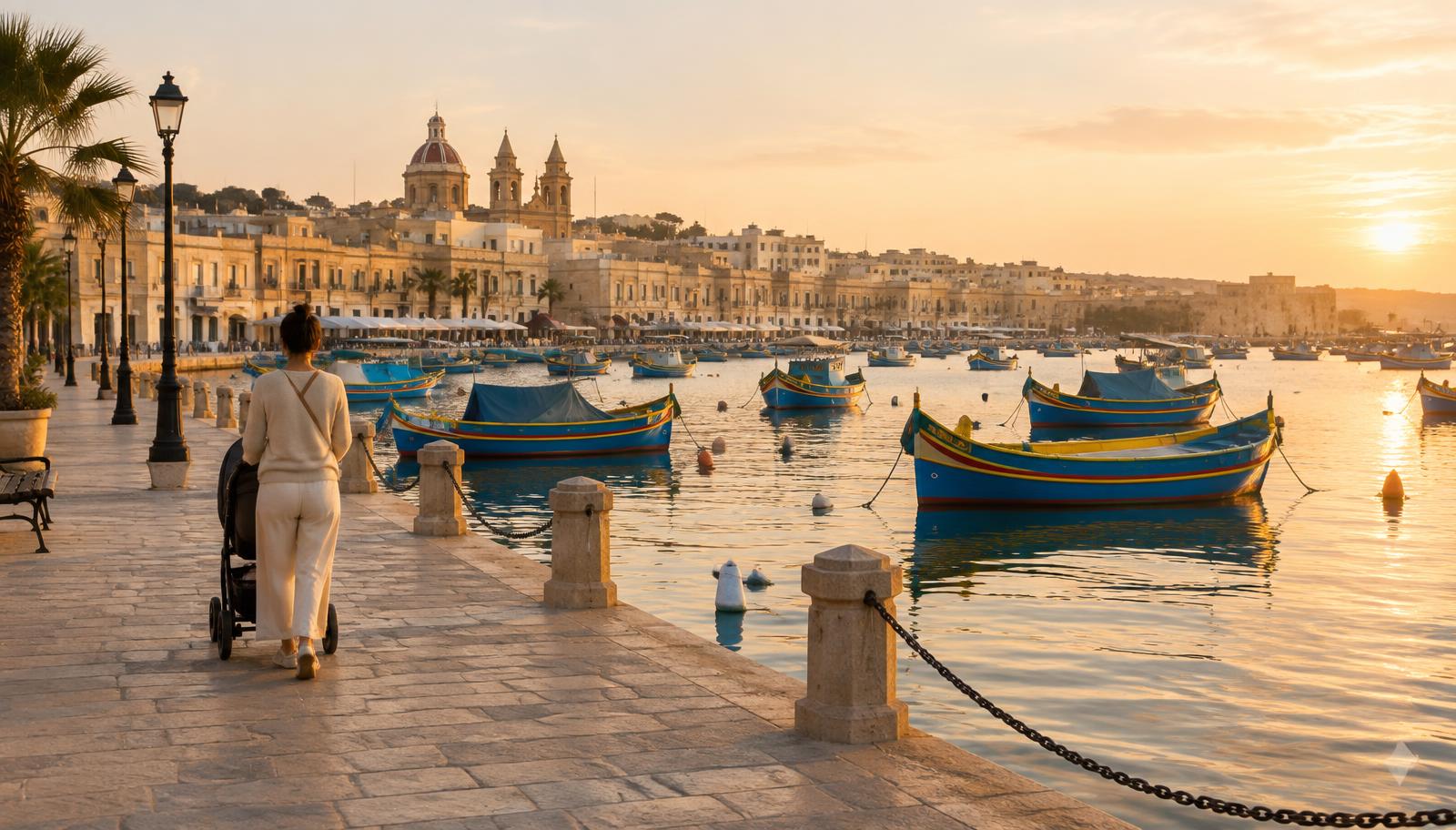
Some of the most important learning in a baby’s day happens without any toys at all. It happens on a walk: the stroller rolling along the promenade, the breeze off the sea, a dog barking, a bus passing, a neighbour saying ‘Ħelow!’ from a doorway. For a baby, all of this is new, interesting and full of information.
In Malta, we are lucky. Within minutes of most homes there is a seafront, a village square, a garden or a valley. A daily walk is one of the simplest and richest things we can offer our babies — and our own wellbeing too. This guide shares how to turn an ordinary stroller walk into gentle sensory and language time, with some favourite Maltese routes.
Why walks matter for babies
Babies learn language by hearing words connected to things they are experiencing. When you say “Look, a boat!” while they are watching a luzzu bob on the water, the word has meaning. Walks are full of these moments. They also offer changing light, sounds, smells and movement — sensory input that is varied but natural, rarely overwhelming in the way loud screens can be.
Fresh air and daylight can help regulate sleep patterns, and for parents, gentle walking is good for body and mind, especially in the early postpartum months.
Face to face or facing out?
For young babies, a parent-facing pram or a carrier allows you to see their reactions and talk to them. They can watch your face and hear your voice clearly. Older babies may enjoy facing out to see more, but watch for signs of overstimulation: turning away, fussing or sudden sleepiness. A carrier is wonderful for Malta’s narrow pavements, village steps and uneven paths where strollers struggle.
Name what they notice. The world becomes words.
The art of narrating
You don’t need to talk constantly. Instead, follow your baby’s gaze and name what they are looking at. “That’s a tree. The leaves are moving.” “Listen — church bells.” “A red door.” Pause and give them time to respond with sounds or smiles. If your family speaks both Maltese and English, use both naturally; babies are remarkably good at learning more than one language.
Things to notice by sense
- See: luzzu boats, colourful doors and balconies, birds, flowers, shadows, buses, water, dogs.
- Hear: waves, church bells, seagulls, the festa band in summer, wind in the pine trees, children playing.
- Touch: stop to feel a smooth stone wall, a soft leaf, the cool sea breeze on their cheeks.
- Smell: the sea, bread from a bakery, wild fennel, jasmine in the evening, rain on hot stone.
Favourite stroller-friendly routes
Malta’s pavements can be challenging, but many routes are lovely with a pram:
- The Sliema–St Julian’s promenade: long, flat and full of sea views, boats and people. Best early in the morning in summer.
- The Marsaskala and St Thomas Bay seafront: quieter, with fishing boats and wide paths.
- San Anton Gardens, Attard: shaded paths, ducks, fountains and peacocks — a favourite in the heat.
- Argotti and Upper Barrakka Gardens: flowers, views and the noon salute cannon (perhaps from a distance with a sleeping baby!).
- Ta’ Qali National Park: open space, trees and room to stretch out a blanket.
- Xlendi or Marsalforn in Gozo: gentle seaside strolls with stunning views.
Village walks
Even a walk around your own village core is rich. Narrow streets, statues of saints, niches in walls, old wooden doors, the bakery and the pastizzeria. Stop in the pjazza, watch the pigeons, listen to the church bells. These familiar routes become part of your child’s sense of home and belonging.
Seasonal walks
Malta’s seasons change the walk. In autumn and winter, the countryside turns green, wildflowers appear and carob pods fall. In spring, the fields are full of red poppies, yellow Bermuda buttercups (ħaxixa Ingliża) and wild fennel. In summer, walk early before the heat and seek shade. Our summer guide has more on managing the hottest months.
Collecting small treasures
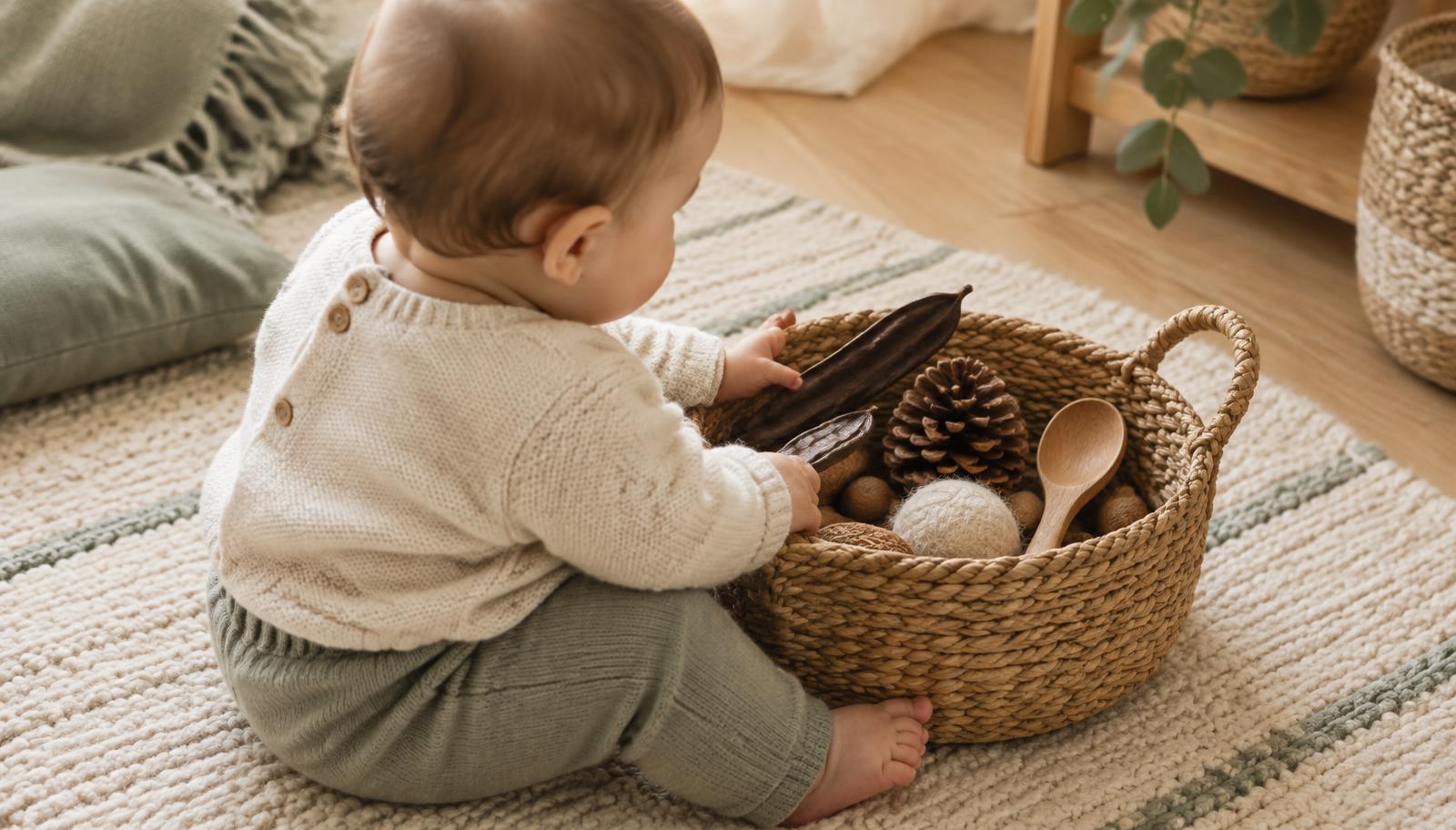
As babies grow into toddlers, walks become collecting expeditions. A small basket or cloth bag is perfect for gathering leaves, pine cones, pebbles and flowers. Back home, these treasures can join a sensory basket (always checked for safety) or be pressed. Our Botanical Discovery Press is made for turning walk treasures into lasting keepsakes — a wonderful activity for older siblings and toddlers.
Gently teach children to take only what has fallen, leave living plants and respect protected areas.
When to stop and get out
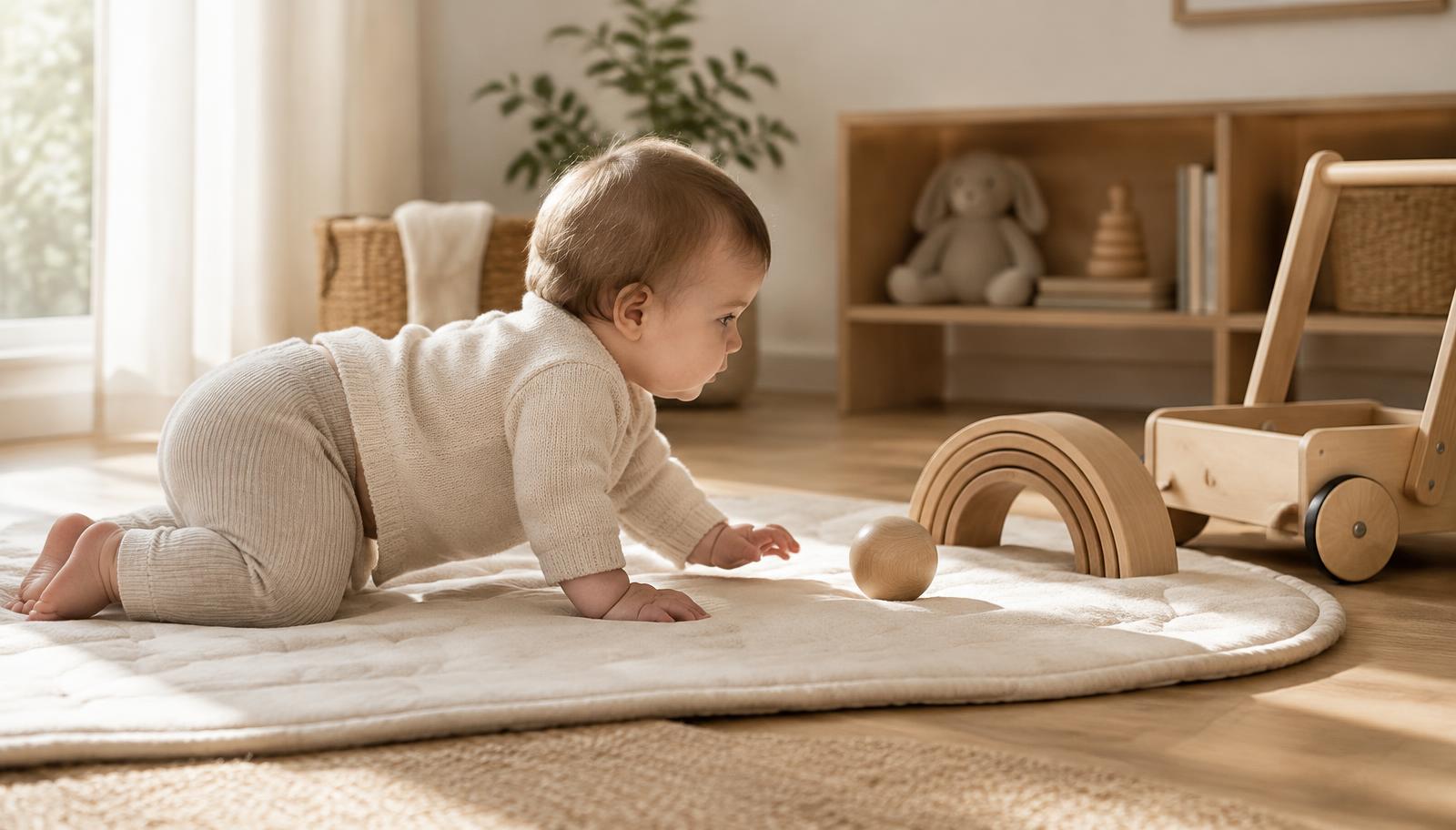
Stroller walks are lovely, but babies also need to move. Find a clean patch of grass or a blanket in the shade and give your baby some floor time. Let crawlers feel the grass and early walkers try different surfaces. Our guide From Tummy Time to First Steps explains why varied surfaces support development.
Bringing the walk home
After a walk, talk about what you saw. Read a picture book about the sea, birds or trees. Look at a pine cone together. This connects outside experience with language and stories. Find gentle nature books in our Stories from the Wood collection and our thoughts on building a small, beloved library.
Practical tips for Maltese walks
- Bring water and sun protection; even winter sun can be strong.
- Use a carrier for steps, narrow pavements and rocky paths.
- Avoid the hottest hours from June to September.
- Bring a light muslin for shade and a blanket for floor time.
- Keep it short and flexible — a ten-minute walk is still valuable.
A daily ritual
A daily walk does not need a destination. It is a ritual of noticing, shared between parent and child. Over time, your baby will begin to point, babble and eventually name the things you have shown them together: the boat, the bird, the bells. It is one of the simplest and most beautiful ways to raise a curious child on our islands.
For more gentle, everyday ideas, read Baby’s First Sensory Year, or explore our curated pieces in the shop.