The Quiet Power of Open-Ended Play
Why fewer instructions can make room for bigger ideas.
2 min read
Watch a toddler with a cardboard box and you will see something remarkable. It is a house, then a boat, then a drum, then a hiding place. No instructions, no buttons, no correct way to use it. This is open-ended play: play where the child, not the toy, decides what happens.
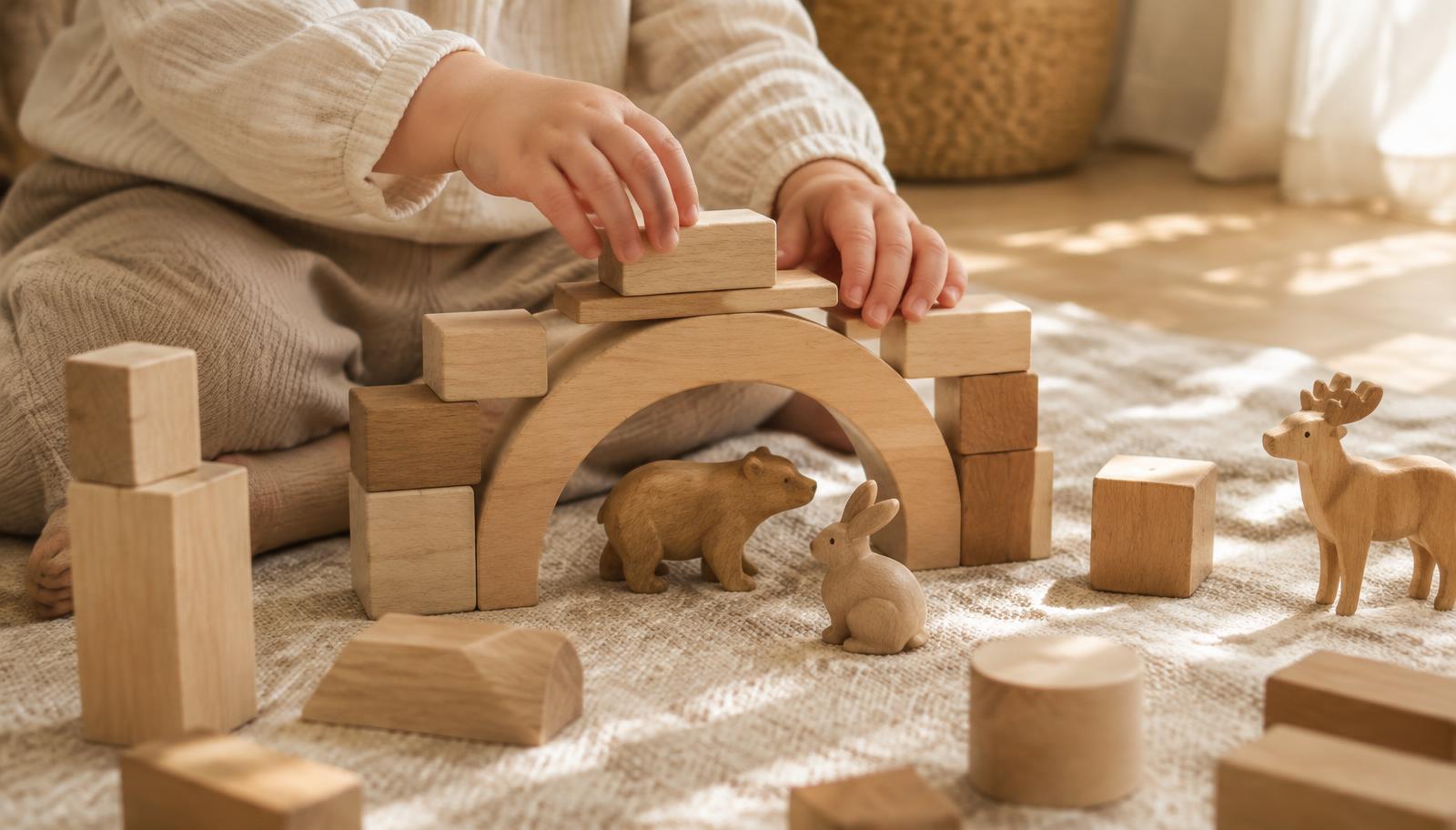
Open-ended toys are objects without a single fixed purpose. Blocks, wooden arches, carved animals, scarves, baskets of natural objects, crayons and paper. They do nothing on their own, which is precisely why they are so valuable. They ask the child to bring the idea.
Why it matters
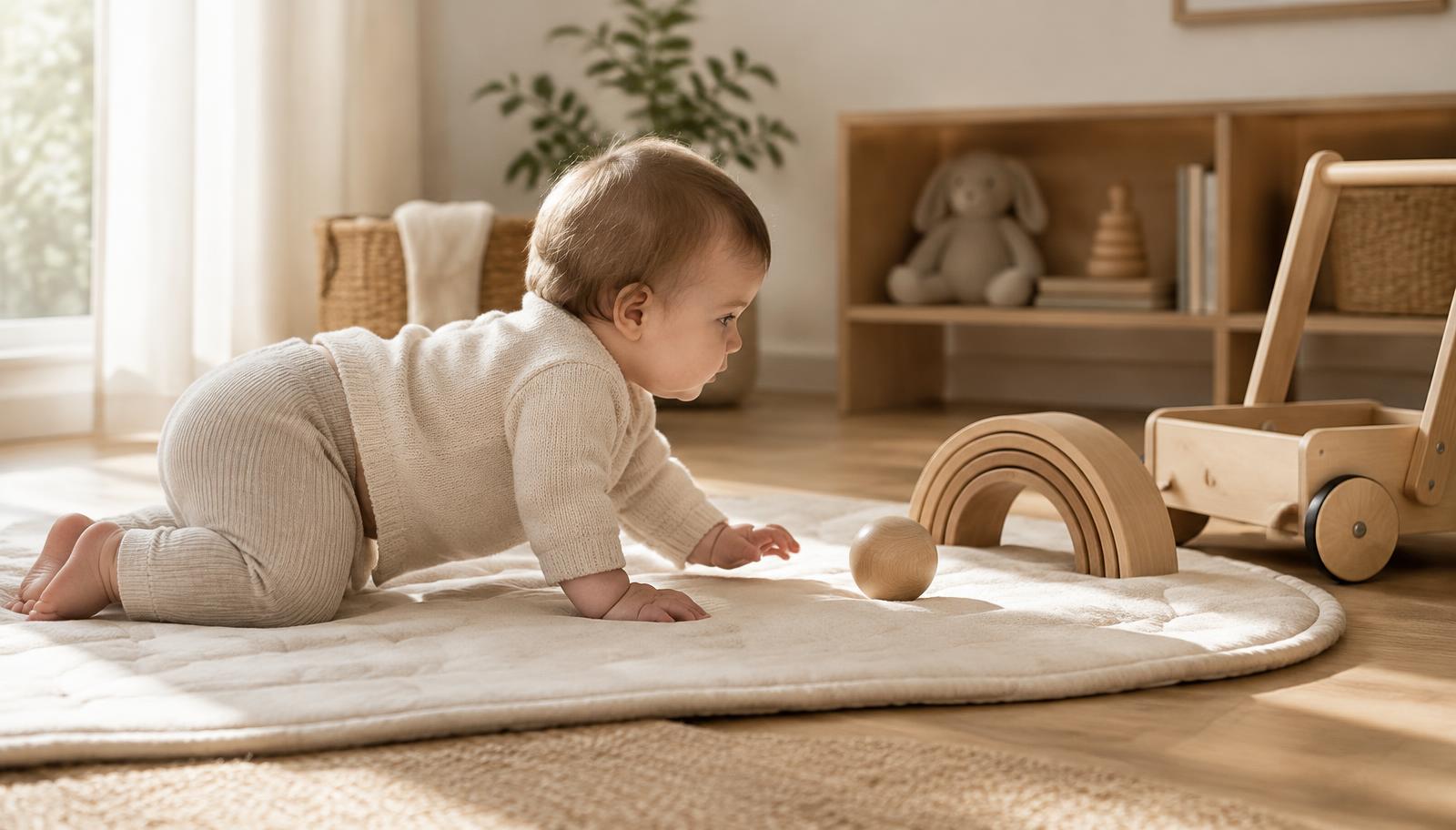
When a toy does everything — lights up, sings, tells the child what to press — the child’s role becomes reactive. When a toy does nothing, the child must imagine, plan, experiment and solve problems. Over time, this builds focus, creativity, language and confidence. Open-ended play also grows with the child. The same wooden rainbow is a rattle-like thing to mouth at six months, a rocking toy at nine, a stack at eighteen, and a bridge for animals at three. Our guide From Tummy Time to First Steps follows this journey through the first year.
The less a toy does, the more a child can do with it.
Fewer things, deeper play
Children with fewer toys often play longer and more creatively with each one. A small, rotated selection on a low shelf — rather than an overflowing toy box — invites concentration. This is especially helpful in compact homes; see Raising a Montessori Baby in a Modern Maltese Flat.
Where to begin
- A rainbow stacker such as our Little Landscape Rainbow.
- A set of wooden animals like the Forest Friends Set.
- A basket of natural objects — our Gathering Basket.
- Crayons and a roll of paper — the Little Maker Art Roll.
Open-ended toys also tend to be durable and natural, which is why they sit at the heart of our approach. We explain more in Why We Choose Plastic-Free for Malta’s Next Generation. For babies, read Baby’s First Sensory Year.
Give a child time, space and a few simple things, then step back. You may be surprised by how much they already know how to do.