Why We Choose Plastic-Free for Malta’s Next Generation
On a small island, plastic waste is never far away. Here is why we choose differently.
5 min read
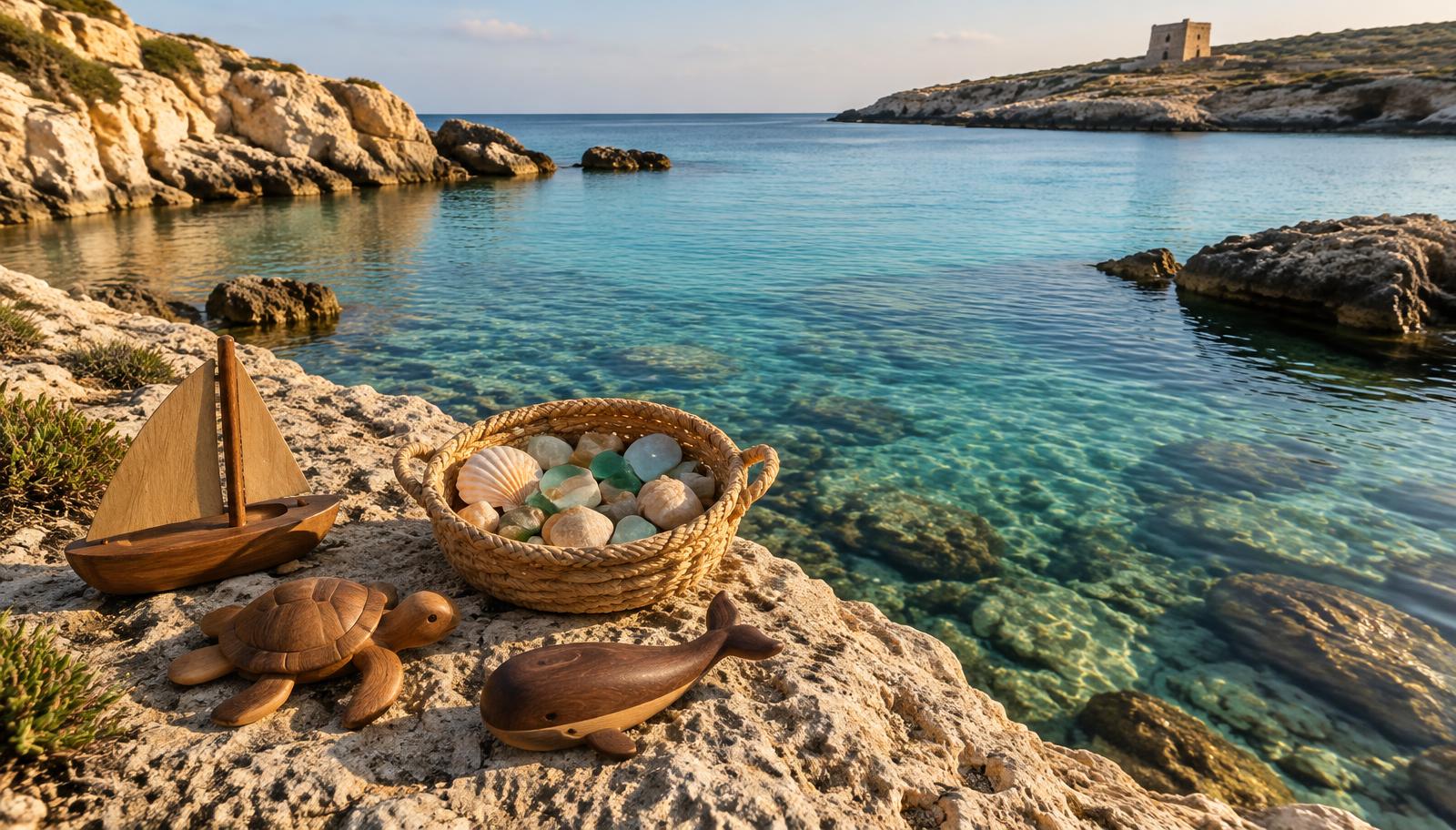
Living on a small island changes how you see things. In Malta, the sea is never far away, and neither is what we throw away. Walk along almost any bay after a summer weekend and you will find bottle caps, broken spades, fragments of brightly coloured plastic caught in the rocks. Our landfills are visible from the road. Waste is not an abstract problem here; it is part of the landscape.
Little Curio began with a simple question: what if the things we give our children could be part of a different story? Not perfect — no shop is — but more thoughtful. This is why we choose to focus on plastic-free, natural toys, and why we believe it matters for Malta’s next generation.
The problem with disposable toys
Many plastic toys are made to be cheap, and cheap often means short-lived. A toy that breaks after a few weeks, a battery-operated gadget that loses its appeal, a party favour used for an afternoon — these quickly become waste. Mixed plastics with electronics and paint are difficult to recycle, and most end up in landfill or, worse, the environment.
On an island with limited space for waste, every item that is thrown away has a real cost. Choosing fewer, longer-lasting toys is one small way families can reduce that burden.
Our climate is hard on plastic
Anyone who has left a plastic bucket on a Maltese balcony for a summer knows what happens: it fades, becomes brittle and cracks. Intense UV light, heat and salty air break down many plastics surprisingly quickly. Soft plastics can become tacky in humidity.
Natural materials, chosen well, handle our climate differently. Solid hardwoods like beech and maple, finished with natural oils, age gracefully. Organic cotton softens with washing. Wool and linen breathe in the heat. These materials don’t need to be replaced each season; they gain character with time.
We would rather give a child one thing that lasts ten years than ten things that last one.
Better for little bodies
Babies and toddlers explore with their mouths. Families understandably want to know what their children are chewing on. Natural, untreated or plant-oil-finished wood and organic textiles offer simplicity and peace of mind. Every piece we choose comes from makers who meet European toy safety standards (EN 71), and we prefer finishes that are water-based, plant-based or food-safe. Our guide to plastic-free teethers and rattles goes into more detail.
Better for play
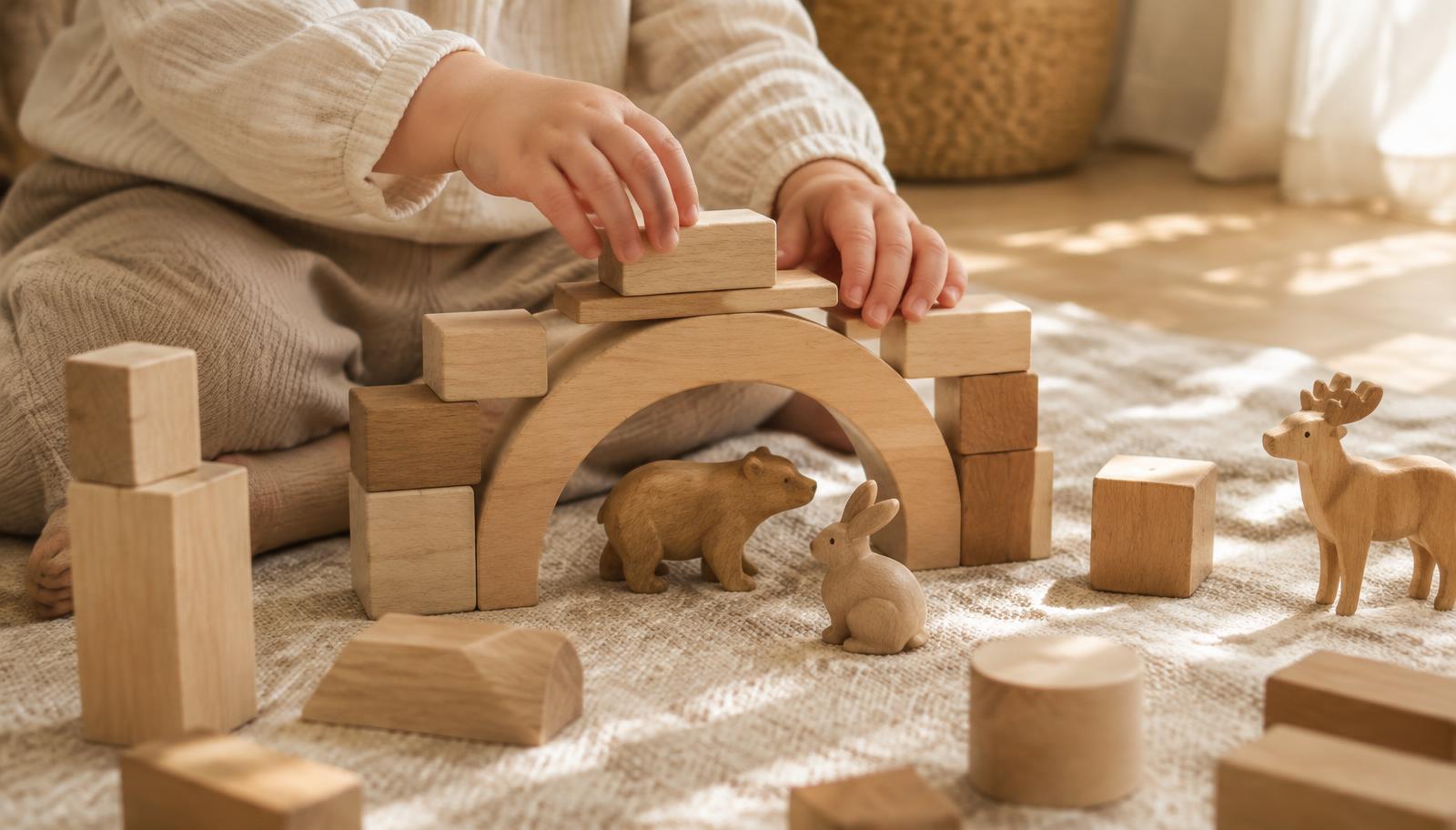
There is a developmental argument too. Many plastic toys are designed to do something specific: press a button, hear a song. They entertain, but they often leave little for the child to imagine. Simple natural toys, by contrast, are open-ended. A wooden arch can be a bridge, a cradle, a tunnel, a rainbow. A set of animals becomes a farm, a zoo, a family. We write about this in The Quiet Power of Open-Ended Play.
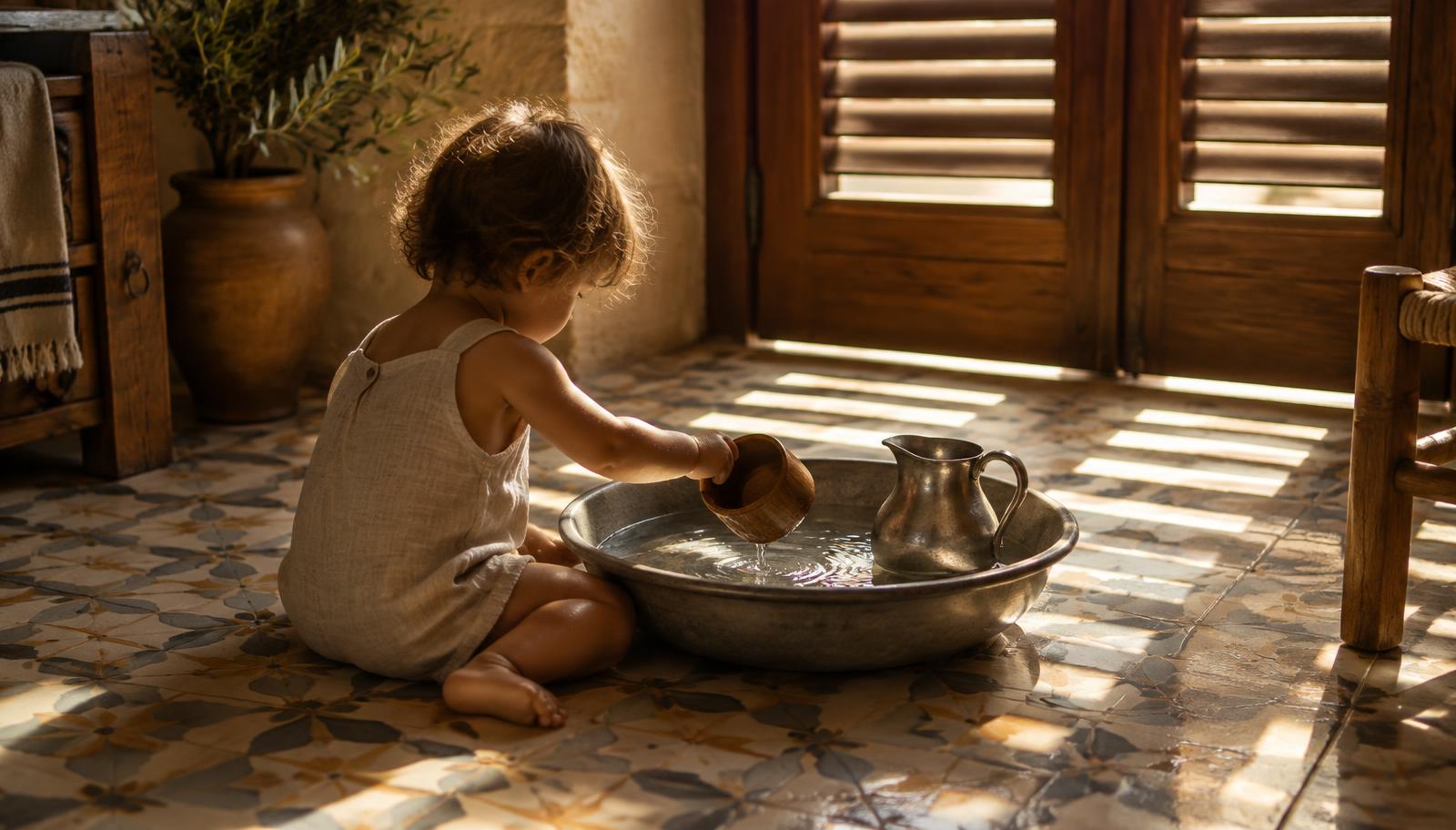
Natural materials also offer richer sensory feedback: the weight of wood, the texture of wool, the coolness of metal, the warmth of cotton. Children learn about the world through these real differences. Our article on Baby’s First Sensory Year explores why this matters so much in the first months.
Beauty that belongs in a home
Maltese homes are full of beauty: carved stone balconies, patterned tiles, wooden doors painted in deep greens and blues. Natural toys in soft, muted colours sit comfortably in these spaces. They don’t need to be hidden away when guests arrive. They feel like part of family life rather than an invasion of it — especially important in small apartments, as we discuss in Raising a Montessori Baby in a Modern Maltese Flat.
Heirlooms, not landfill
A well-made wooden toy can be passed from sibling to sibling, cousin to cousin, and eventually to the next generation. In Maltese families, where hand-me-downs travel through extended family networks, this matters. A rainbow stacker or set of animals can be enjoyed for decades. When a toy is finally retired, solid wood is far easier to dispose of responsibly than mixed plastics.
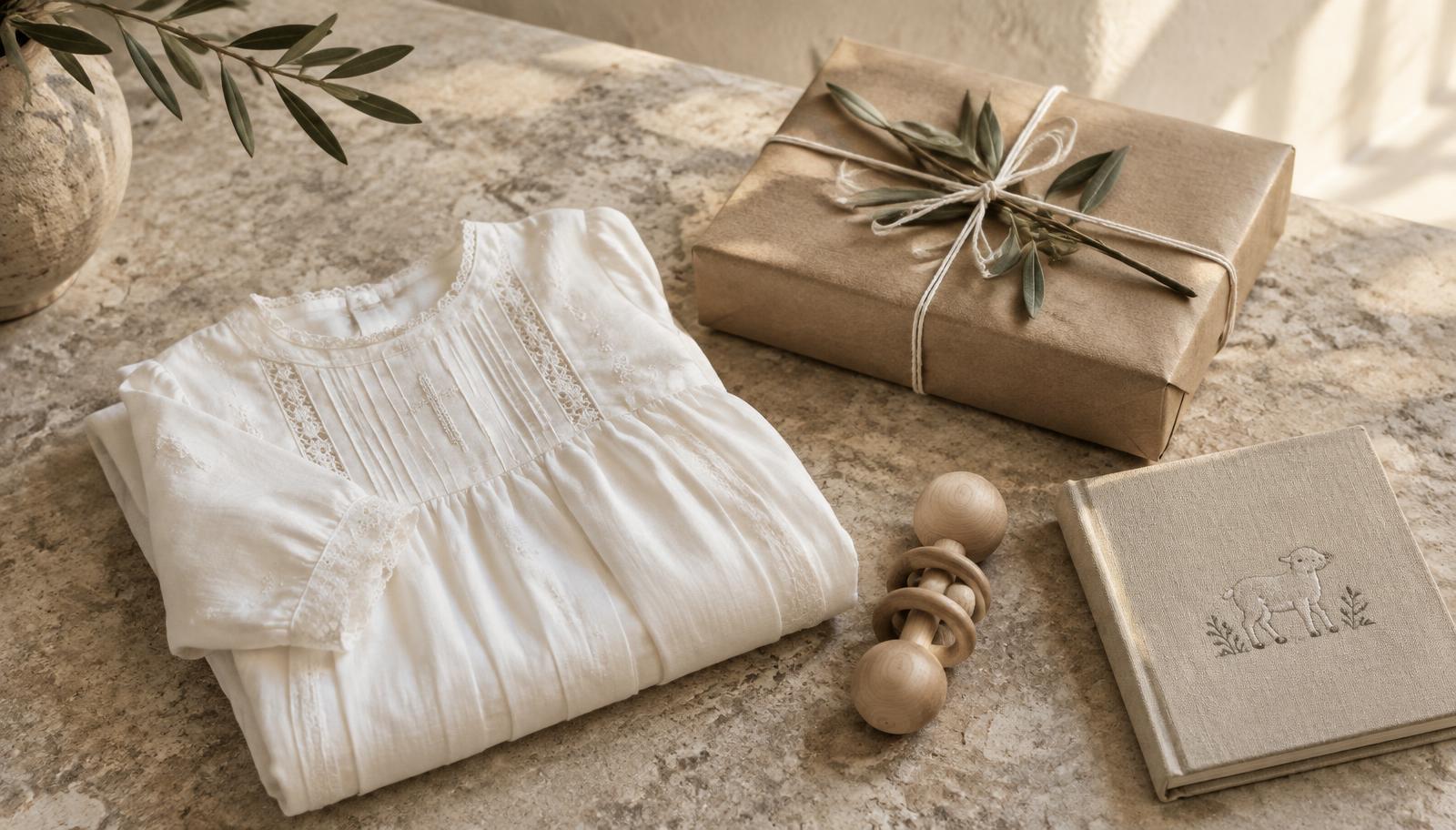
This is also why we love natural toys as gifts. A christening or first-birthday present that lasts becomes a family keepsake. See our ideas in Christening & Baby Shower Gifts in Malta.
Honesty about our choices
We want to be transparent. Being plastic-free is a direction, not a perfect state. Products travel to Malta from European workshops, and shipping has an environmental cost. Some items may include small necessary components. Some families choose food-grade silicone for practical reasons, and that is a sensible choice too. We are not here to judge anyone’s home. We simply want to offer a carefully chosen alternative for families who are looking for it.
What families can do
- Choose fewer, better toys, and rotate them rather than buying more.
- Pick durable beach tools for summer instead of single-season plastic.
- Wrap gifts in paper, fabric or baskets rather than plastic.
- Pass toys on through family and friends.
- Repair before replacing; many wooden toys can be sanded and re-oiled.
- Gently share gift wishlists with relatives.
Our summer guide includes ideas for plastic-free beach days, and our first birthday guide offers ways to celebrate with less waste.
Local habits that help
Small Maltese rituals already point the way: the reusable basket for the Sunday market, bread wrapped in paper from the village bakery, glass bottles returned for deposit. Bringing that same spirit to the playroom — buying less, choosing well, passing on — feels less like a new idea and more like a return to how many of our grandparents lived.
Raising children who care
Perhaps the most important reason of all: children learn from what we do. When they grow up with real materials, repair what they love, help collect litter on the beach and see adults make thoughtful choices, they learn that the island is something to care for. That lesson lasts far longer than any toy.
We think of Malta’s children growing up on this beautiful, fragile island — swimming in its sea, walking its valleys, playing in its village squares. Choosing natural, lasting things for them is our small way of caring for their future. Explore our shop and read more about who we are on our About page.