Loose Parts Play for Beginners: How Simple Objects Spark Creativity
Wooden rings, corks, shells, egg cups. Loose parts play turns ordinary objects into endless possibilities for curious toddlers.
4 min read
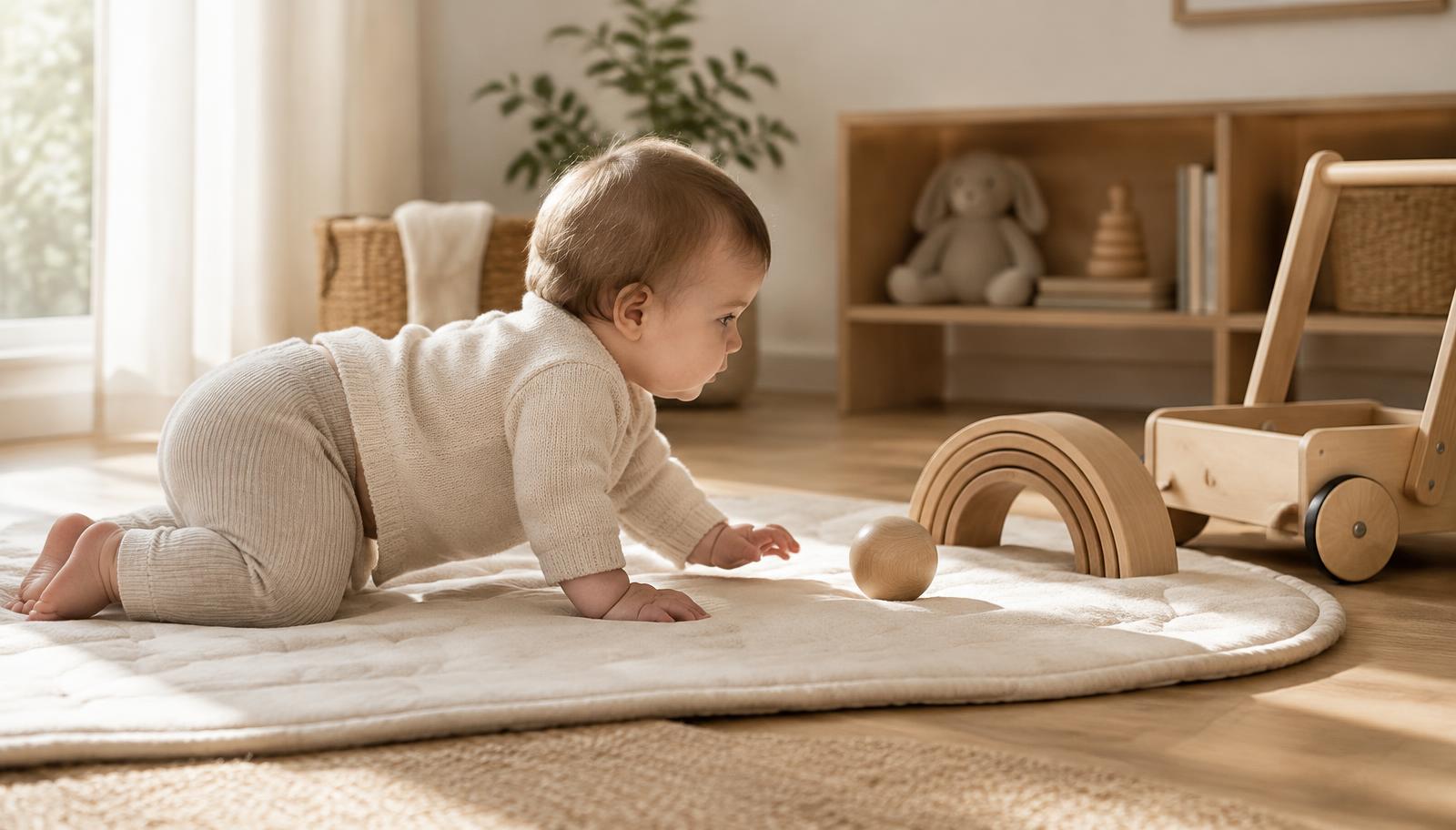
Give a toddler a fancy new toy and a cardboard box, and you know which one they will play with. Children have always been drawn to simple objects they can move, combine and transform. This is the heart of loose parts play, one of the most creative, flexible and affordable ways to play.
If you have heard the term but are not sure where to start, this guide is for you. We will explain what loose parts are, how to choose them safely for young children, and a few simple setups to try at home in Malta.
What are loose parts?
Loose parts are materials that can be moved, carried, combined, lined up, taken apart and put back together in many different ways. They have no fixed purpose. A wooden ring might be a wheel, a plate, a frame or a crown. A shell might be a boat, a bowl or a treasure. The child decides.
The idea comes from architect Simon Nicholson, who argued in the 1970s that the more variable materials an environment has, the more creative play it invites.
Why loose parts are so powerful
Loose parts encourage imagination, problem solving, maths thinking and language. When children sort shells by size, they are comparing. When they build a tower of corks, they are testing balance. When they line up rings and call it a train, they are telling a story. And because there is no right way to play, every child can succeed.
Loose parts also help with focus. Many parents are surprised by how long their toddler concentrates with a simple tray of objects. We explore this in our article on independent play.
Safety for little ones
Babies and young toddlers put things in their mouths, so loose parts for this age must be large enough not to be a choking hazard. A useful rule is that anything that fits through a toilet roll tube is too small for children under three. Always supervise loose parts play, and check items for sharp edges, splinters and cracks.
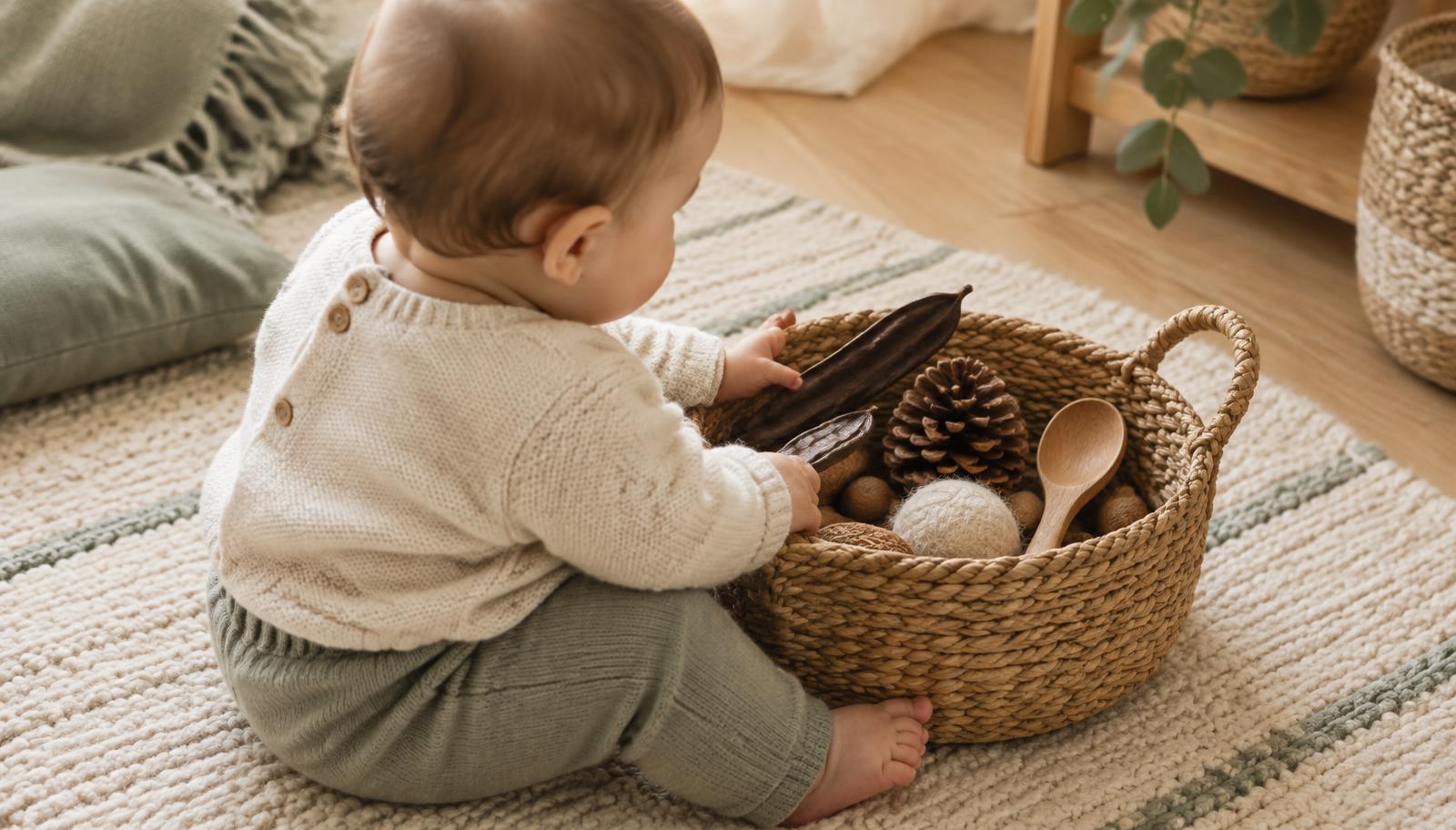
For babies under one, a treasure basket of larger everyday objects is a gentle introduction to the same idea.
Where to find loose parts
You probably already have many at home. The kitchen, the garden and the beach are full of them.
- From the kitchen: wooden spoons, metal bowls, egg cups, muffin tins, large corks, wooden pegs
- From nature: pine cones, carob pods, large shells, smooth stones, sticks
- From the craft box: wooden rings, large wooden beads on a cord, fabric scraps
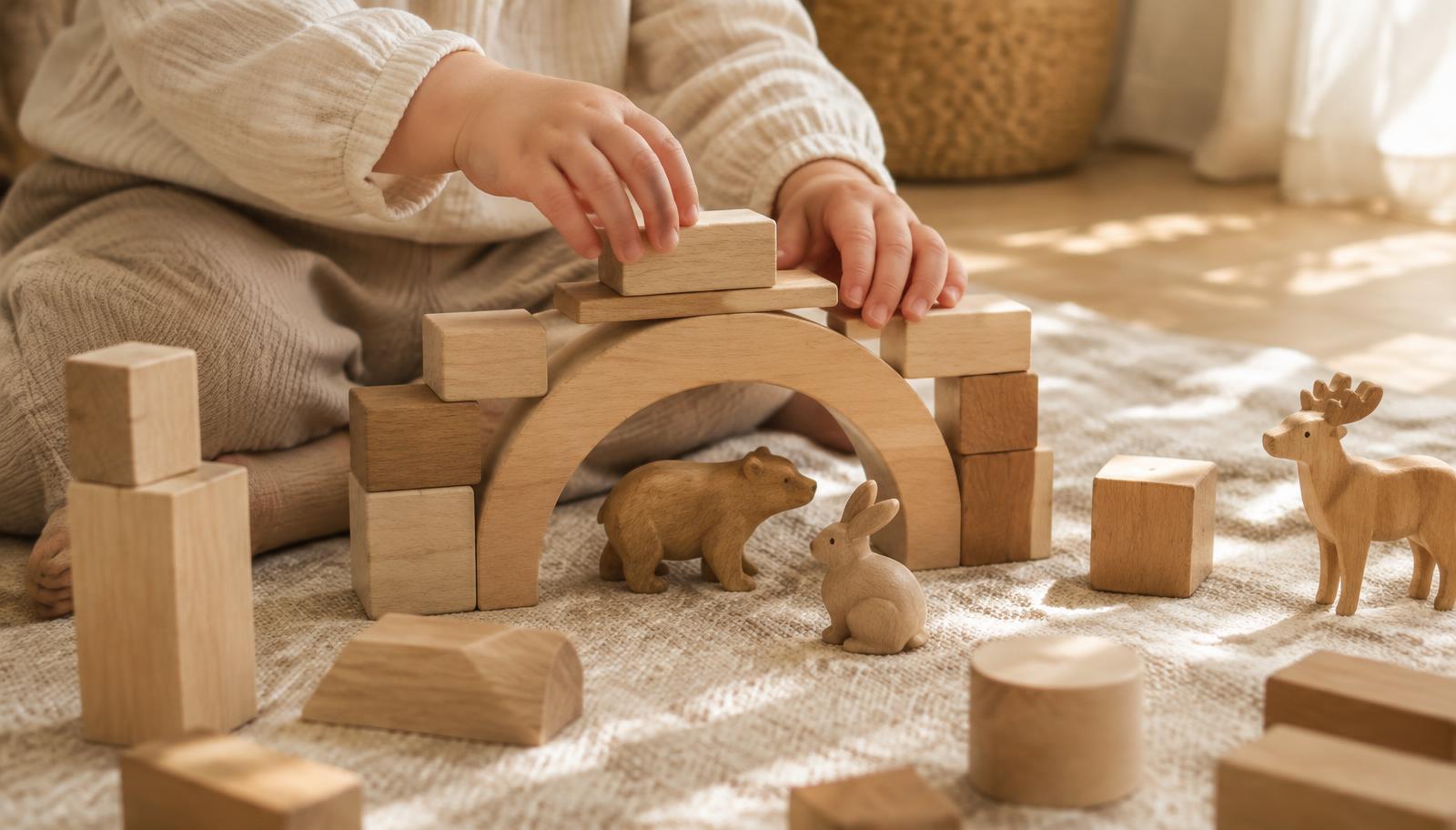
- From toys: wooden blocks, peg people, rainbow arches
A walk in one of Malta's parks or along the shore can become a collecting trip. Our guide to nature play in Malta suggests places to go.
Simple setups to try
Start with a tray or a muffin tin and a few types of objects. Put it on a low table or the floor and step back. You do not need to show your child what to do.
- Sorting: a muffin tin with corks, shells and wooden rings
- Filling and emptying: a basket of pine cones and two bowls
- Building: blocks with sticks and stones
- Patterns: wooden rings and pegs on a cloth
- Small world: shells and stones with wooden animals
Indoor and outdoor
Loose parts work beautifully outdoors, where mess matters less. A balcony, courtyard or roof is perfect for a tray of sand, stones and shells. Our balcony and courtyard play guide has more ideas for small Maltese outdoor spaces.
Storing loose parts
Keep loose parts in baskets, jars or trays so they are easy to see and tidy away. Offer a few types at a time and rotate them. Too many at once can be overwhelming. Our guide to natural toy storage has ideas for keeping everything calm.
The adult's role
Your job is to offer interesting materials, keep them safe, and then watch. Resist directing the play. If your child builds a tower that you would have built differently, let it be. You might describe what you see: you put all the shells in a line. This supports language without taking over.
Growing with your child
Loose parts play grows with children. A one year old fills and empties. A two year old sorts and stacks. A three year old builds worlds and tells stories. As your child grows, you can add smaller and more varied materials, always with safety in mind.
Toys that work as loose parts
Many classic wooden toys are loose parts in disguise. Blocks, rainbow arches, peg people and stacking rings can all be combined with natural objects in endless ways. Our guide to open-ended toys explains which last longest. Little Curio is preparing a small collection of plastic-free toys for families in Malta, and you can preview the shop while we get ready.
More from the Journal: Choosing First Books for Babies: Board Books Worth Reading Again and Again, Sorting and Matching Games for Toddlers: Early Maths Through Play.