Sorting and Matching Games for Toddlers: Early Maths Through Play
Before numbers on a page, there is sorting socks, matching shells and counting stairs. Here is how play builds early maths.
4 min read
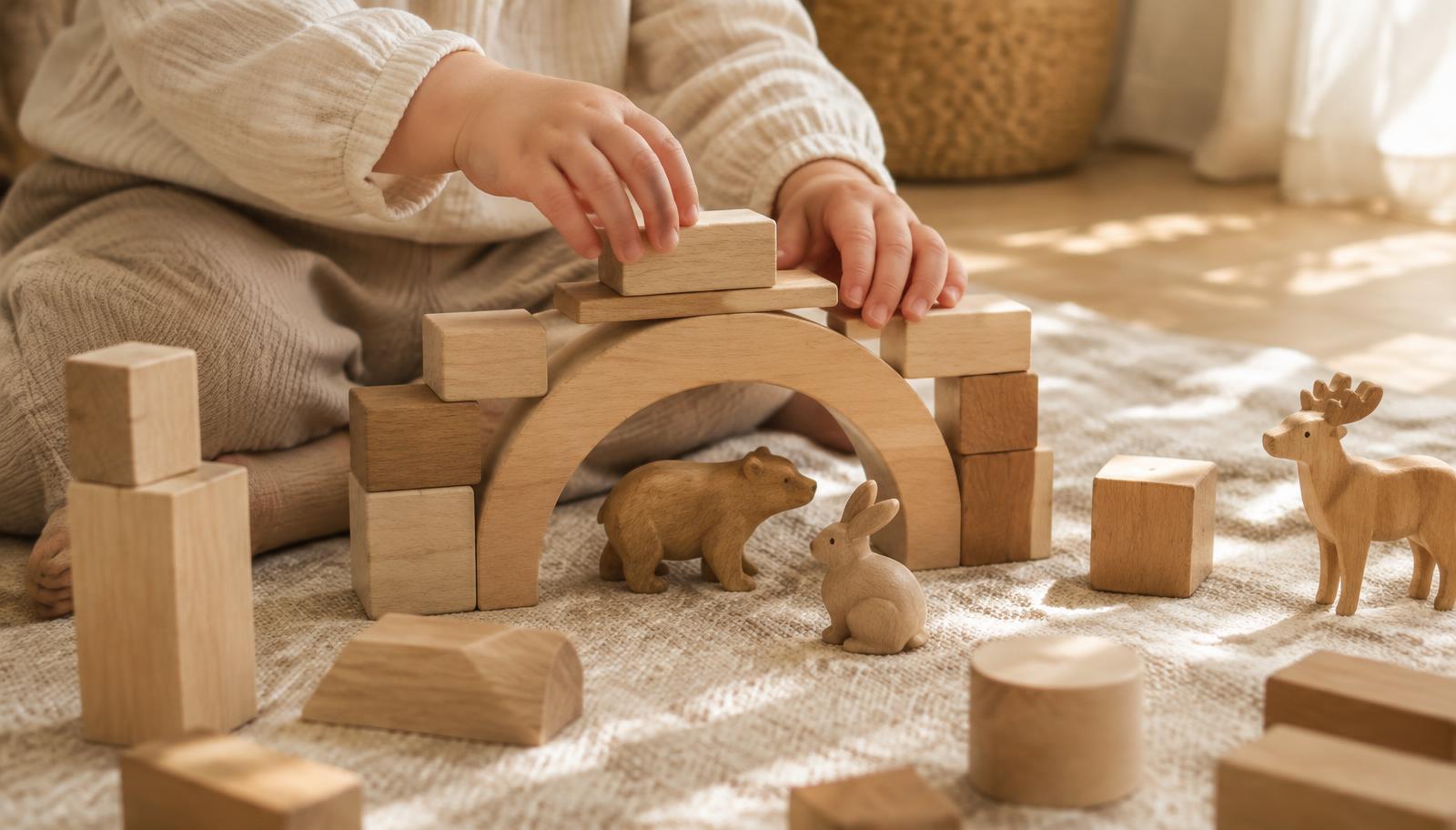
Early maths is not about worksheets or reciting numbers. For toddlers, it is about noticing that some things are the same and some are different, that one pile is bigger than another, and that the stairs go one, two, three. These ideas grow naturally from everyday play, and sorting and matching games are one of the simplest ways to support them.
This guide offers ideas for parents in Malta who want to bring a little early maths into play without turning it into a lesson.
Why sorting matters
When a toddler sorts objects into groups, by colour, size, shape or type, they are learning to compare, notice patterns and think logically. These are the foundations of mathematical thinking. Sorting also builds vocabulary: same, different, big, small, more, fewer, all, none.
Start with two groups
For young toddlers, begin with just two very different kinds of object. Shells and pine cones. Spoons and cups. Red blocks and blue blocks. Offer two bowls and show how you put each kind in its own bowl. Then let your child try. If they mix them up, that is fine. They are still exploring.
Sorting by colour
Colour sorting is a favourite. A wooden rainbow, coloured blocks or felt balls can be sorted into matching bowls. Our article on ways to play with a wooden rainbow includes colour games. Name colours casually as you play, without quizzing.
Sorting by size
Big and small are early ideas many toddlers enjoy. Stacking cups and rings are natural size-sorting toys. You can also sort big and small shoes, spoons or stones.
Matching games
Matching asks a child to find two things that are the same. Pairing socks from the washing basket is a perfect toddler job. Simple picture matching cards, or pairs of identical objects hidden in a bag, are fun too. Our guide to practical life for toddlers has more everyday tasks with hidden maths.
Natural treasures
Malta offers plenty of natural objects to sort: shells, smooth stones, carob pods, pine cones, leaves and sticks. A walk on the beach or through a park can end with a sorting game at home. Our articles on spring nature walks and loose parts play suggest what to collect. Choose items large enough to be safe for your child's age.
Counting in everyday life
Count stairs as you climb them. Count apples into a bag at the market. Count blocks as you stack them. Toddlers often recite numbers before they understand them, and that is a normal step. Over time, they begin to link each number with one object.
Patterns
Older toddlers and preschoolers enjoy simple patterns: red, blue, red, blue. Make a pattern with blocks or beads and see if your child can continue it. Clapping and stamping rhythms are patterns too, which links nicely to acoustic musical instruments.
Shape and space
Shape sorters and puzzles build an understanding of shape and space. Our guide to puzzles and shape sorters explains how to introduce them. Building with blocks also teaches balance, height and how shapes fit together.
Maths words to use naturally
- More and less
- Big, bigger, biggest
- Same and different
- Full and empty
- In, on, under, behind
- First, next, last
- Heavy and light
Use these words as you play, cook and tidy. You do not need to explain them. Children learn their meaning by hearing them used in context.
Pretend shops
A pretend shop brings counting, swapping and sorting together. Our article on pretend play for toddlers explains how to set one up simply.
Tidying up as maths
Tidying is sorting. Blocks in the block basket, books on the shelf, animals in their box. A calm, organised play space, as described in natural toy storage and setting up a Montessori toy shelf, makes this easier.
Keep it playful
Maths in the kitchen
The kitchen is full of early maths. Toddlers can count spoons into a drawer, match lids to containers, sort fruit by colour or size and help measure flour for baking. Ask simple questions as you go: which bowl is bigger, how many tomatoes do we need, is the cup full or empty? These small conversations turn ordinary tasks into learning without anyone noticing.
Follow their lead
Some toddlers love sorting and will spend a long time lining things up by colour. Others are more interested in pouring or building. Notice what your child enjoys and offer sorting ideas that fit. A child who loves vehicles might sort cars by colour. A child who loves animals might group them by where they live. When the game connects with their interests, it holds their attention for longer.
Toddlers learn best when they are interested and relaxed. If a sorting game becomes a struggle, move on. Come back to it another day. Little Curio is curating simple, plastic-free toys for sorting, stacking and early maths; see what is coming.