Stacking Toys for Babies and Toddlers: From First Rings to Tall Towers
Stacking looks simple, but it is one of the richest kinds of early play. Here is how it develops, and which stacking toys are worth having.
4 min read
Few toys have lasted as long as the stacking toy. Rings on a peg, cups that nest inside each other, blocks that balance one on top of another: versions of these have been in nurseries for generations. They have lasted because they work. Stacking looks simple, but it asks a small child to plan, balance, compare sizes, control their hands and cope when things fall down.
This guide is for parents in Malta who want to choose one or two good stacking toys and understand how stacking play grows from the first months to the preschool years. As always, every child develops at their own pace, so treat the ages here as loose guides.
Why stacking matters
When a child places one thing on top of another, they are learning about size, weight, balance and gravity. They are practising the careful release of an object, which is harder than it looks. They learn that a big ring goes at the bottom and a small one at the top, which is an early idea of order and comparison. And when the tower topples, they learn to try again. Our guide to fine motor skills before preschool explains why these small hand movements matter so much.
The first stage: knocking down
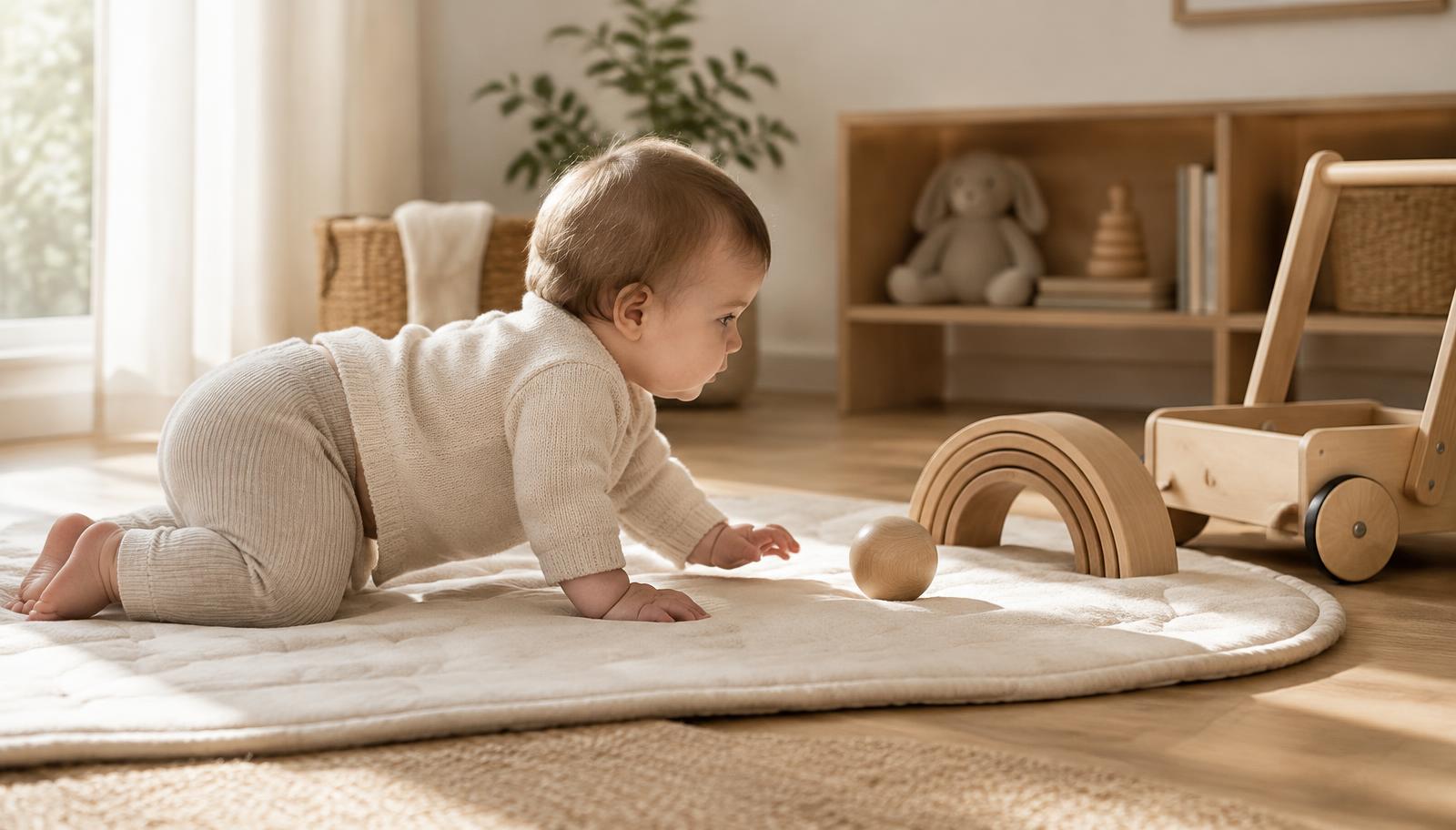
Most babies enjoy knocking towers down long before they can build one. From around six to nine months, many babies will happily swipe at a tower of soft blocks or stacking cups and watch it tumble. That is not destruction; it is cause and effect, explored in our article on cause and effect toys without batteries. For a while, you are the builder and your baby is the demolition crew. Enjoy it.
Nesting cups: the most versatile stacker
If you only buy one stacking toy, nesting cups are hard to beat. They stack into a tower, nest inside each other, hold water in the bath, scoop sand at the beach and fill with treasures in a sensory bin. Babies can mouth them, toddlers can sort them and preschoolers can count them. Look for cups made from natural rubber, wood or another plastic-free material, and check that the smallest cup is too large to be a choking hazard. They are wonderful in a plastic-free bath time routine too.
Ring stackers
The classic ring stacker, with graded rings on a central peg, suits many children from around their first birthday. At first, toddlers simply take the rings off, which is the easier half. Putting them back on a peg needs more control. Later, they begin to notice size and try to put them in order. Do not correct the order too quickly. A toddler who puts the small ring at the bottom and sees the big ring wobble on top is learning more than one who is told the right answer.
Blocks
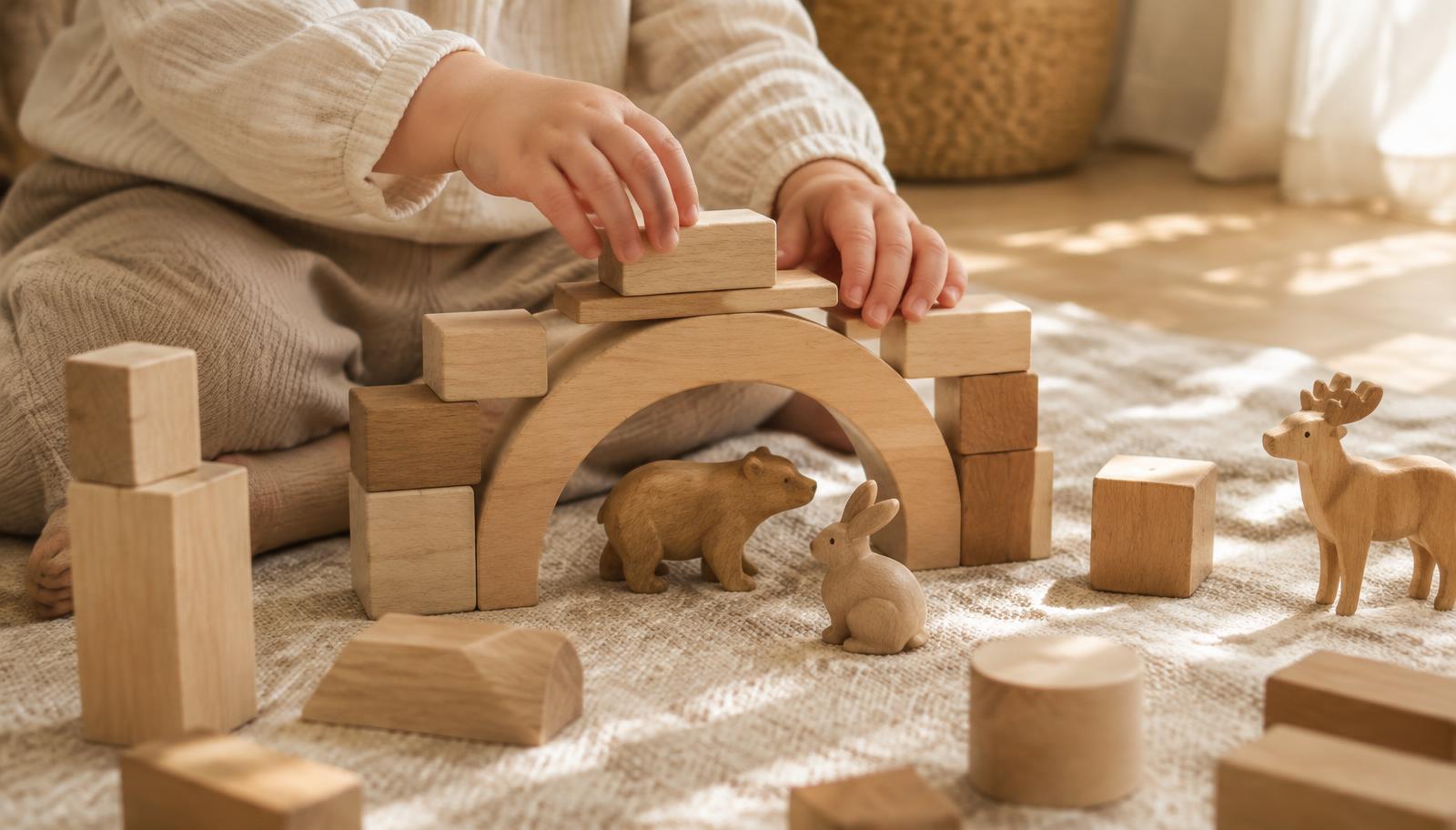
Simple wooden blocks are the next step and they never really stop being useful. Toddlers start by stacking two or three. By three, many will build towers, walls, bridges and roads. Our parent's guide to wooden building blocks looks at which sets to choose and how many you really need.
Rainbow stackers and balancing toys
A wooden rainbow can be a stacker, a tunnel, a bridge, a cradle for a doll or a set of arches for small animals. It is one of the most open-ended stacking toys there is. Our article on ways to play with a wooden rainbow has fifteen ideas. Balancing stones and stacking pebbles, made from wood or felt, suit older toddlers who enjoy a gentle challenge.
How to introduce a stacking toy
Sit on the floor beside your child. Take the pieces apart slowly. Put them back together slowly. Then hand one piece over and wait. Toddlers learn a great deal by watching calm, deliberate movements, which is why our guide to setting up a Montessori toy shelf suggests showing rather than explaining. If your child loses interest, put the toy away for a week. It often feels new when it comes back, especially as part of a toy rotation.
When towers fall
Toddlers can find falling towers frustrating, especially when they are tired. Name the feeling, offer to help hold the bottom, or suggest building it again together. Some children find it easier to stack on a rug than on smooth Maltese tiles, where pieces slide. A wooden tray gives a firm, flat base too.
What to look for
- Solid, smooth wood or natural rubber
- Pieces too large to swallow for children under three
- Safe, minimal finishes
- A size that suits small hands
- Something that can be used in more than one way
Stacking and early maths
Stacking naturally leads to counting, comparing and ordering: one, two, three blocks; this one is taller; that one is the biggest. These are the foundations of early maths, explored further in our article on sorting and matching games. You do not need to turn play into a lesson. Simply use the words naturally as you play together.
A good gift
Stacking toys make lovely, practical gifts for first birthdays, christenings and Christmas. Our best wooden toys for one year olds and gifts for new parents have more ideas. Little Curio is curating a small collection of plastic-free stacking toys for families in Malta; see what is coming to the shop.