A Parent's Guide to Wooden Building Blocks: Which Sets, How Many and Why
Blocks might be the most useful toy a child ever owns. Here is how to choose a set that will last from first birthday to school age.
4 min read
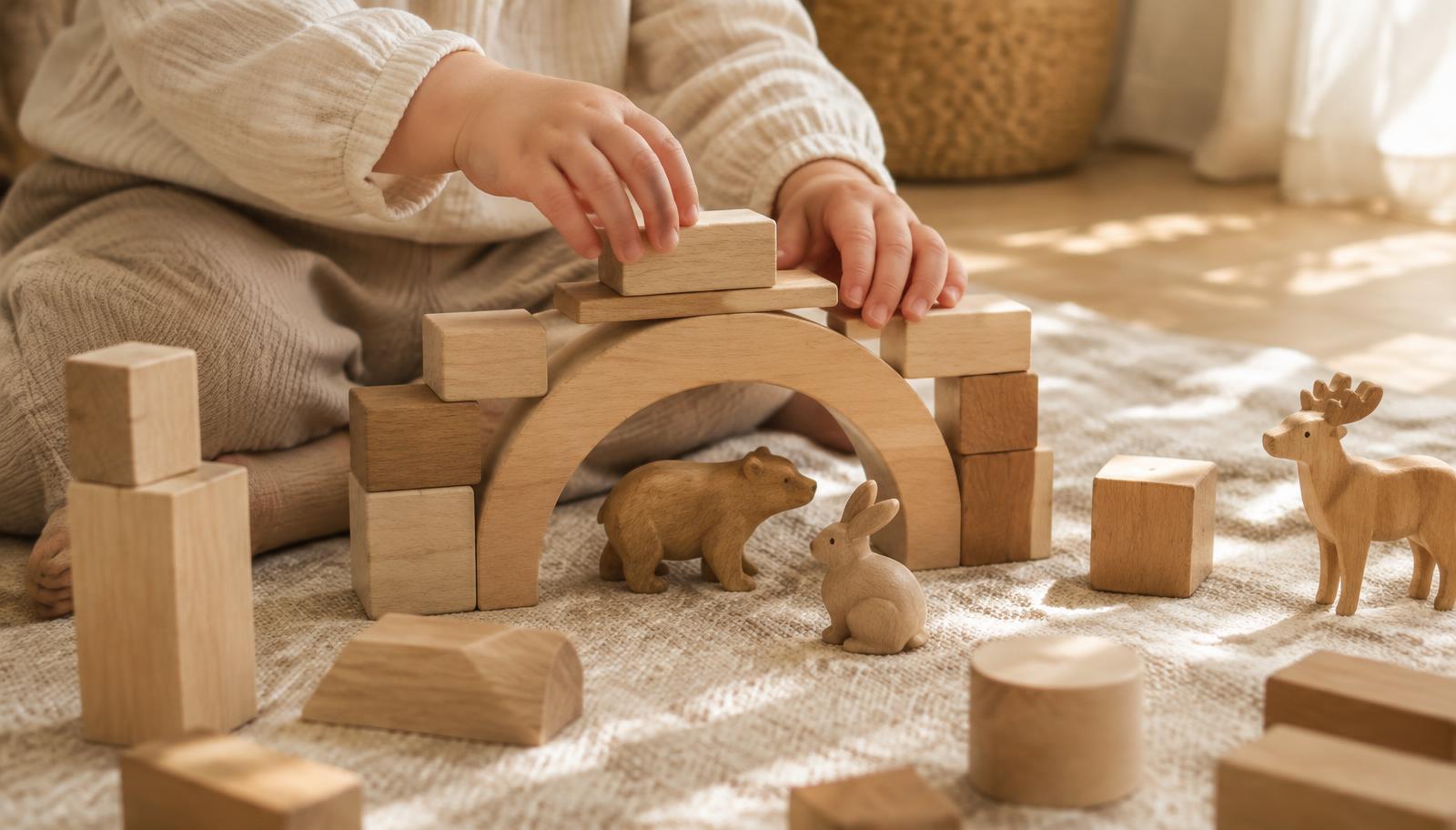
If you could choose only one toy to last from the first birthday to the first years of school, many early years educators would choose a set of wooden blocks. Blocks are stacked by babies, lined up by toddlers, built into towers by preschoolers and turned into whole cities by older children. They never run out of uses.
This guide helps parents in Malta choose a set, decide how many blocks they really need and understand how block play develops.
Why blocks are so valuable
Block play builds hand control, balance, spatial awareness and early maths. It invites problem solving: why did the tower fall, how can I make the bridge longer? It supports imagination when blocks become houses, roads or castles. And it can be calm and absorbing, perfect for independent play. Our article on the quiet power of open-ended play explains why toys like these hold children's attention.
Types of block sets
- Unit blocks: plain wooden blocks in mathematically related sizes, such as a unit, a double unit and a half unit
- Cubes: simple same-size blocks, easy for young toddlers
- Coloured blocks: painted or stained, good for colour play
- Natural shapes: arches, cylinders, triangles and tree blocks
- Soft blocks: fabric or rubber for young babies
Unit blocks are a classic in early years settings because the sizes relate to each other: two small blocks equal one longer one. This helps children discover balance and measurement naturally.
How many blocks do you need?
For a young toddler, a small set of ten to twenty blocks is plenty. As children grow, they often want more to build bigger structures. A set of forty to sixty blocks suits many preschool children. You can add to a set over time, which makes blocks a good gift for grandparents, godparents or aunts and uncles to contribute to. See our group gift guide.
Natural wood or colour?
Plain wood is calm, beautiful and endlessly versatile. Coloured blocks add interest for colour games, as explored in sorting and matching games. A mix often works well. If you choose coloured blocks, look for water-based, non-toxic finishes. Our article on natural wood and minimally dyed toys explains what to look for.
How block play develops
Children tend to move through stages. First, they carry and explore blocks. Then they stack and line them up. Next come bridges, enclosures and patterns. Later, children build structures with names and stories: a house, a garage, a zoo. Each stage is valuable. Our guide to stacking toys covers the earliest steps.
Blocks and small world play
Blocks combine beautifully with small figures. A few wooden animals can turn a block tower into a farm, a zoo or a forest. Add play silks for rivers and fields. Our article on small world play has more ideas.
A good building surface
Blocks are easier to build with on a firm, flat surface. Maltese tiled floors are ideal for stability, but blocks can be noisy when they fall. A low-pile rug or a large wooden board helps. Leave buildings standing for a while if you can, so children can return to them.
Joining in
Sit beside your child and build too. Describe what you are doing: I am putting this long block across the top. Ask open questions: what could we build next? Resist the urge to build for them or fix their structures. Their wobbly tower is their work.
Safety
Choose blocks with smooth edges and no splinters. For children under three, make sure blocks are too large to be a choking hazard. Teach that blocks are for building, not throwing, and offer soft balls for throwing instead, as described in our article on why toddlers love throwing.
Storing blocks
A low, open basket or a wooden crate makes blocks easy to find and tidy away. Some families sort blocks by shape on a shelf, which turns tidying into a sorting game. Our guide to natural toy storage has ideas.
Caring for blocks
Wooden blocks last for years with simple care. Wipe them with a damp cloth and dry well. Avoid soaking. In Malta's humid winters, store them away from damp walls. Our guide to cleaning wooden toys in humidity has step-by-step advice.
A toy worth passing on
Leaving buildings standing
Children often want to return to a structure they built earlier. If you have space, leave a building standing for a day or two, perhaps on a tray or a corner of the floor. Toddlers may add to it, play with it or knock it down with great delight. Being allowed to finish their work on their own timetable shows children that their play matters, which encourages deeper building next time.
Good blocks are rarely outgrown. When they are, they make a lovely hand-me-down. See our article on when to retire a toy. Little Curio is curating plastic-free wooden blocks for families in Malta; see what is coming.