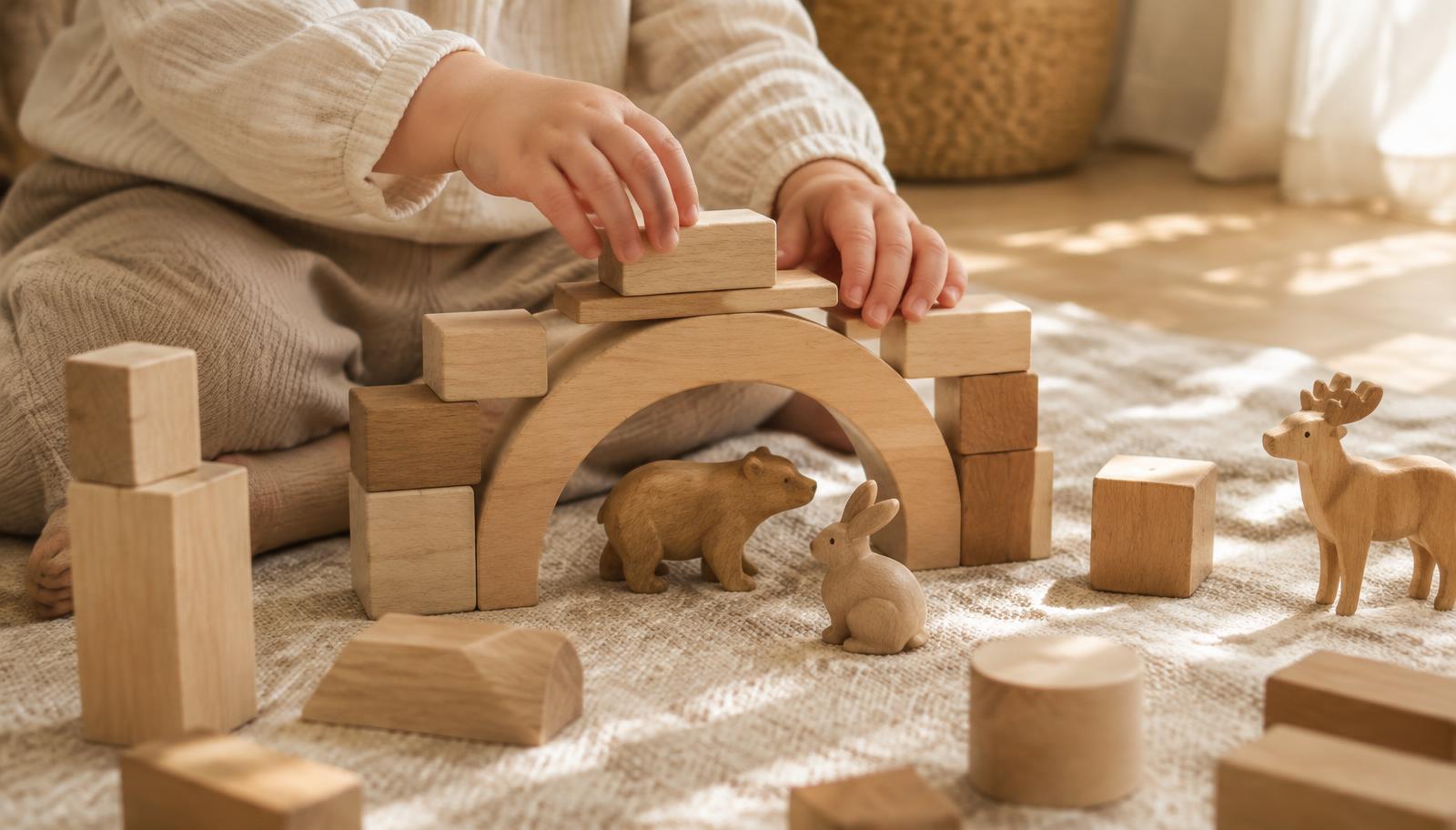
Why Natural Wood and Minimally Dyed Toys Matter for Babies Who Chew Everything
Babies explore the world with their mouths. Here is what we look for in natural wood and minimally dyed toys, and the questions worth asking.
4 min read
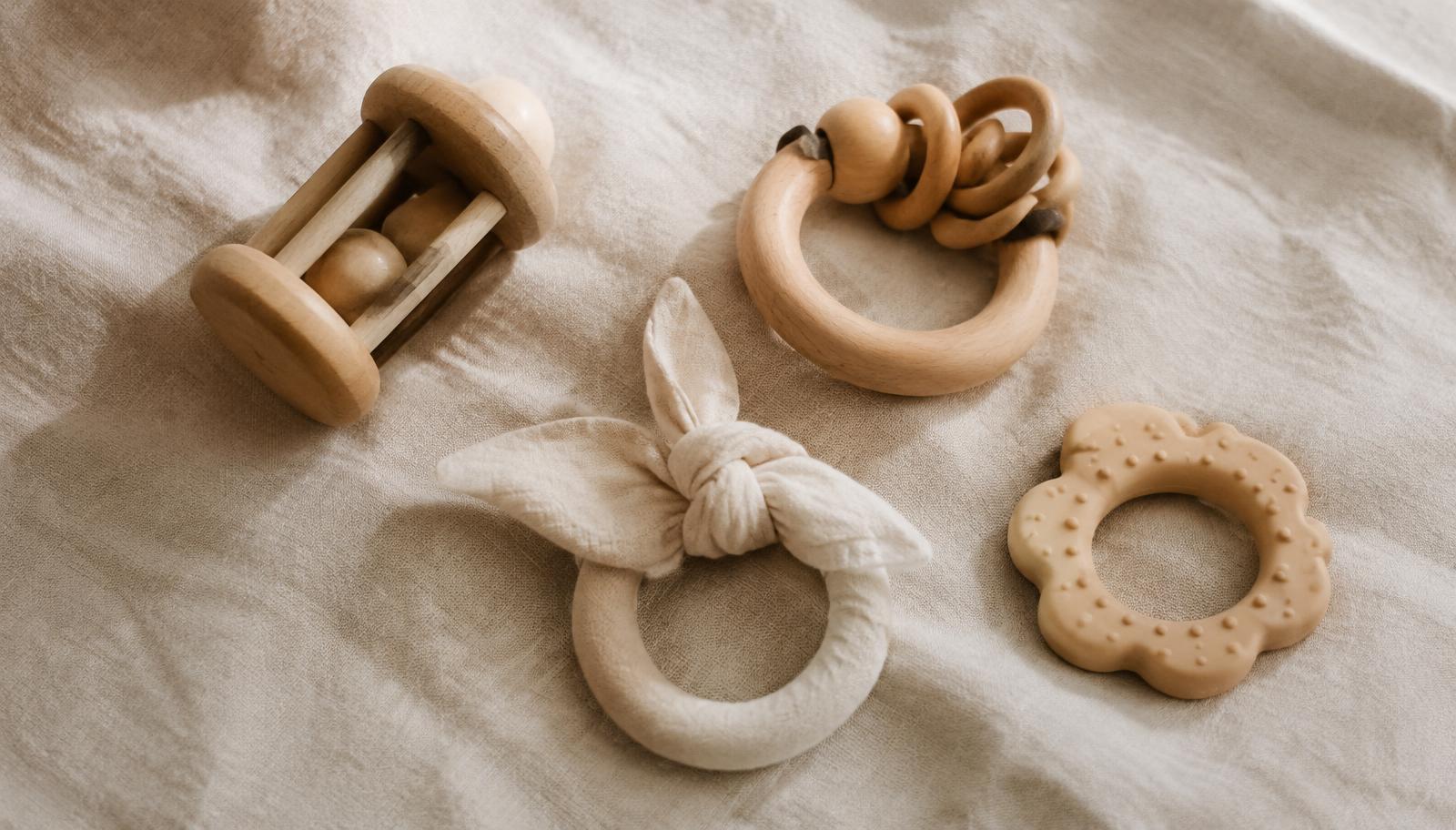
If you have a baby, you know that everything goes in their mouth. Toys, spoons, keys, the corner of a book, your fingers. Mouthing is a normal and important way for babies to explore, and it often increases when they are teething. It also means that what their toys are made of really matters to many parents.
At Little Curio, we choose plastic-free, minimally dyed toys, and this is one of the main reasons. Here is what we look for when choosing toys for babies who chew everything, and the questions we think are worth asking. This is general information, not medical advice, so speak to your doctor about any specific concerns.
Why babies mouth
The mouth is one of the most sensitive parts of a baby's body. When a baby mouths a toy, they learn about its shape, texture, temperature and hardness. It is a key part of sensory development, which we explore in our article on a screen-free sensory first year. Teething adds another reason: chewing can soothe sore gums.
What we mean by natural wood
By natural wood, we mean solid wood that has been left unfinished or finished simply. Hardwoods such as beech and maple are popular for baby toys because they are dense, smooth and less prone to splintering. A well-made wooden toy should feel smooth all over, with rounded edges and no rough patches.
What we mean by minimally dyed
Colour is lovely, and babies do respond to it. But many toys are heavily painted or coated. We prefer toys that use colour sparingly, with water-based stains, plant-based or food-grade dyes, or simply the natural colour of the wood. This means fewer layers of finish on the surfaces babies chew.
Safety standards in Europe
In Malta and across the European Union, toys must meet strict safety rules. Look for the CE mark, which shows the manufacturer declares the toy meets EU requirements, and for conformity with EN 71, the European toy safety standard. EN 71 covers things like small parts, sharp edges and, in one part, limits on the migration of certain elements from paints and materials. This is a baseline, and we would not choose a toy for little ones that did not meet it.
Questions worth asking before you buy
- What type of wood is it?
- Is it painted, stained, oiled or untreated?
- What kind of paint or dye is used?
- Does it carry a CE mark and meet EN 71?
- Are there any small parts that could come loose?
- Where was it made?
A reputable maker or shop should be happy to answer. If they cannot, that tells you something.
Finishes we like
Many natural wooden toys are finished with oils or waxes such as beeswax or plant oils. These protect the wood while keeping the surface simple. Some babies have allergies, so if you have any concerns about specific ingredients, check before buying.
Other materials for mouthing
Wood is not the only natural option. Natural rubber teethers are soft and flexible, which many babies prefer for sore gums. Organic cotton and wool toys are soft and washable. We share more in our guide to plastic-free teethers and rattles and natural teething relief.
Why we avoid plastic for babies
Plastic is not one material but many, and toys made from it vary a great deal. Some parents prefer to avoid it for toys babies chew, and for environmental reasons. Plastic also tends to feel the same everywhere: light, smooth, the same temperature. Natural materials offer babies a richer variety of textures and weights. Our article on wooden vs plastic toys explains the differences.
Keeping wooden toys safe
Wooden toys need a little care. Check them regularly for cracks or rough patches, especially if they have been chewed a lot. Do not soak them in water, which can cause swelling and splitting. Wipe them clean instead. Our wooden toy care guide explains how, with tips for Malta's humid climate.
When to retire a toy
If a wooden toy has deep cracks, splinters or loose parts, it is time to retire it from your baby's toy basket. A toy that has been loved to that point has done its job well.
Our approach
We are a small shop, curated by a mum, and we choose every piece with babies like our own in mind. We look for simple materials, minimal colour, sturdy construction and makers who are open about what they use. We would rather offer fewer things that we feel good about than a large range we cannot vouch for.
Buying online
Many families in Malta buy toys from overseas websites. It is worth being a little more careful here. Check that the seller ships products intended for the EU market, look for the CE mark on the toy and its packaging, and be wary of very cheap toys with no clear maker or safety information.
As we prepare our first collection for families in Malta, you can preview the shop and read about why we choose plastic-free.
More from the Journal: A Calm Corner for Big Feelings: Supporting Toddlers Through Tantrums, How to Set Up a Montessori Toy Shelf: What to Put Out and How Often to Change It.