Natural Teething Relief in Malta: Soothing Sore Gums the Gentle Way
Teething can be hard on everyone. Here are gentle, natural ways to help, and when to ask for advice.
4 min read
If your baby is drooling, chewing everything in sight, waking more at night and generally out of sorts, teething may well be the reason. It is a stage every family goes through, and it can be exhausting for everyone. The good news is that there are many gentle, natural ways to help your little one feel more comfortable.
Please note: I am a mum, not a doctor. This guide shares practical comfort ideas. If your baby has a high temperature, is unusually unwell or you are worried, always speak to your paediatrician, GP or pharmacist.
When teething starts
Most babies get their first tooth between four and ten months, though some start earlier and some later. The bottom front teeth usually come first. Teething continues on and off until around two and a half or three years, when the back molars arrive. Signs include drooling, chewing, red cheeks, swollen gums, irritability and disturbed sleep.
1. Something safe to chew
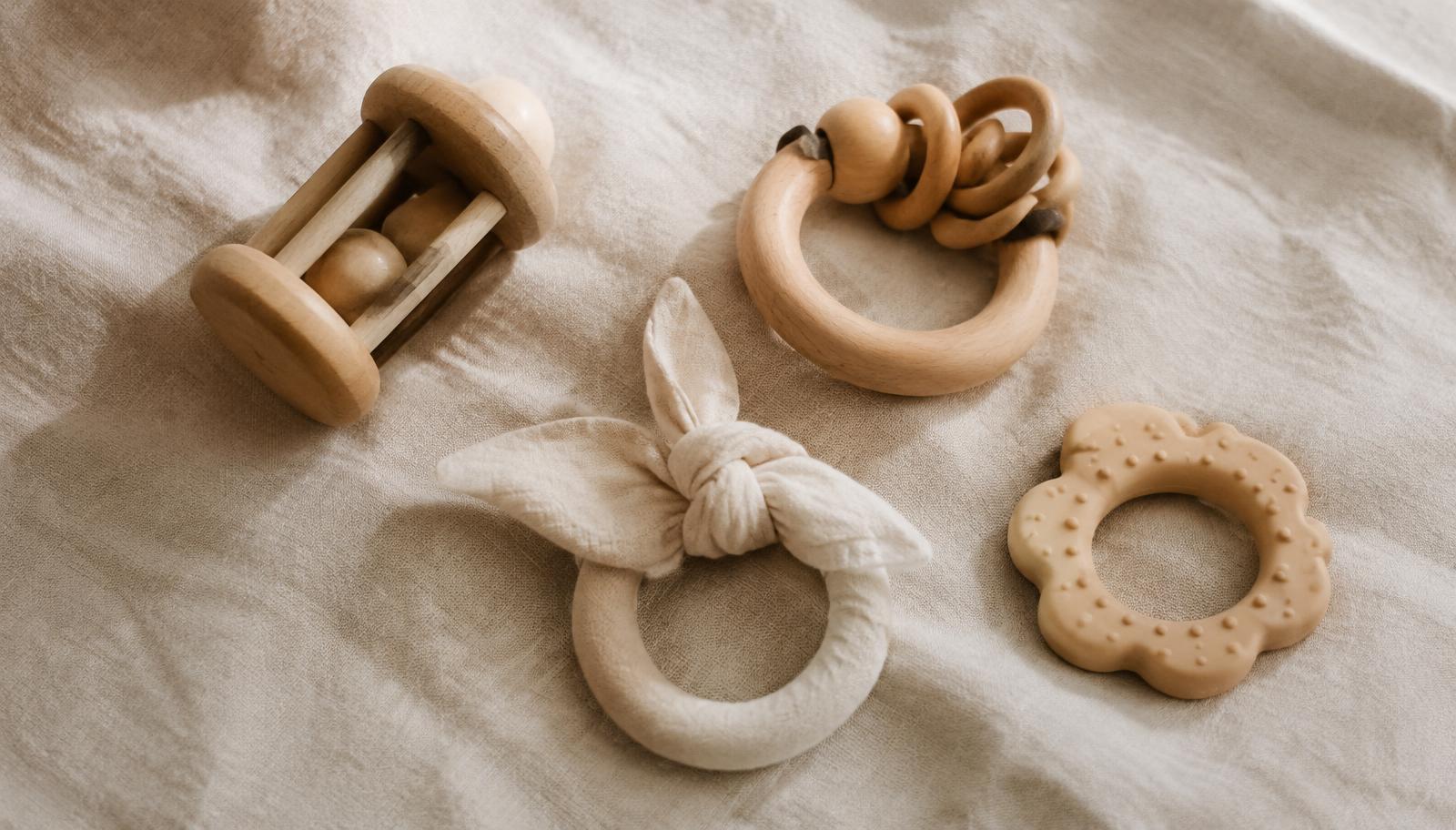
Babies instinctively chew to relieve pressure on their gums. Offering something safe and satisfying is the simplest help. Natural rubber teethers are soft yet firm. Untreated hardwood teethers, such as beech or maple, are smooth and dense. Organic cotton teethers can be dampened and chilled. Our guide to plastic-free teethers and rattles explains how to choose.
2. Cold, not frozen
Cold is soothing for sore gums. A clean, damp muslin or cotton cloth chilled in the fridge is a classic for good reason. Some teethers can also be chilled. Avoid freezing hard teethers, which can be too harsh on tender gums.
3. Gentle gum massage
With a clean finger, gently rub your baby's gums in small circles. Many babies find the pressure comforting, and it is a lovely moment of closeness.
4. Cool foods, if weaning
If your baby has started solids, cold foods such as chilled yoghurt or chilled fruit purée may help. Always stay close during eating. See our guide to Montessori weaning in Malta for more.
5. Comfort and closeness
Never underestimate the power of cuddles. Teething babies often want to be held more, fed more often and comforted at night. A carrier or sling can make this easier during the day. Slow walks outside, like those in our stroller walk guide, can also distract and calm.
6. Keep the chin dry
Drooling can cause a rash around the mouth and chin. Gently wipe and pat dry, and use a soft cotton bib. A simple barrier balm can help if the skin becomes irritated.
- Natural rubber, hardwood or cotton teether
- A chilled, damp muslin
- Gentle gum massage with a clean finger
- Cold foods if weaning
- Extra cuddles and closeness
- Soft cotton bibs to keep skin dry
What to avoid
Health authorities across Europe advise against amber teething necklaces and bracelets, because of the risk of choking and strangulation. Avoid any jewellery on babies. Be cautious with teething gels; some contain ingredients not recommended for young babies, so ask your pharmacist before using any. Avoid teethers filled with liquid that could leak, and anything small enough to be swallowed.
Teething is temporary. Comfort, patience and a good teether will get you through.
Teething in a Maltese summer
Hot weather can make teething babies even more unsettled. Keep them cool with light cotton clothing, shade and plenty of feeds. A chilled teether becomes even more welcome. Our article on keeping baby cool in a Maltese summer has more ideas for the hot months.
Caring for natural teethers
Wash wooden teethers with a damp cloth and mild soap; do not soak or boil them. Let them dry naturally. Natural rubber can be washed in warm soapy water. Cotton teethers can usually be machine washed. Check all teethers regularly and replace any that show cracks or wear.
When to get advice
Teething can cause mild discomfort and fussiness, but it should not cause high fever, diarrhoea or a baby who seems seriously unwell. If you notice these signs, contact your doctor. Trust your instincts.
Teething as part of a sensory stage
Interestingly, the urge to mouth everything is also how babies learn about the world. This is why treasure baskets and sensory toys for six month olds work so well at this age: they satisfy the need to chew while offering endless discovery.
A thoughtful gift
Questions parents often ask
Are wooden teethers hygienic? Dense hardwoods such as beech and maple are naturally smooth and, when kept clean and dry, are a lovely, simple option. Wipe them after use and let them air dry. How often should I replace a teether? Check it before every use and replace it at the first sign of cracks, splinters or wear. Can a teether help at night? Some babies find it comforting during night feeds, but never leave a teether, cord or anything around the neck in the cot. If sleep is very disrupted for a long period, speak to your doctor.
A natural teether paired with a soft rattle makes a lovely and practical gift for a new baby, christening or baby shower. Our christening and baby shower guide has more ideas, and you can explore our plastic-free collection for gentle pieces chosen by a mum in Malta.