Montessori Weaning in Malta: Low Tables, Real Materials and Confident Self-Feeding
Real bowls, a low table and Mediterranean flavours: how to make weaning calm, independent and joyful.
4 min read
Starting solids is one of the most exciting, and messiest, stages of the first year. If you are drawn to the Montessori approach, you may wonder how it applies to weaning. The answer is beautifully simple: trust your baby, offer real materials and encourage independence from the very first spoonful.
This guide shares how we approached Montessori weaning at home in Malta. As always, follow your health visitor's or paediatrician's guidance on when and how to start solids, especially around allergies and choking.
When to start
Most health guidance recommends starting solids at around six months, when your baby can sit up with support, has good head control, shows interest in food and has lost the tongue-thrust reflex. Every baby is different, so watch for signs of readiness rather than the calendar.
What makes weaning Montessori?
Montessori weaning is less about what food you give and more about how. It emphasises respect for the child, real materials, a prepared environment and gradual independence. It often overlaps with baby-led weaning, where babies feed themselves soft finger foods, though many families combine spoon-feeding and self-feeding. Our guide to Montessori toys from 0 to 18 months explains the wider approach.
The weaning table
One of the most distinctive Montessori ideas is a low weaning table and chair, where a baby who can sit steadily can sit with their feet on the floor. This gives stability and independence. As they grow, they can climb in and out themselves. Many families use a high chair at the family table for some meals and a weaning table for snacks. Either is fine; what matters is that your baby is upright, supported and part of mealtime.
Real materials
Montessori encourages real, breakable materials from early on: a small glass, a ceramic bowl, a metal spoon. This sounds alarming, but babies learn to handle things carefully when they are given real things. Start with small, sturdy pieces and stay close. Wooden bowls and plates are a lovely middle ground.
- A small, heavy ceramic or wooden bowl
- A short, child-sized metal or wooden spoon
- A tiny glass or open cup
- A cotton bib or apron
- A cloth napkin and damp cloth for wiping
The open cup
From around six months, babies can practise drinking from a small open cup, with lots of spills at first. It builds coordination quickly. A shot glass or very small cup works well.
Mediterranean first foods
Living in Malta, we are surrounded by wonderful first foods. Soft roasted vegetables like courgette, pumpkin and sweet potato. Ripe avocado. Soft-cooked broad beans, mashed, a nod to the classic bigilla. Steamed fish, flaked carefully for bones. Ricotta from a local farm. Peeled, soft fruits like peaches and figs in season. A drizzle of good olive oil. Avoid adding salt and honey for babies under one, and always cut food into safe shapes.
Involving baby in the kitchen
Babies love to watch. Let them sit nearby while you prepare food, smell herbs from the balcony pot, feel a cold lemon, hear the sizzle. As they become toddlers, they can wash vegetables, tear lettuce and stir. These are real tasks, at the heart of Montessori practical life.
Weaning is not just about food. It is about a baby discovering that they can do it themselves.
Embracing the mess
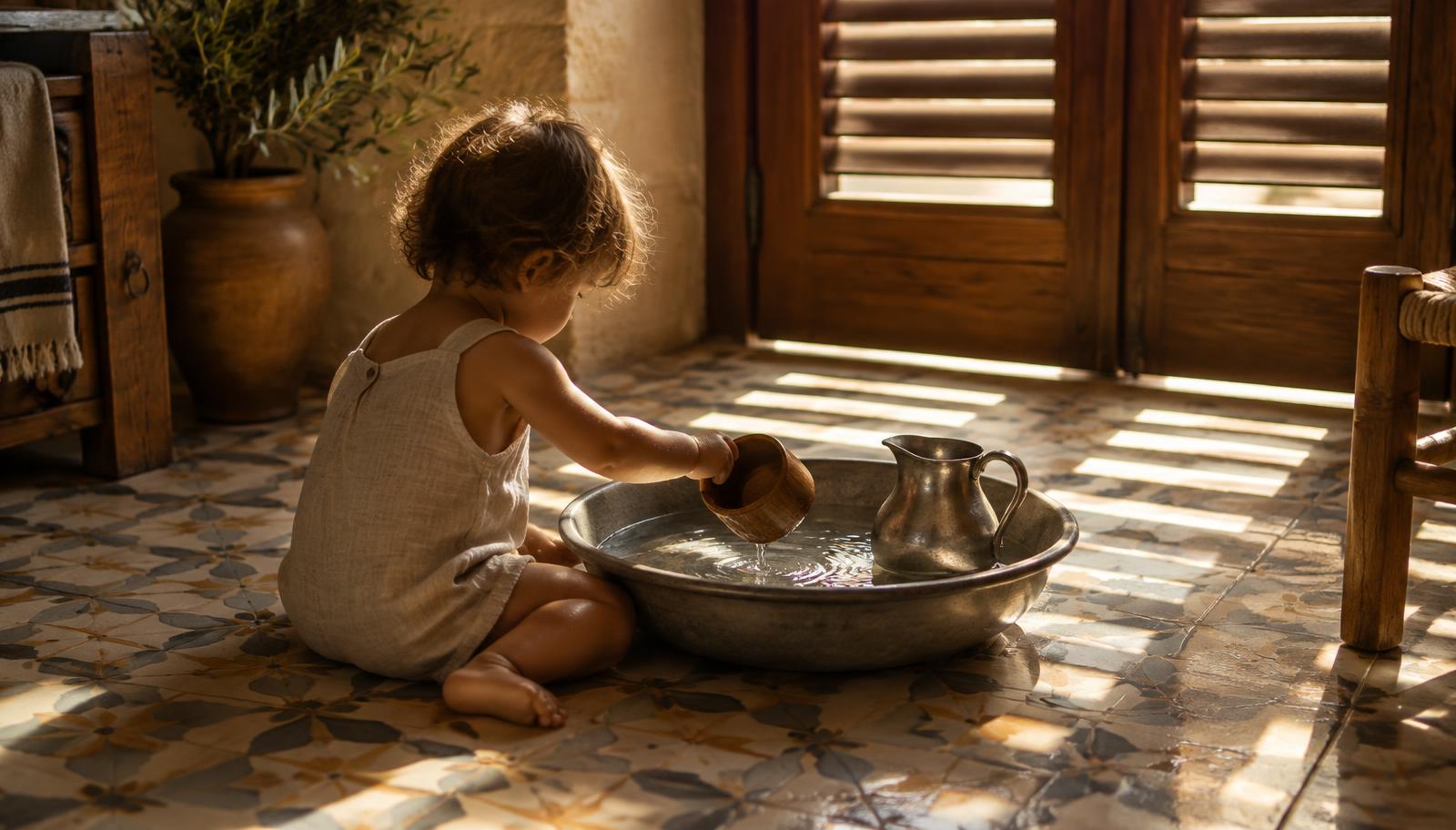
Self-feeding is messy. Accept it, plan for it and keep calm. A washable mat under the chair, a long-sleeved bib and a bath after dinner make life easier. Tiled floors, so common in Maltese homes, are a blessing here. Over time, children become remarkably skilled.
Teething and weaning
Teething often coincides with weaning. Cold foods like chilled yoghurt or soft fruit may help soothe gums. Our guide to natural teething relief has more ideas.
Eating together
Whenever possible, eat with your baby. Children learn by watching, and sharing a meal, even a simple one, builds connection. In Maltese families, Sunday lunch with nanna and nannu is a perfect opportunity for little ones to experience new flavours and the joy of the table.
Making it part of your home
A small, dedicated low shelf in the kitchen with your toddler's bowl, cup and cloth lets them help set the table and tidy up. This fits naturally with our ideas for raising a Montessori baby in a modern Maltese flat.
Weaning gifts
Questions parents often ask
Is it safe to give a baby a glass? With a very small, sturdy glass and close supervision, many families find babies handle it carefully. Start with a few sips and stay right beside them. What if my baby refuses solids? It is common for interest to come and go. Keep offering calmly, eat together and follow your baby's cues. Can I combine purées and finger foods? Absolutely. Many families do both. What matters most is a relaxed atmosphere, a safe seating position and allowing your baby to be part of the meal. If you have any concerns, your health visitor or paediatrician is always the best first call.
A beautiful wooden bowl and spoon set, a linen bib or a small glass make thoughtful gifts for a baby approaching six months. Pair them with a sensory toy like a treasure basket. See our baby shower gift ideas, our minimalist baby registry and the Little Curio shop.