Montessori Toys for Babies in Malta: A Clear Guide from 0 to 18 Months
What Montessori really means for babies, stage by stage, and the few toys worth having at home.
4 min read
Montessori has become one of those words that appears on everything, from wooden toys to bedsheets. If you are a new parent in Malta trying to work out what it actually means for a baby, and what you really need to buy, it can be confusing. This guide strips it back to the essentials, stage by stage, from birth to eighteen months.
I am not a Montessori teacher. I am a mum who fell in love with the ideas behind it and saw how calmly my own baby played when given a few simple things. Montessori-style is how I describe the toys at Little Curio: inspired by the approach, chosen for real homes.
What Montessori means for babies
At its heart, the Montessori approach is about respecting the child as a capable learner. For babies, that means a calm environment, freedom to move, real materials and toys that do one thing well, so the baby can concentrate and master it. It means observing what your baby is interested in, rather than filling every moment with entertainment.
You do not need a special room, or to spend a lot. Our guide to raising a Montessori baby in a modern Maltese flat shows how a corner of a living room can be enough, and the Maltese nursery covers setting up a calm sleep space.
0 to 3 months: looking and listening
Newborns see best at close range and are drawn to high contrast. Simple black and white cards, a face to look at and a mirror on the floor beside a movement mat are more than enough. Montessori mobiles, hung within view but out of reach, give something gentle to track. Above all, newborns need floor time on a firm mat, freedom to stretch and wriggle, and your voice.
3 to 6 months: reaching and grasping
As babies discover their hands, they begin to reach, bat and grasp. This is when a simple wooden rattle, a teething ring and objects of different textures become fascinating. Tummy time gets longer, and a ball placed just out of reach can be a great motivator. Our article on the best toys for six month olds goes deeper, and plastic-free teethers and rattles helps with choosing well.
6 to 9 months: exploring with every sense
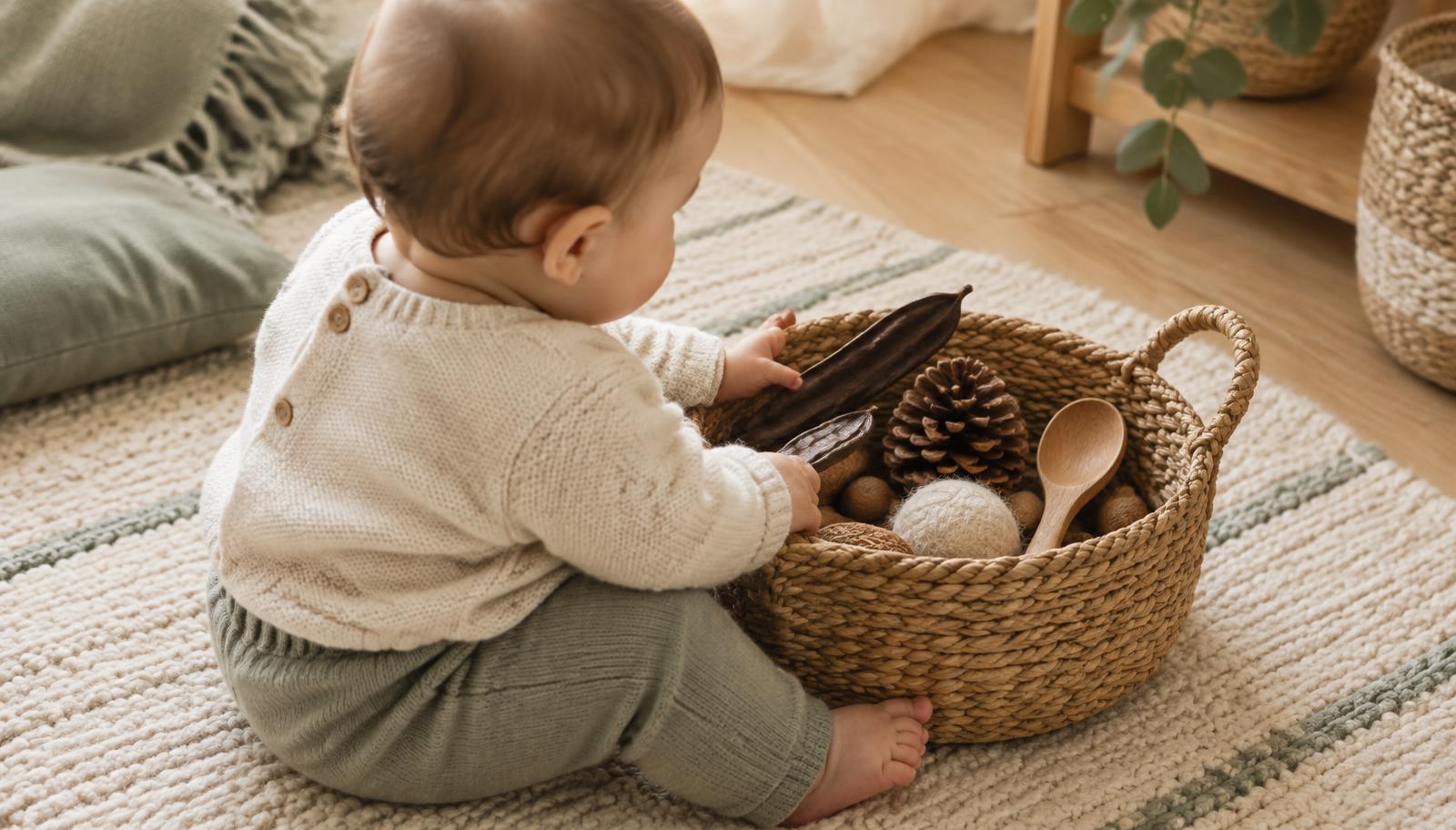
Sitting up opens a whole new world. This is the golden age of the treasure basket: a low basket filled with everyday natural objects to mouth, bang, drop and examine. Read our full guide to treasure baskets and heuristic play, or start with our Gathering Basket. Babies also love object permanence boxes, where a ball disappears and reappears, and simple stacking cups.
This is often when weaning begins, too, and Montessori ideas apply beautifully at the table. See Montessori weaning in Malta.
9 to 12 months: crawling, pulling up, posting
Babies on the move need space and a safe environment to explore. Low, stable furniture to pull up on, a push walker for the cruising stage and posting toys that challenge new hand skills all fit here. Our guide to wooden milestones walks through this stage in detail.
12 to 18 months: walking, stacking, early independence
Now come the big leaps: walking, first words, and a fierce desire to do things themselves. Rainbow stackers such as our Little Landscape Rainbow, simple puzzles with knobs, push and pull toys and first board books are all wonderful. Children also love to help with real tasks: wiping a table, carrying a small basket, watering a plant on the balcony. See our best wooden toys for one year olds for a complete list.
- 0 to 3 months: contrast cards, mirror, movement mat, gentle mobile
- 3 to 6 months: rattle, teething ring, textured objects, a ball
- 6 to 9 months: treasure basket, stacking cups, object permanence box
- 9 to 12 months: push walker, posting toys, low furniture
- 12 to 18 months: rainbow stacker, knob puzzles, board books, real tasks
The low shelf
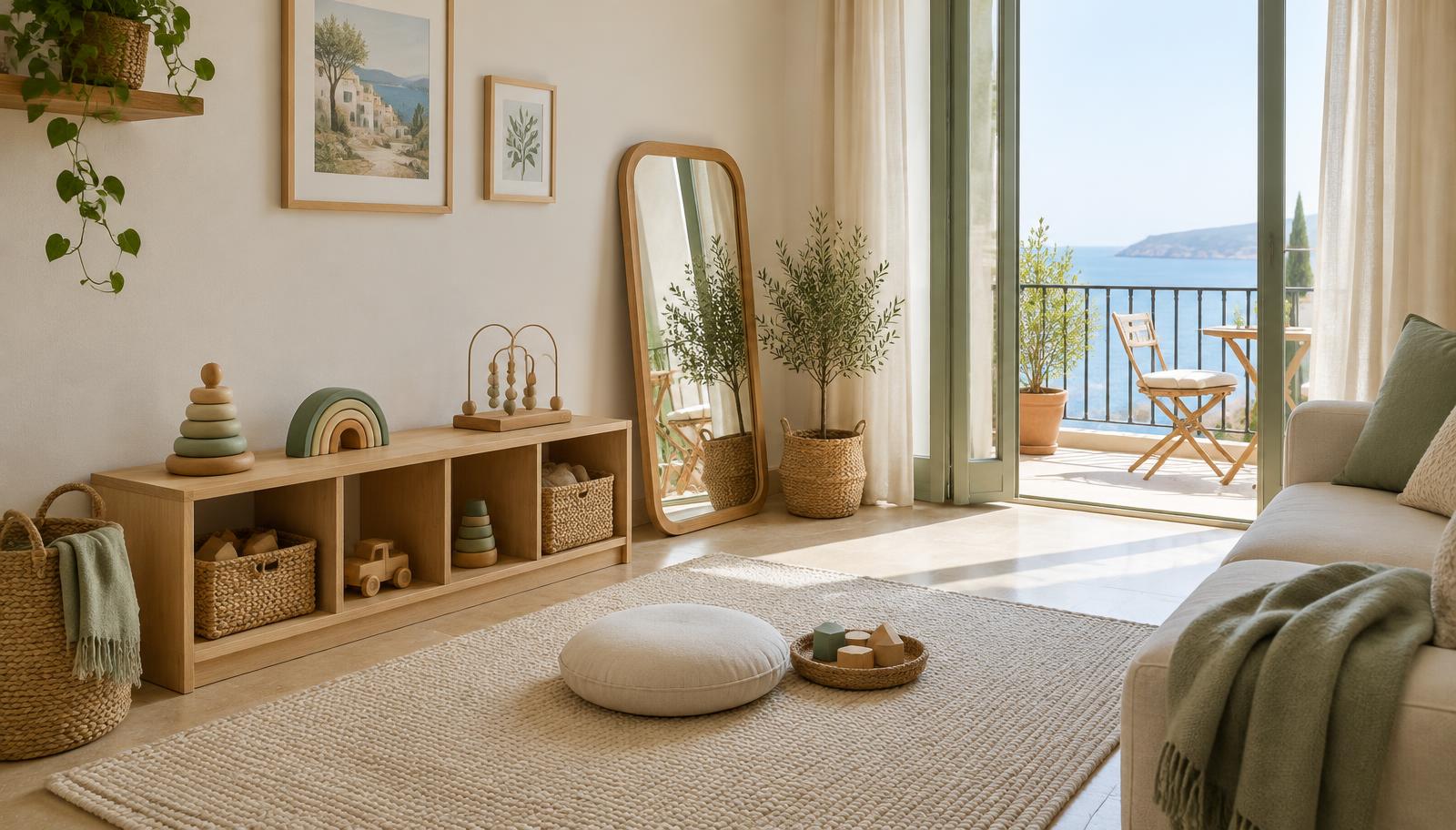
A Montessori home is often recognised by its low, open shelf. Rather than a toy box, a few toys are displayed at the child's height, each in its own place, so the baby can choose. Six to eight items is plenty. Swap them every week or two, following your child's interest. Our toy rotation guide explains how this works in small spaces.
Montessori is less about what you buy and more about what you leave out.
What to skip
You do not need baby walkers that hold a child upright before they can stand, toys that light up and talk, or bouncers used for long stretches. You also do not need everything labelled Montessori. A wooden spoon and a metal bowl are perfectly Montessori.
Bringing it together
The best Montessori setup is calm, simple and responsive to your own baby. Start small, observe and add slowly. If you are building a wish list before your baby arrives, our minimalist baby registry is a gentle place to begin, and everything in the Little Curio shop is chosen with these ideas in mind.