Wooden vs Plastic Toys: Why Maltese Parents Are Making the Switch
An honest, balanced comparison of wooden and plastic toys: safety, durability, play value and what our island climate does to both.
4 min read
Every parent eventually stands in front of two toys and wonders which one to buy. One is wooden, quiet and a little more expensive. The other is plastic, bright, cheaper and probably plays a song. It is a fair question, and the honest answer is more nuanced than a slogan. In this guide I want to compare wooden and plastic toys properly, the way I would explain it to a friend over coffee in Valletta, so you can decide what makes sense for your family.
I run a plastic-free shop, so you know where I lean. But I also know that real family life includes the odd plastic bath toy from Nanna, and that is fine. This is about choosing well most of the time, not about perfection.
Safety: what actually matters
Both wooden and plastic toys sold in the EU must meet the same toy safety standards, so neither is automatically safe or unsafe. What matters is the quality of the specific toy. With plastic, many parents prefer to avoid soft plastics of unknown origin, especially for babies who mouth everything. With wood, the questions are about finish and construction: is the paint water-based and child-safe, are the edges smooth, are there small parts that could come loose?
Wood has one quiet advantage: it is a single, natural material that you can see and understand. A beech rattle finished with beeswax is exactly what it looks like. For teething babies in particular, many parents feel more comfortable with natural materials, which we explore in our guides to plastic-free teethers and rattles and natural teething relief.
Durability in a Maltese climate
This is where our island makes a real difference. Strong UV, long hot summers and salty, humid air are hard on plastic. Leave a plastic ride-on on a roof terrace for a season and it fades and cracks. Bath toys trap water and grow mould. Beach spades snap at the first rock. A solid hardwood toy, kept indoors and wiped clean, can last for decades. Many of the wooden toys in Maltese homes today belonged to parents or even grandparents.
- Plastic: lighter, waterproof, often cheaper, but fades and becomes brittle in heat and sun
- Wood: heavier, warmer to the touch, ages gracefully, can be repaired and re-oiled
- Both: quality varies hugely, so buy from someone you trust
Play value: what holds a child's attention
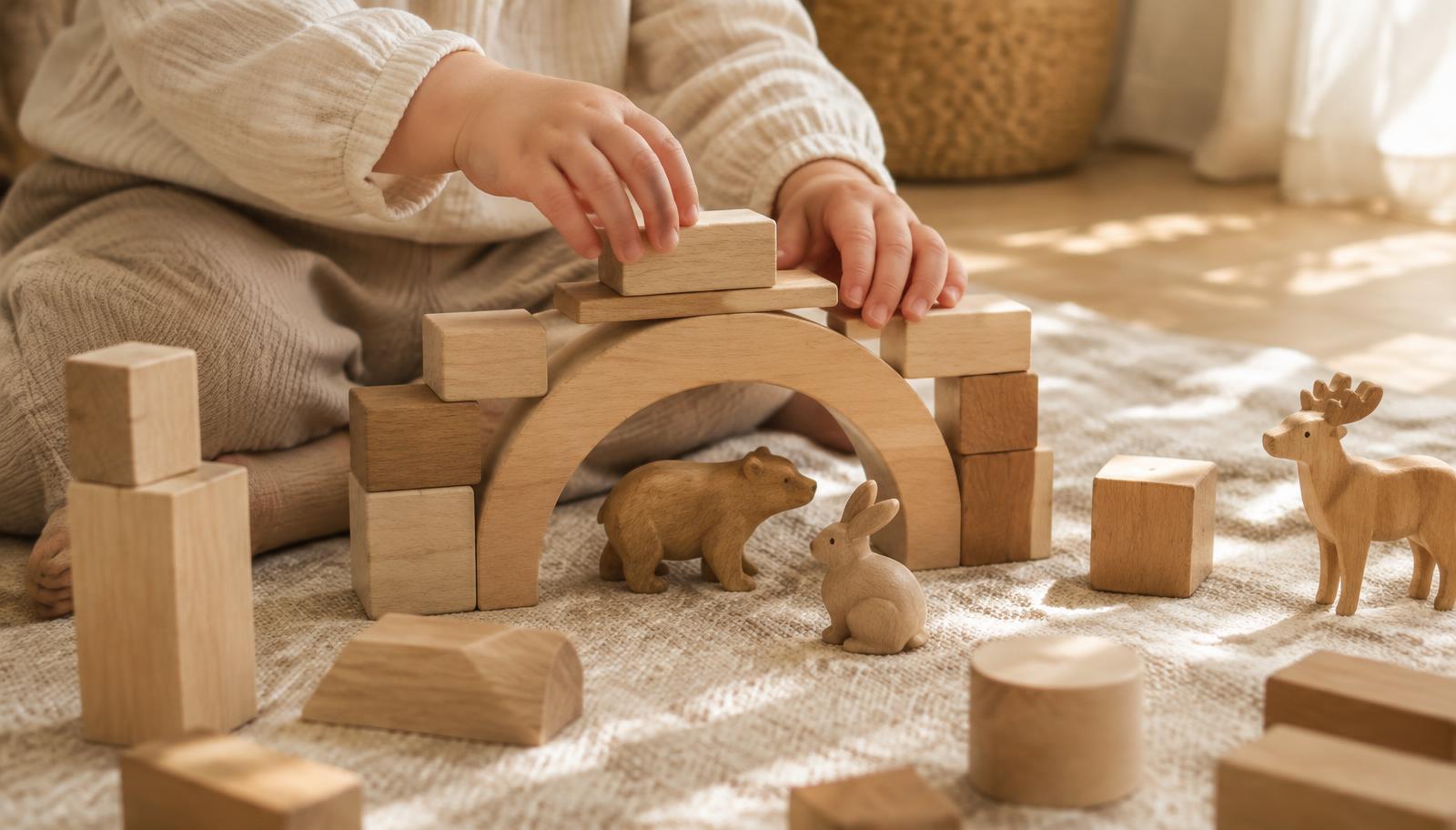
Many plastic toys are designed to do one thing: press a button, hear a sound. They are exciting for a few minutes, but once the child has worked out the trick, there is little left to discover. Wooden toys tend to be simpler, which sounds like a disadvantage but is usually the opposite. A set of blocks, a rainbow stacker or a few carved animals do nothing by themselves, so the child has to bring the ideas. That is where concentration, creativity and problem solving grow.
This is the heart of open-ended play, and it is why the toys that last are often the plainest. If you want specific ideas, see our guide to open-ended toys for toddlers or our small-world play ideas for two and three year olds.
The sensory difference
Wood has weight, temperature and grain. It feels different in a baby's hand from a smooth plastic shell. Babies learn through their senses, and natural materials such as wood, cotton, wool, metal and woven willow offer much more information than a single plastic texture. A treasure basket is built on exactly this idea.
Cost: cheap now, or cheaper over time?
A wooden toy usually costs more on the day. But if you think in terms of cost per year of play, the maths often changes. A thirty-euro plastic gadget that is abandoned within a month is expensive. A forty-five-euro rainbow stacker used for five years by two siblings is not. Buying fewer, better toys is also kinder to small homes, which we discuss in our toy rotation guide.
Waste on a small island
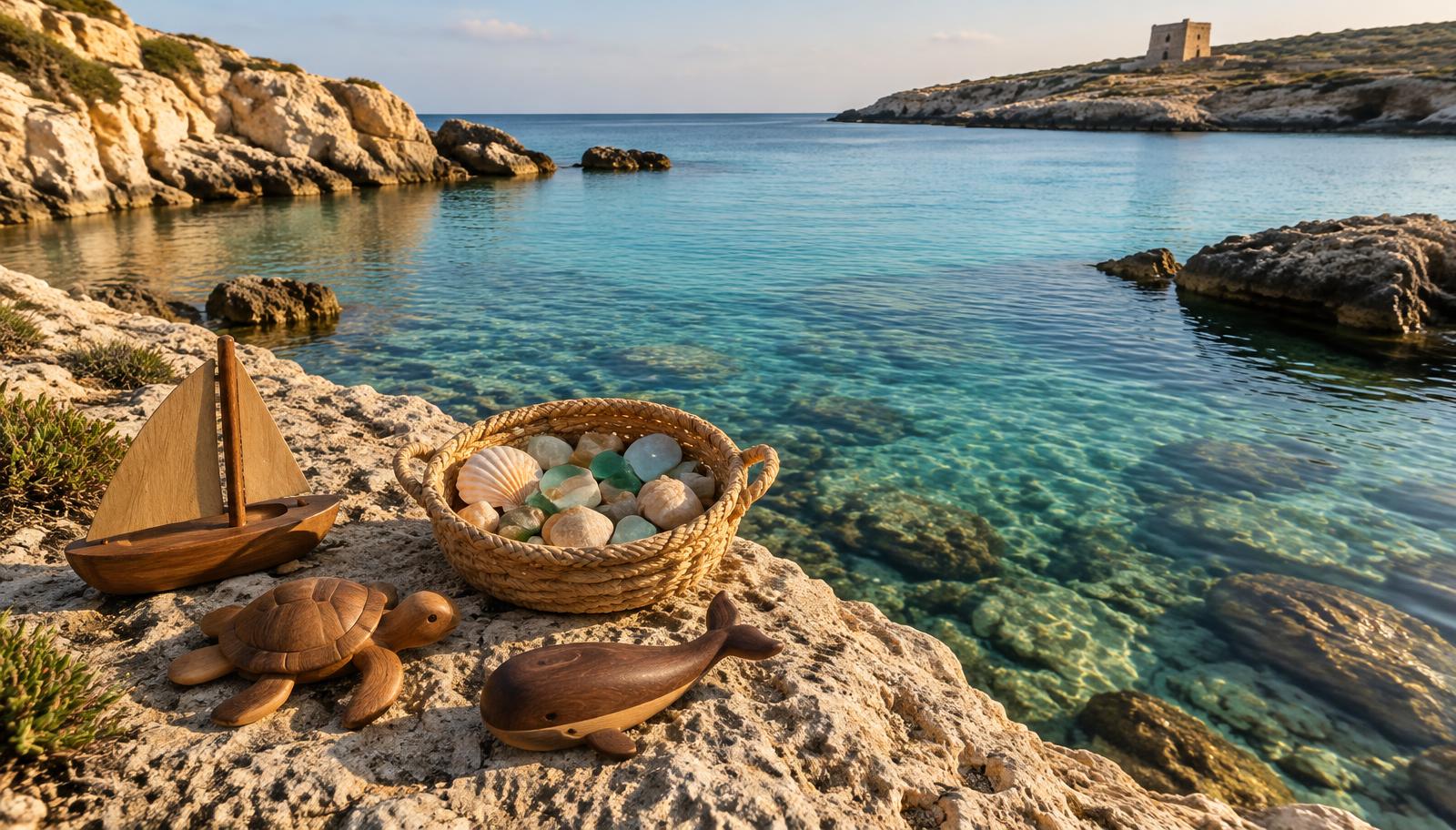
Malta has limited land and visible landfills. Mixed plastic toys with electronics are hard to recycle, and broken plastic often ends up in our bays. Wood is not a perfect material either, but well-made wooden toys tend to be kept, passed on and eventually returned to nature far more gently. We wrote about this more personally in why we choose plastic-free for Malta, and there are practical ideas for summer in plastic-free seaside play.
You do not need to throw out every plastic toy. Just let the next one you buy be something worth keeping.
How to make the switch gently
Start with the next toy you would have bought anyway. A birthday, a christening, Christmas. Choose one beautiful wooden piece instead of three cheaper ones. Ask grandparents and godparents if they would like a few ideas; most are delighted to have a list. Our Maltese godparent gift guide and first Christmas gift ideas are easy to share in a family WhatsApp group.
Then, slowly, let the plastic toys that break or are outgrown leave without replacement. Over a year or two, the balance of your playroom changes almost without effort.
So which is better?
For most families, most of the time, a small collection of well-made wooden and natural toys offers more play, lasts longer in our climate and creates less waste. Plastic still has its places, the bath and the beach among them, though even there are alternatives. If you would like to see what a carefully chosen plastic-free collection looks like, browse the Little Curio shop or start with our guide to wooden toys in Malta.