Open-Ended Toys for Busy Toddlers: How Blocks and Rainbows Build Focus
Why a few plain blocks hold a toddler's attention longer than any gadget, and how to set them up.
4 min read
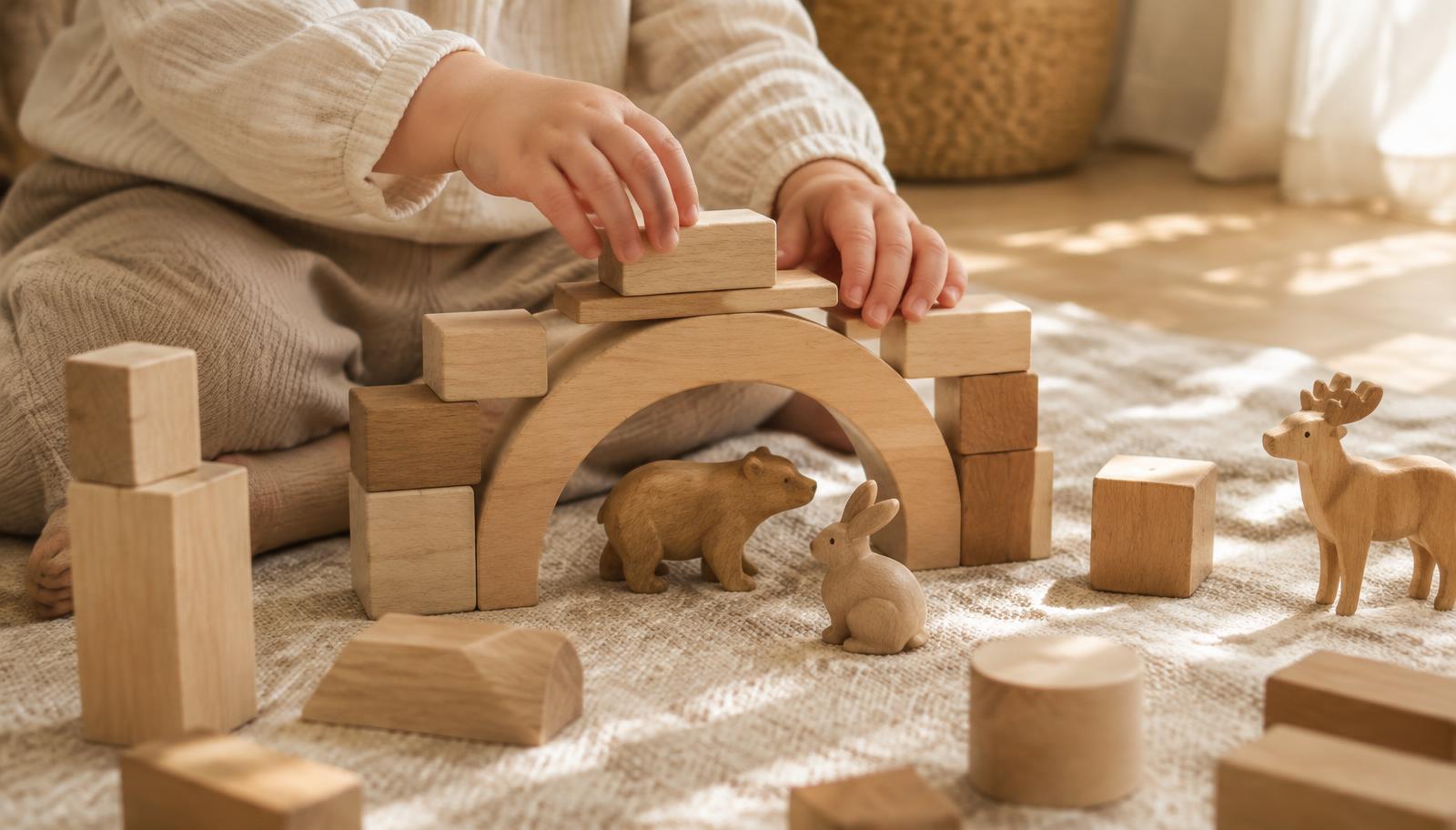
If you have a toddler, you know how quickly their attention moves. One moment they are fascinated, the next they are off to something else. So it can be surprising to watch a two year old spend twenty minutes building and rebuilding a tower of plain wooden blocks. That is the quiet power of open-ended toys, and it is why they are at the heart of everything we choose at Little Curio.
What is an open-ended toy?
An open-ended toy is one that can be used in many different ways, with no single right answer. A block can be a tower, a phone, a car, a wall or a piece of cake. A wooden rainbow can be a bridge, a tunnel, a cradle or a mountain range. Compare that with a closed toy, which has one function: press the button, hear the song. We first wrote about this in the quiet power of open-ended play.
Why open-ended toys build focus
Closed toys tend to hold attention briefly, because once the child has discovered what they do, there is nothing left to find. Open-ended toys offer endless new problems: how high can I build? What happens if I put this here? Can the animal fit through the tunnel? Each question invites concentration, experimentation and persistence. Over time, children practise focus the way adults practise a skill.
The best open-ended toys for toddlers
1. Wooden blocks
A good set of plain hardwood blocks is the single most versatile toy you can own. Start with a modest set of standard shapes and add more as your child grows. Blocks teach balance, gravity, shape, size and early maths, and they are used from one year to eight or nine.
2. A rainbow stacker
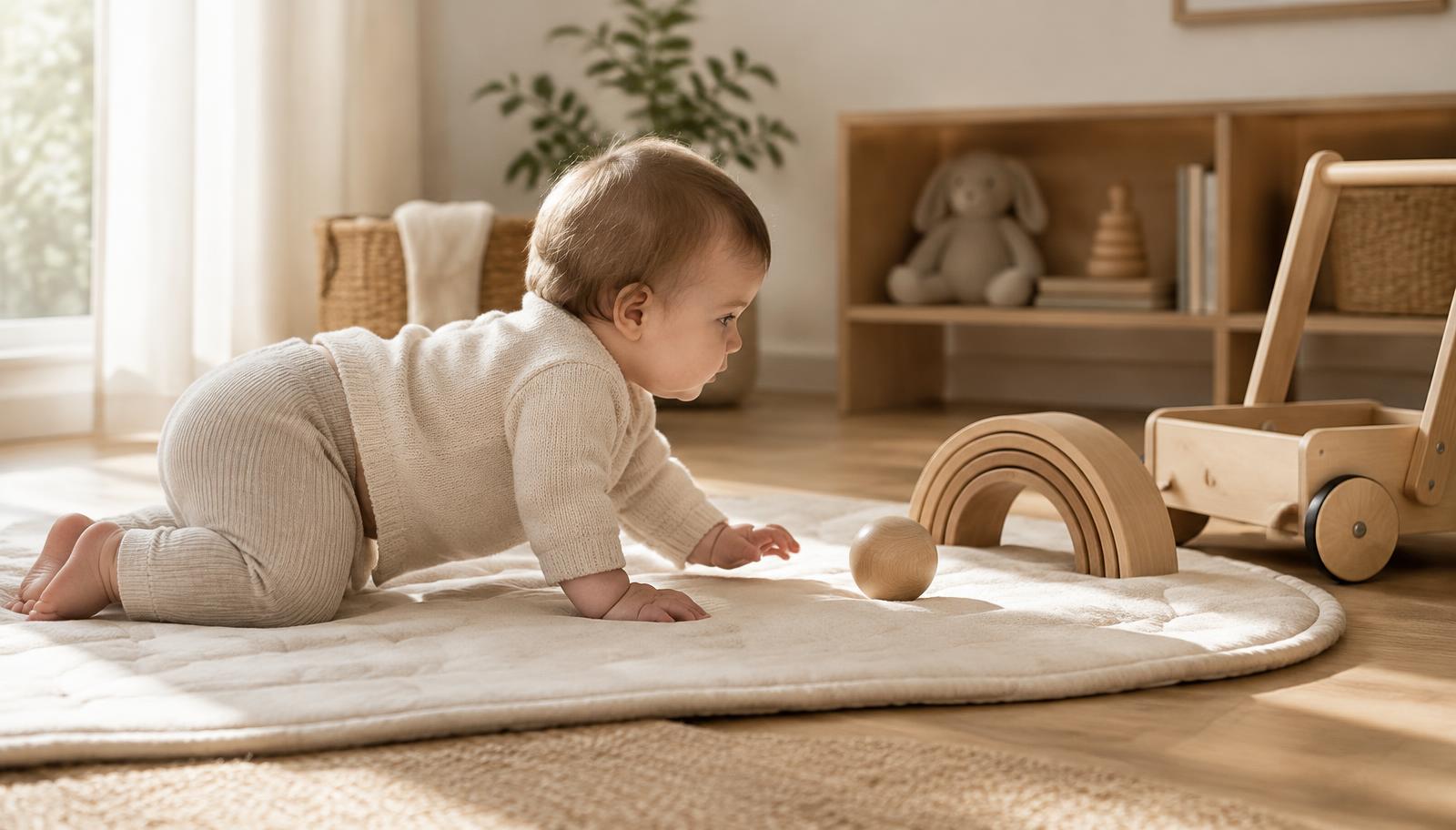
Rainbows are beloved for good reason. At one, they stack and rock. At two, they become bridges and tunnels. At three and beyond, they are landscapes, beds, fences and anything else imagination needs. Our Little Landscape Rainbow is made to last through all of these stages.
3. Carved animals and figures
Simple wooden animals add story to building. Suddenly the block tower is a zoo, the rainbow is a cave. Our Forest Friends Set pairs beautifully with blocks and rainbows. See our guide to small-world play for more.
4. Loose parts
Loose parts are collections of small natural or found objects: wooden rings, pine cones, shells, pebbles, corks, fabric scraps. For toddlers who no longer mouth everything, they are wonderful for sorting, arranging and pretend play. Collect them on walks in our Gathering Basket.
5. Play silks or fabrics
A few squares of cotton or silk can be a cape, a river, a picnic blanket, a hiding place. They are light, beautiful and take up almost no space.
- Plain hardwood blocks
- A rainbow stacker
- Carved animals and figures
- Natural loose parts
- Play fabrics in soft colours
How to set them up
Presentation matters. A pile of blocks dumped in a box is less inviting than a few arranged on a low shelf. Try placing a rainbow, a handful of blocks and two animals together on a tray, a little invitation to play. Then step back. You do not need to show your toddler what to do; the point is that they decide. Our guide to raising a Montessori baby in a Maltese flat has more on setting up a calm play space.
Open-ended toys do not entertain children. They give children something to think with.
Fewer, not more
Open-ended play thrives with fewer toys, not more. Too many choices overwhelm, and children flit from one to the next. A toy rotation system keeps a small selection out at a time and makes everything feel fresh.
What about screens and gadgets?
There is no need for guilt. But it is worth noticing how differently your child plays with a block compared with a tablet. Open-ended toys ask your child to bring the ideas. That is how creativity and focus grow. For more on making the most of time indoors, see screen-free rainy days in Malta.
Value over time
Open-ended toys often cost more upfront, but they last for years and serve siblings too. Our wooden vs plastic toys guide breaks down the long-term value.
As a gift
Questions parents often ask
My toddler just throws the blocks. Is that normal? Completely. Throwing, dropping and knocking down are how toddlers explore weight and cause and effect. Gently show where blocks can be thrown, perhaps into a basket, and keep offering. How many blocks do we need? A small set of twenty to thirty pieces is plenty to begin with. Can open-ended toys work for very active children? Yes, especially large blocks, rainbows to climb over and balance on carefully, and fabrics for dens. Movement and imagination go hand in hand at this age, and open-ended toys welcome both.
Blocks, a rainbow or a set of animals make outstanding birthday and Christmas gifts, especially for two year olds. See our second birthday gift ideas and browse the Little Curio collection for open-ended pieces made to be played with for years.