The Art of Independent Play: Why Simple Toys Help Toddlers Focus Longer
Independent play is not about leaving children alone. It is about giving them the space, time and simple toys to follow their own ideas.
4 min read
Every parent knows the feeling. You need ten minutes to make dinner, answer an email or drink a coffee while it is still hot, and your toddler needs you right now. Independent play, the ability to play contentedly on their own for a while, can feel like a distant dream.
But independent play is a skill that can grow, and the toys and space around a child make a real difference. This is not about leaving children alone or expecting them to entertain themselves for hours. It is about creating the conditions where they can follow their own ideas, concentrate and feel capable.
What independent play looks like
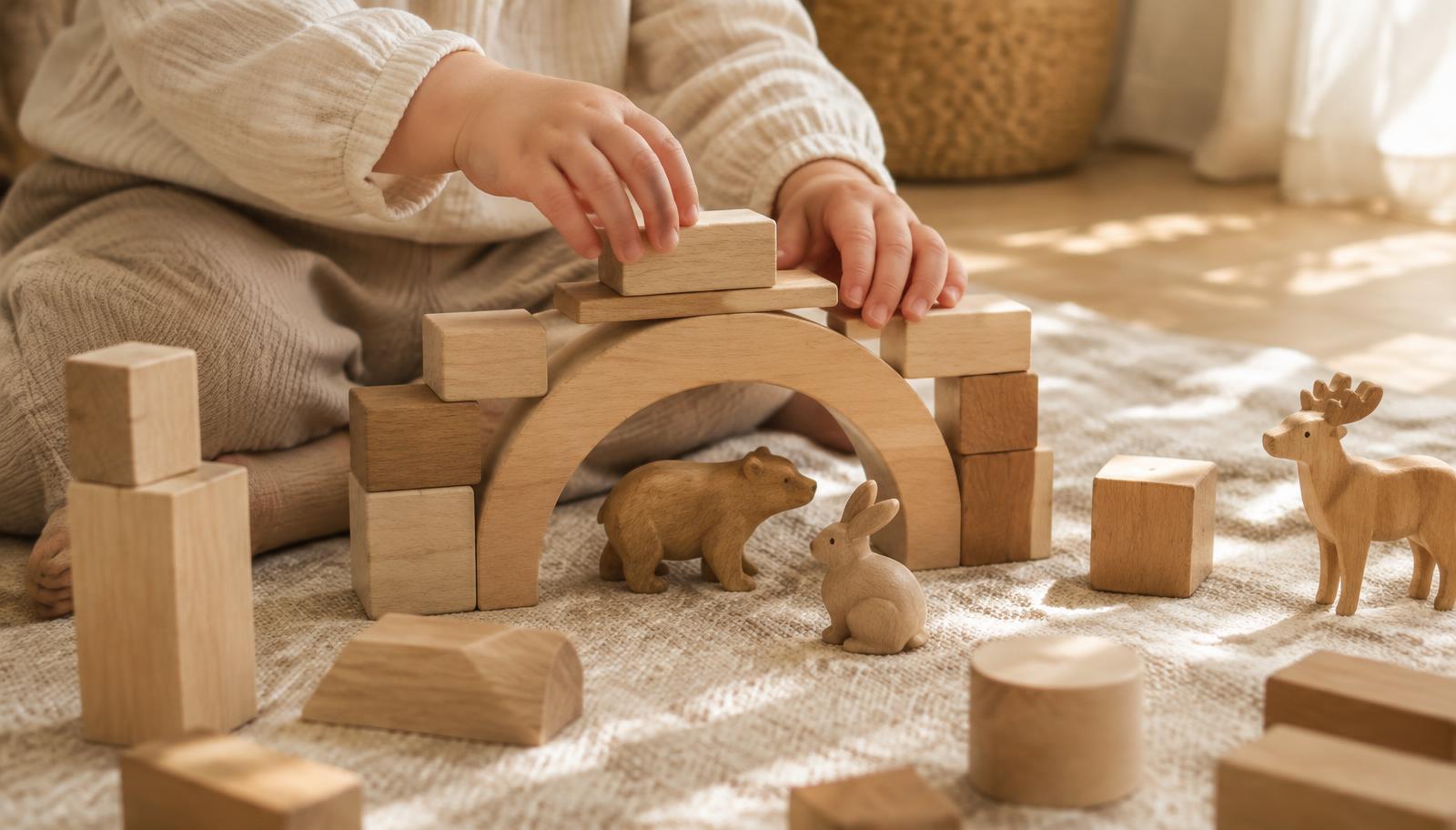
For a baby, independent play might be a few minutes on a mat, studying their hands or a wooden rattle while you sit nearby. For a toddler, it might be ten or twenty minutes stacking blocks, filling and emptying a basket, or arranging animals in a line. It grows slowly with age and practice.
Why simple toys work better
Many toys marketed to young children are designed to grab attention: flashing lights, music, buttons that make noises. These toys can be exciting at first, but they often do most of the work. The child presses a button and watches. Attention is captured, then quickly lost.
Simple, open-ended toys work differently. A set of wooden blocks does nothing on its own. The child has to decide what to do with it. That decision is where concentration begins. Our article on the quiet power of open-ended play explores this in depth.
Fewer toys, longer play
When too many toys are available, children tend to move quickly from one to another. With fewer choices, they settle and go deeper. A shelf with six to eight toys, rotated regularly, often leads to longer, calmer play than a full toy box. Our toy rotation guide shows how to set this up.
Create a yes space
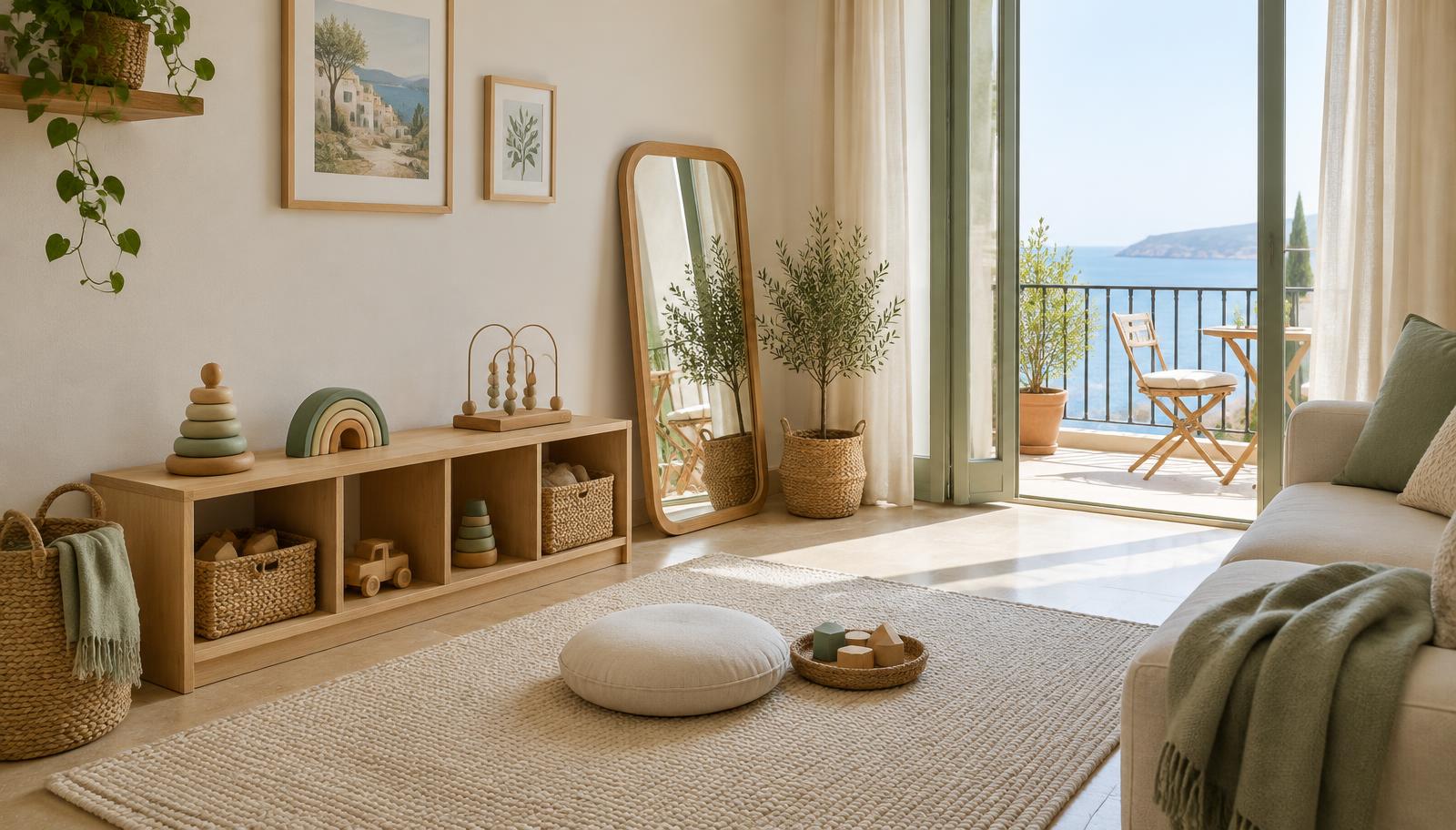
A yes space is an area where everything is safe for your child to touch and explore. They do not need to hear no. This might be a play corner, a gated area or a whole room. When children can explore freely, they relax into play, and you can relax too. See our guide to setting up a play corner in a small Maltese apartment.
Observe before you step in
When your child is playing happily, try not to interrupt, even with praise or questions. Sit nearby, watch and wait. If they are struggling with something, give them a moment before you help. Often they will work it out. This quiet confidence in their abilities is one of the greatest gifts we can give.
Start small
If your child is used to constant company, start with a few minutes. Sit nearby and stay present, but busy yourself with something quiet. Gradually increase the time and distance. Many children play longer on their own when they know you are close.
Toys that invite deep focus
- Wooden blocks and arches
- Stacking and nesting cups
- Simple puzzles
- A basket of loose parts
- Small wooden animals and figures
- Posting and threading toys
- Books on a low shelf
Loose parts are especially good for focus, because there are endless ways to use them. Our beginner's guide to loose parts play explains how to start.
The role of boredom
It is fine for children to feel a little bored. Boredom is often the moment just before creativity. Resist the urge to rush in with a new activity. Given a little time, many children will find something to do on their own.
Timing matters
Children play best when they are rested, fed and have had some connected time with you first. A child who has just had a cuddle and a story is far more likely to play happily alone than one who is tired or hungry. Fill their cup, then step back.
Independent play and screens
Screens can seem like an easy solution, but many parents find that children are more unsettled afterwards. Building independent play with simple toys takes more patience at first, but it pays off. For screen-free ideas, see our rainy day guide.
Patience and practice
Independent play does not happen overnight, and some children are naturally more sociable than others. Every child is different. Keep offering the time and space, with simple toys and a calm environment, and it will grow.
In a busy Maltese home
With grandparents popping in, cousins visiting and lunches that stretch all afternoon, quiet time can be rare. A small basket of familiar toys taken to a relative's house gives your child a calm anchor in a busy room, and a chance to settle into play on their own.
For more on choosing toys that last, read our guide to open-ended toys. Little Curio is a small Malta-based shop curated by a mum, choosing simple, plastic-free toys designed for exactly this kind of play. You can preview the shop as we get ready to open.
More from the Journal: Stacking Toys for Babies and Toddlers: From First Rings to Tall Towers, Pretend Play for Toddlers: Play Kitchens, Little Shops and Tiny Homes.