Pretend Play for Toddlers: Play Kitchens, Little Shops and Tiny Homes
Stirring pretend soup or selling you an imaginary pastizz is serious work for a toddler. Here is how to support pretend play simply.
4 min read
Somewhere between eighteen months and two years, many children begin to pretend. A wooden block becomes a phone. An empty cup is offered to you with great ceremony. A teddy is put to bed and told firmly to go to sleep. Pretend play is one of the great leaps of early childhood, and it is a joy to watch.
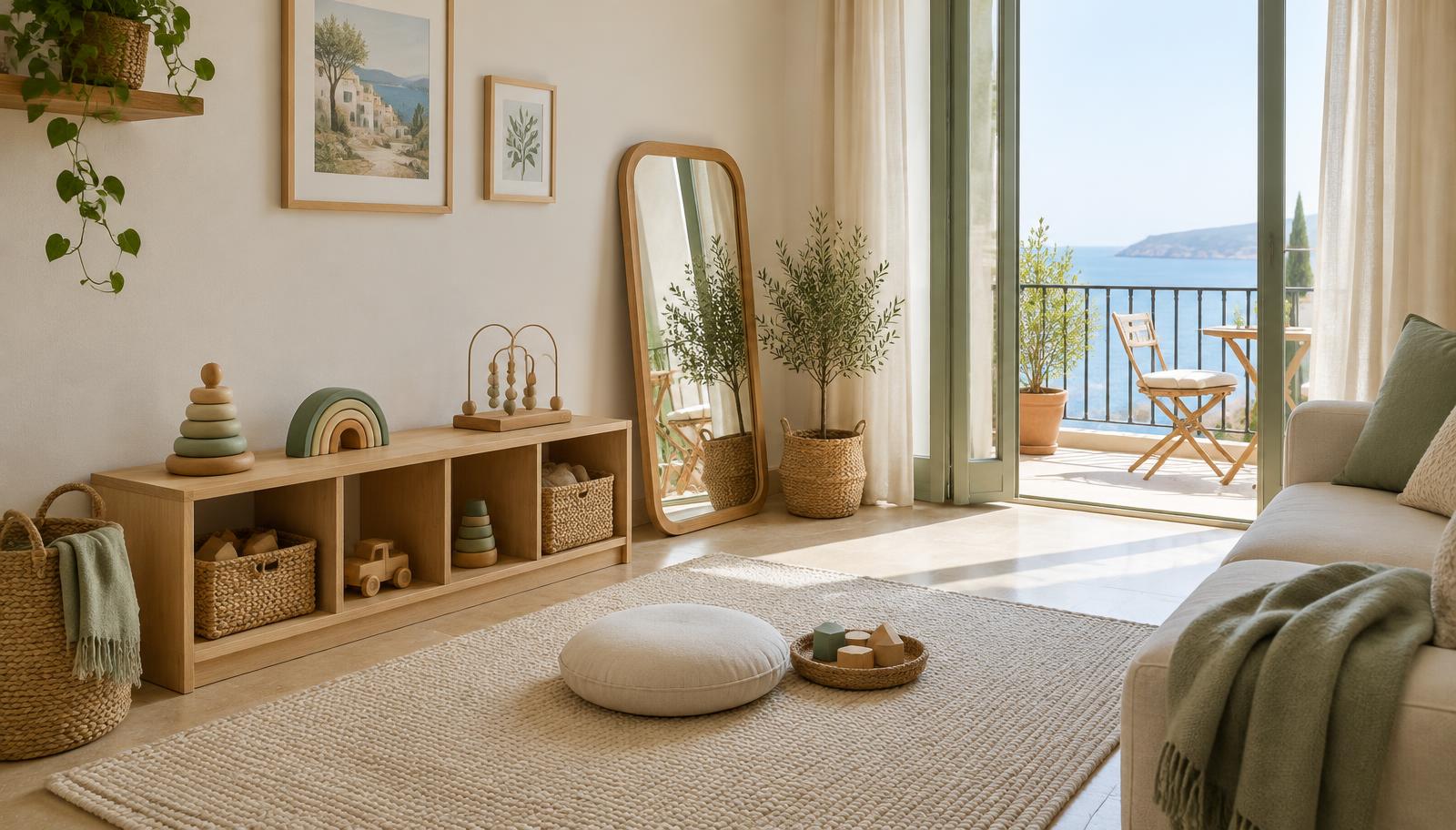
This guide looks at why pretend play matters, and how to set up a simple play kitchen, shop or home corner in a Maltese home, even a small one, without filling it with plastic.
Why pretend play matters
When a toddler pretends, they are using one thing to stand for another. That is the same kind of thinking that later supports language, reading and maths. Pretend play also helps children make sense of their world. They act out what they see: cooking, shopping, caring for babies, going to the doctor. They practise words, try out roles and work through feelings. Our article on talking through play explores how pretending supports early language.
Start with real life
Toddlers pretend what they know. In Malta, that might mean making ftira, buying bread from the van, going to the market, visiting Nanna or setting the table for Sunday lunch. Watch what your child is interested in and offer a few props that match. You do not need a full themed set. A basket, two bowls and a wooden spoon can become a whole restaurant.
A simple play kitchen
Play kitchens are a favourite, and a good wooden one can last for years. But you do not need a large one. A low shelf or a sturdy box with two circles drawn on top for hobs works beautifully in a small flat. Add a small pan, a wooden spoon, a couple of bowls, cups and plates, and some pretend food. Wooden or felt food lasts longer than plastic, and real items like pine cones, shells or chestnuts can be soup ingredients for older toddlers.
Real kitchen tools are often more appealing than toy versions. A small metal whisk, a wooden spoon and an old saucepan feel real because they are. Our guide to practical life for toddlers shows how to let children help with real cooking too.
A little shop
Toddlers love shops. A small basket, a few items from the cupboard (sealed packets, a few pieces of fruit), a bag to carry shopping home and something to act as money are enough. Older toddlers might enjoy a toy till or a little purse with large wooden coins. Shop play naturally brings counting and taking turns, two big themes in our article on sorting and matching games.
A home corner
A doll or soft toy, a small blanket, a basket for a bed and a little bowl and spoon let toddlers care for a baby of their own. This kind of caring play is especially lovely when a new sibling is on the way, as we explore in preparing a toddler for a new baby and dolls and soft toys for caring play.
Dressing up
A few simple pieces go a long way: a hat, a scarf, an apron, a bag. Play silks can become capes, skirts, blankets or sea. See play silks and scarves for more. Around Carnival time, dressing up takes on a whole new energy, as described in our article on Carnival in Malta with little ones.
Keep it small and calm
It is tempting to buy every piece of a themed set. Toddlers usually play more deeply with fewer, well-chosen things. A small kitchen with six or eight items, rotated now and then, is often more engaging than a full one. Our toy rotation guide and natural toy storage ideas can help.
How to join in
Accept the cup of tea. Ask what is for dinner. Pay for your shopping. Follow your child's lead rather than directing the game. If you add something, keep it small: oh no, the soup is too hot, what shall we do? These little prompts stretch the story without taking it over.
Pretend play by age
- Around 18 months: simple actions, such as drinking from an empty cup or feeding a teddy
- Around 2: short sequences, such as cooking then serving
- Around 3: longer stories with roles, often with friends
- Around 4: complex games with rules, characters and props made from anything
Small worlds and big worlds
Pretend play happens at two scales. In big pretend play, children are the characters themselves. In small world play, they move little figures through a story. Both are valuable, and many children enjoy both. A collection of wooden animal figures bridges the two beautifully.
A gift that grows
A small set of wooden food, a little pan or a simple shop basket make thoughtful second birthday gifts. Little Curio is curating plastic-free pretend play pieces for families in Malta; see what is coming.