Talking Through Play: Simple Ways to Support Your Toddler's First Words
First words grow from thousands of small conversations. Here is how simple play and everyday chatter help language bloom.
4 min read
The first word is one of the most eagerly awaited moments of the early years. But long before that word arrives, a baby has been listening, watching, babbling and taking turns in conversation. Language grows from thousands of small, everyday exchanges, and play is one of the richest places for them to happen.
This guide offers simple, practical ways to support early language at home. It is not a replacement for professional advice. Children develop language at very different rates. If you have any concerns about your child's hearing, understanding or speech, speak to your doctor, health visitor or a speech and language therapist.
Talk, pause, listen
The most powerful thing you can do is have conversations, even with a baby who cannot yet talk. Say something, then pause. Your baby might coo, kick, smile or babble. Respond as if they have spoken. These back-and-forth exchanges, sometimes called serve and return, are thought to be one of the most important foundations of language.
Narrate everyday life
Describe what you are doing as you do it. Now we are washing your hands. The water is warm. Here is the towel. It may feel strange at first, but children learn words by hearing them linked to real things and actions. Cooking, dressing, walking to the shop and hanging washing are all chances to talk. Our guide to practical life for toddlers has ideas for involving little ones in daily tasks.
Follow their interest
When your child looks at or points to something, name it. A dog! A big dog. The dog is running. Talking about what they are already interested in is far more effective than trying to direct their attention elsewhere. On a walk, this might be a bird, a bus, a cat on a wall or the sea. Our article on the Malta stroller walk has ideas for chatting on the move.
Expand, gently
When your toddler says a word, add a little more. If they say car, you might say yes, a red car. If they say more, you might say more water, please. This is called expanding. It shows them the next step without correcting them. If they say a word incorrectly, simply repeat it back correctly in a natural way, rather than asking them to say it again.
Books every day
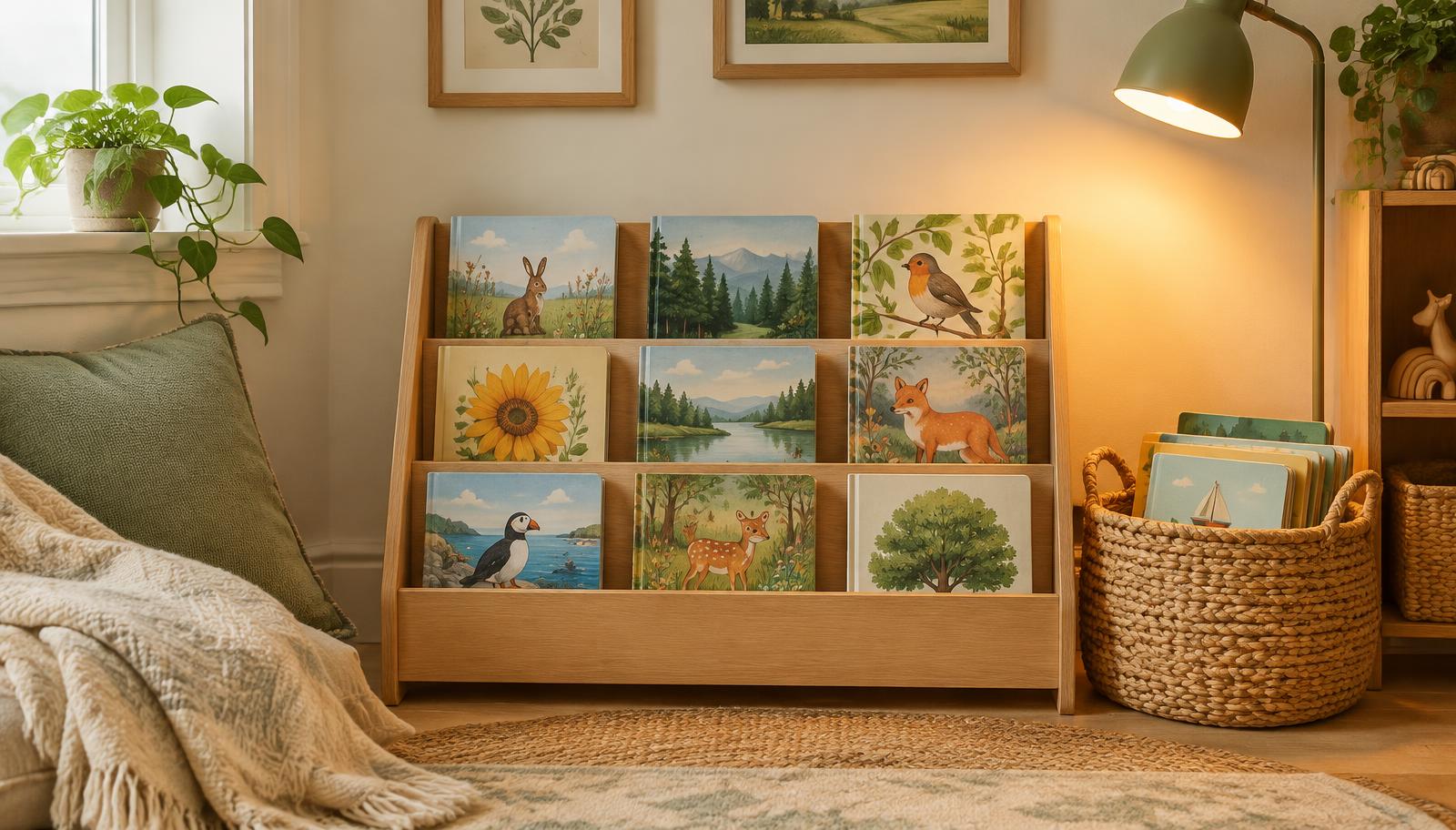
Sharing books is one of the best ways to build vocabulary. You do not need to read every word. Point at pictures, name things, make animal sounds and let your child turn the pages. Our guide to choosing first board books and our article on a front-facing book nook can help you build a small, loved library.
Songs and rhymes
Rhymes, songs and finger plays help children hear the rhythm and sounds of language. Repetition is good. Children love knowing what comes next. Sing in Maltese, English or any language you speak at home. Our article on raising a bilingual toddler in Malta looks at using two languages through play.
Toys that invite talk
Some toys naturally encourage conversation. Pretend play sets, small figures, dolls and animals invite children to make sounds, name things and tell stories. Our articles on pretend play and wooden animal figures explore this. Simple toys often work better than talking toys, because the child has to do the talking.
Screens and language
Many parents choose to limit screens for young children, partly because time on screens is time not spent in conversation. Background television can also make it harder for children to hear and respond to voices. Our screen-free bedtime routine and screen-free rainy days offer alternatives.
Give them time
Toddlers need time to find their words. Wait a few seconds longer than feels natural before filling the silence. Offer choices: would you like the apple or the banana? This gives a reason to speak and two words to choose from.
Gestures count
Pointing, waving, nodding and shaking the head are all communication. Many children use gestures before words. Respond to them warmly. Some families also use simple baby signs alongside speech.
Everyday chances to talk
- Mealtimes, facing each other
- Bath time, with simple toys
- Nappy changes and dressing
- Walks and car journeys
- Cooking together
- Bedtime stories
- Waiting in a queue or at a café
For busy outings, our guide to eating out in Malta with a toddler suggests a small bag of conversation-starting toys.
Keep it joyful
A note for busy parents
None of this needs extra time in the day. Talking while you cook, singing in the car and naming things on the walk to the shop all count. Some days will be full of conversation and others will be quiet and tired, and that is fine. Over weeks and months, lots of small moments add up to a rich world of words for your child.
Language grows best in warm, relaxed moments. You do not need flashcards or drills. Play, laughter and genuine interest in what your child is trying to tell you are the best teachers. Little Curio is curating simple, plastic-free toys and books for families in Malta; see what is coming.