Building a Collection of Wooden Animals: A Toy That Grows Over the Years
One wooden animal at each birthday and Christmas can grow into a whole farm, forest or ocean. Here is why a collection is worth starting.
4 min read
Some toys are used for a few months and then forgotten. Others grow with a child for years. Wooden animal figures belong firmly in the second group. A one year old holds and mouths them. A two year old names them and makes their sounds. A three year old builds them a farm. A five year old creates whole stories with them. And many adults keep a favourite figure long after childhood.
This guide explains why wooden animals are such a valuable toy, how to start a collection and how to play with them at every age.
Why wooden animals?
Wooden animals are tactile, durable and beautiful. They feel good in the hand, they survive being dropped and chewed and they last for years. Simple, realistic figures invite children to learn about the natural world, while more stylised ones leave room for imagination.
Start small
A collection does not need to start large. Three or four animals are enough for a toddler. Choose animals your child sees in everyday life or in books: a cat, a dog, a bird, a horse. In Malta, a goat, a rabbit, a fish and a lizard might be familiar too.
Grow it over time
One of the loveliest things about a collection is that it can grow. Add a new animal at each birthday, Christmas or special occasion. Grandparents, godparents and aunts and uncles can each contribute. Over the years, a whole farm, forest or ocean appears. Our guides to Christmas stocking fillers and the auntie and uncle gift guide include small animals as ideas.
Choosing figures
- Smooth, well-finished wood
- Non-toxic, water-based paints or natural oils
- A size too large to be a choking hazard for young children
- Sturdy enough to stand up
- Realistic or gently stylised, depending on your preference
Our article on natural wood and minimally dyed toys explains what to look for in finishes.
Play ideas for one year olds
Young toddlers enjoy holding, mouthing, dropping and posting animals into containers. Name each animal and make its sound. Hide one under a cloth and find it again. Keep figures large and sturdy at this age.
Play ideas for two year olds
Two year olds love naming animals, making their sounds and matching them to pictures in books. Sort animals into groups: animals that fly, swim or walk; farm animals and wild animals. Our article on sorting and matching games has more ideas. Bilingual families can name animals in more than one language, as described in raising a bilingual toddler in Malta.
Play ideas for three year olds and up
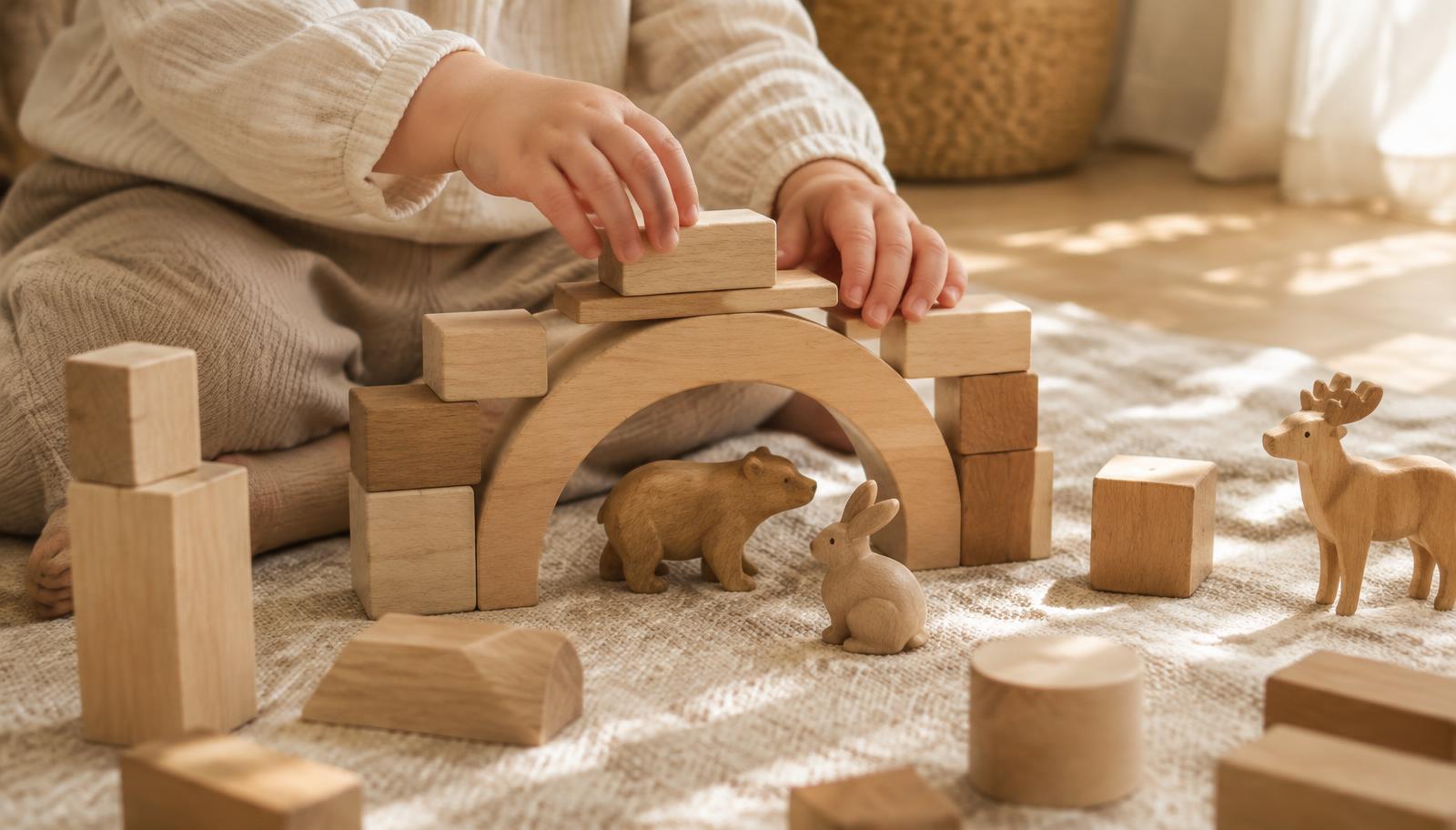
Older children use animals in small world play, building homes for them with wooden blocks, making fields from play silks and crossing bridges made from a wooden rainbow. They create stories, act out journeys and invent families.
Connecting to the real world
Wooden animals connect beautifully with real experiences. After a visit to a farm, a walk spotting birds or a day at the beach looking at fish, bring out the figures and retell the story. Our articles on nature play in Malta's parks and plastic-free seaside play suggest outings.
Language and storytelling
Animals invite talk. Where is the horse going? What does the cat want? Who is hiding? These open questions build vocabulary and storytelling skills. Our article on talking through play explains more.
Pretend play
Animals can visit a pretend vet, live on a farm, go to market or travel on a boat to Gozo. Combine them with pretend play props for richer stories.
Travel companions
A few small animals fit easily into a bag, making them perfect for outings. See our guides to eating out with a toddler and flying from Malta with a toddler.
Storing a collection
A basket, a wooden crate or a shelf with a small tray keeps animals together and visible. Our guide to natural toy storage has ideas.
A collection to pass on
Well-made wooden animals often last long enough to be passed to younger siblings, cousins or even the next generation. Our article on when to retire a toy explains how to pass toys on kindly.
Themes for a collection
Some families build their collection around a theme. A farm collection might include cows, sheep, goats, chickens and a horse. A Mediterranean collection might include fish, an octopus, a turtle, a dolphin and a seagull, a nod to Malta's seas. A woodland collection might include a fox, a rabbit, a hedgehog and an owl. A theme gives a collection shape and makes it easy for relatives to choose the next animal.
Whatever theme you choose, let your child's interests guide the collection. A child obsessed with the sea will treasure a wooden octopus far more than another farm animal.
Little Curio is curating plastic-free wooden animals for families in Malta; see what is coming.