Why Toddlers Love Dropping and Throwing: Understanding Play Schemas at Home
The throwing, the endless carrying, the hiding things in bags. It can look like mischief, but it is often a pattern of learning called a schema.
4 min read

If your toddler has spent a morning dropping a spoon from the high chair, watching you pick it up, and dropping it again, you are not alone. Nor are you alone if every handbag in the house has been filled with blocks and carried from room to room, or if anything left within reach ends up thrown, posted, wrapped or lined up.
These repeated patterns often have a name in early years education: schemas. Understanding them will not stop the spoon hitting the floor, but it can turn an exasperating habit into something you recognise, plan for and even enjoy.
What is a play schema?
A schema is a repeated pattern of behaviour that children use to explore an idea. The idea is not written down or explained, it is lived through the body. A child who throws things over and over is exploring how objects move through the air. A child who carries everything is exploring moving things from one place to another. The repetition is the point: each time, they test the idea again.
Educators describe many schemas. Not every child shows every one, and many children move between several. Here are some of the most common, with simple ideas for working with them at home.
Trajectory: throwing, dropping and things that move
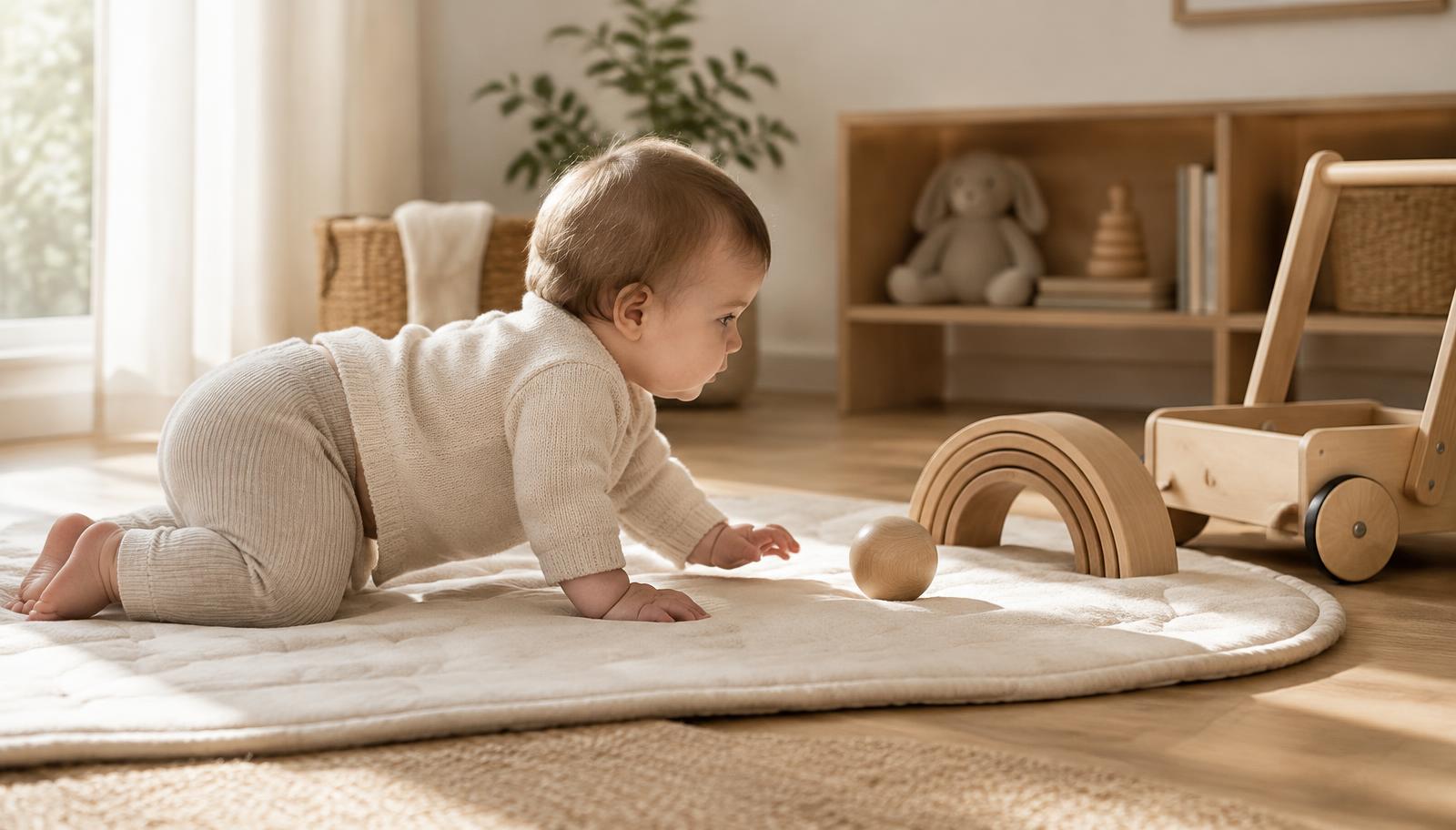
Children exploring trajectory love throwing, dropping, kicking, rolling and watching water pour. They are interested in how things move and fall. Rather than saying no to all throwing, offer something safe to throw. Soft balls, beanbags, scarves and rolled socks are good indoors. Outdoors, small balls, pebbles into the sea (with care for anyone nearby) or sticks into a stream all satisfy the urge.
Ramps and rolling toys are wonderful too. A wooden ball run or a simple board propped on a cushion gives endless fun. Our guide to cause and effect toys without batteries has more ideas.
Transporting: carrying things everywhere
Transporting children fill bags, baskets, buckets and trucks, then move the contents somewhere else. A small basket, a fabric bag, a wooden cart or a push walker with a tray can become their favourite thing. Accept that tidy-up time may involve some redistribution, and give them a job: carrying napkins to the table or shoes to the door.
Enclosing and enveloping
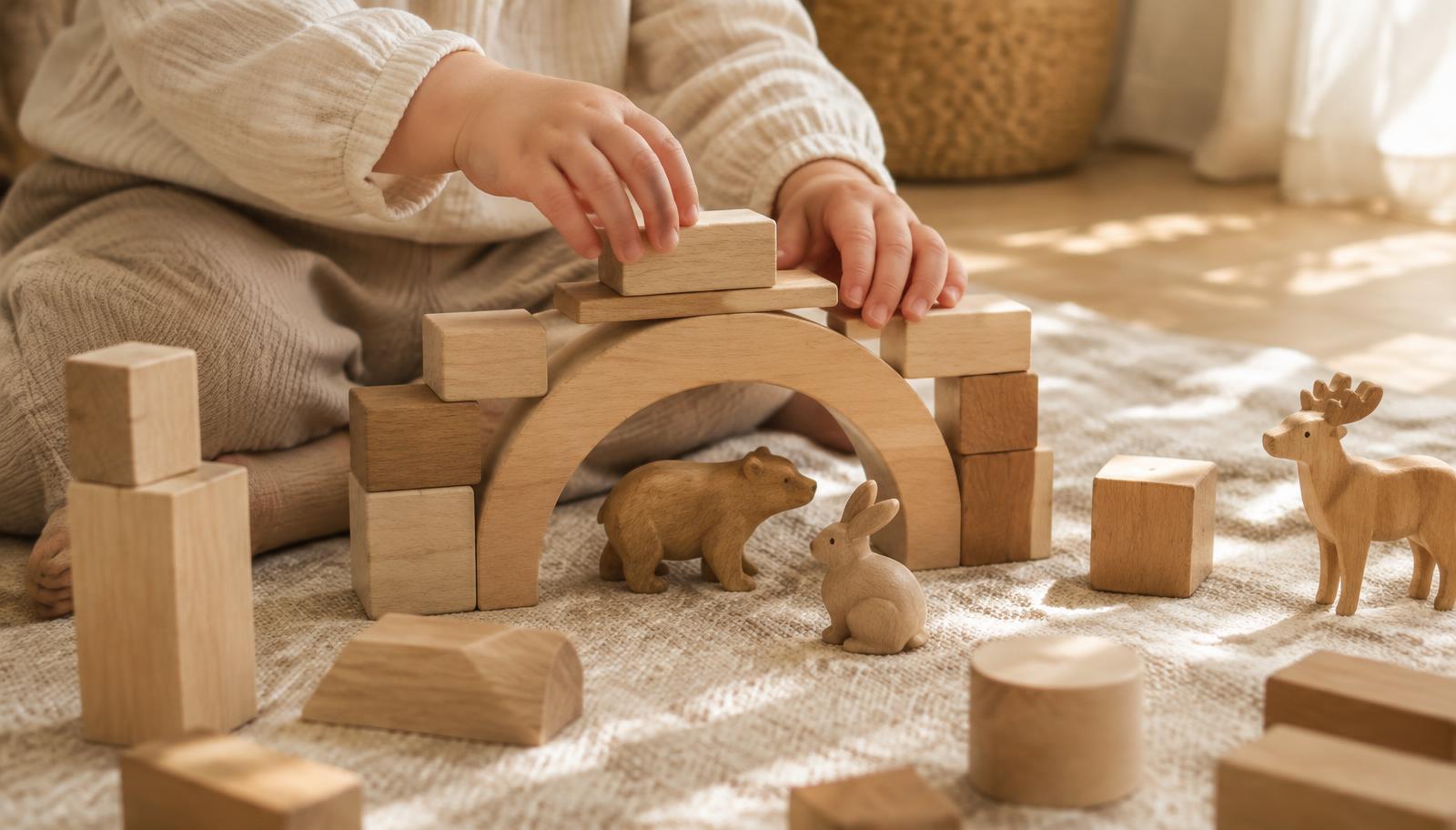
Some children love to put things inside other things, or to be inside things themselves. They build fences around animals, crawl into boxes, cover themselves with blankets and wrap toys in cloth. Nesting cups, boxes with lids, fabric squares and a simple den under the table all suit them.
Rotation, positioning and connecting
Children interested in rotation love wheels, spinning tops, turning taps and watching the washing machine. Positioning shows up as lining things up, sorting or arranging objects carefully. Connecting appears as joining things together, from train tracks to tape. Loose parts, as described in loose parts play for beginners, suit all of these.
Why it helps to notice
When you recognise a schema, you can offer play that fits instead of constantly saying no. A child who is told to stop throwing, without an alternative, will usually just throw something else. A child given a basket of soft balls and a target is more likely to be satisfied.
It also helps with independent play. Toys that match what a child is currently fascinated by hold their attention for much longer.
Keeping things safe
Schemas are normal and healthy, but some behaviours still need limits. Hard objects should not be thrown near people or windows. Pull cords and strings need supervision. A calm, consistent message such as balls are for throwing, blocks are for building, together with a clear alternative, usually works better than a long explanation.
Schemas in a Maltese home
Flats and townhouses do not always have room for a lot of throwing. A hallway with a soft ball and a basket at one end, a balcony with a bucket of water and some cups, or a trip to a park all help. Our ideas for balcony and courtyard play and nature play in Malta's parks are good places to start.
Simple things that suit most schemas
- Soft balls and beanbags
- Baskets, bags and buckets
- Nesting cups and boxes with lids
- Fabric scarves
- Wooden blocks
- A ramp or ball run
- Natural loose parts such as shells and pine cones
When schemas clash with daily life
Some schemas arrive at inconvenient moments. A child exploring trajectory may throw food at dinner. A child exploring enclosing may refuse to get out of the laundry basket. In these moments, it helps to name what is happening calmly, offer the safe version, and move on. Food stays on the plate, but after dinner we can throw the soft balls into the basket. Children do not need long explanations; they need a clear limit and somewhere for the urge to go.
It is also worth remembering that schemas change. The child who threw everything at fifteen months may be lining up every car at two and building enclosures at three. Watching these shifts is one of the quiet pleasures of the toddler years, and it makes choosing toys and activities much easier.
None of these need to be expensive, and many are already in your home. Little Curio is curating a small selection of open-ended wooden toys for families in Malta; see what is coming.
More from the Journal: Choosing First Books for Babies: Board Books Worth Reading Again and Again, Sorting and Matching Games for Toddlers: Early Maths Through Play.