First Steps and Early Walkers: The Best Push and Pull Wooden Toys for 12 to 15 Months
The first wobbly steps are a big moment. A good push or pull toy gives a new walker purpose, balance and a reason to keep going.
4 min read
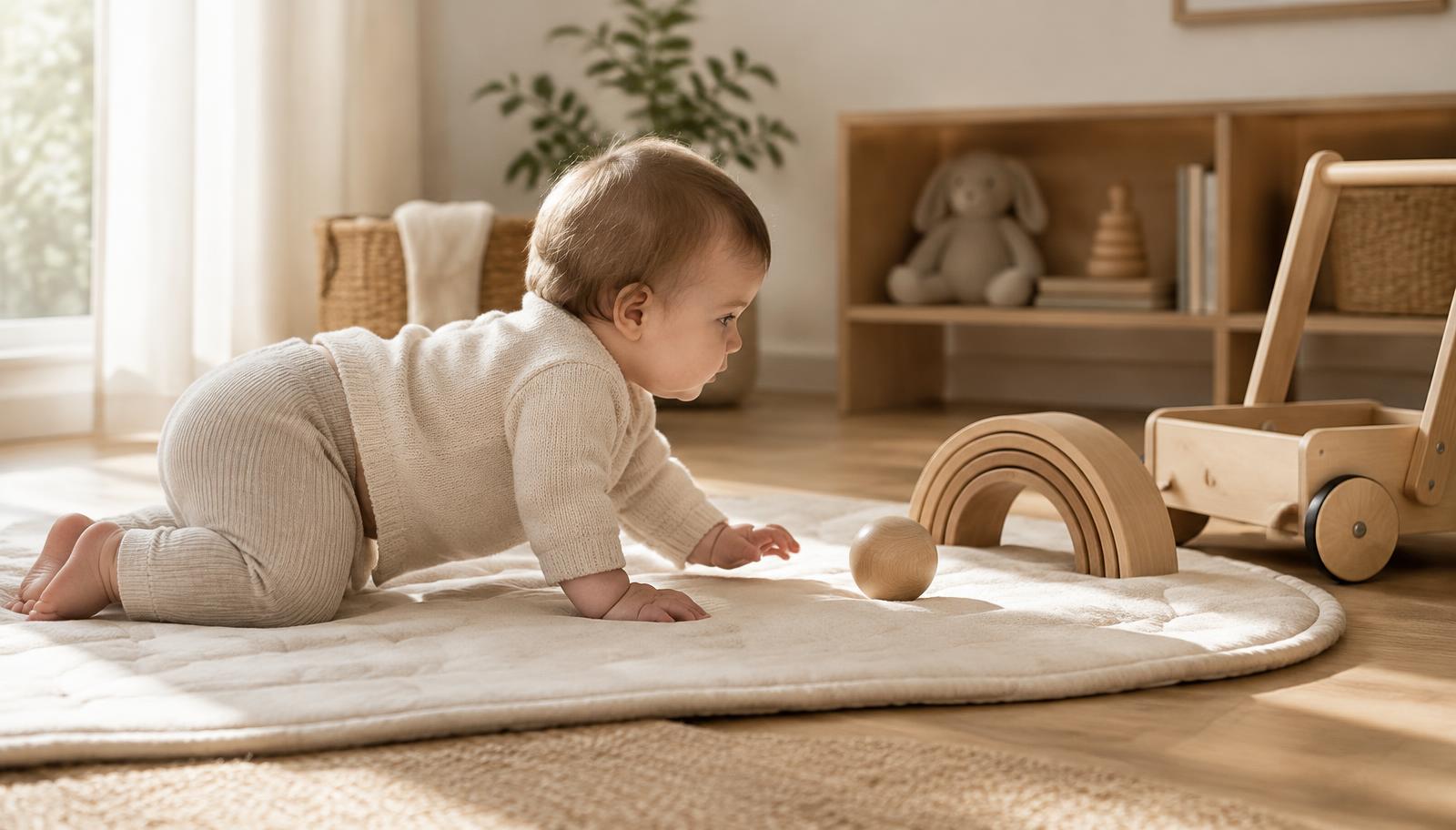
There is a particular kind of concentration on a child's face when they are about to walk. They pull up on the sofa, let go for a moment, sway, sit down hard, and try again. Many children take their first independent steps somewhere around their first birthday, though plenty walk earlier and plenty walk later, and all of that is normal.
During this stage, a well-chosen push or pull toy can be a lovely companion. It gives a reason to move, something to steer and, later, something to show off. This guide looks at how to choose one, with a particular eye on Maltese homes, where tiled floors, narrow hallways and a few steps here and there are part of daily life.
Push toys versus seated baby walkers
A push toy is something a child stands behind and pushes, taking their own weight on their own legs. A seated baby walker holds a child upright in a frame on wheels. They sound similar, but they are very different. Many health organisations advise against seated walkers, mainly because of the risk of falls and accidents, and because they let babies move faster than they can safely manage. If you are unsure, ask your health visitor or doctor for their view.
A push toy, on the other hand, only moves as fast as the child can walk behind it. The child controls the pace, practises balance, and learns to stop and turn. That is why push toys have been a nursery favourite for generations.
What makes a good push toy
- Weight and stability: it should not tip when a child pulls up on the handle
- Resistance: wheels that roll a little slowly are easier for beginners than ones that shoot away
- A sturdy handle at the right height
- A wide base
- Smooth edges and a safe, durable finish
On Maltese tiles, wheels can run fast. Some wooden walkers have a way to adjust resistance, or rubber rims that grip a little better. If yours runs away too quickly, a few books in the tray add weight and slow it down. Rugs help too, though very thick ones can make pushing hard work.
Push toys that do more than one job
Many wooden push toys have a tray or box in front. This is useful long after walking is confident. Toddlers love to load and unload, which is part of the transporting schema we describe in our article on why toddlers love dropping and throwing. A walker can become a delivery van for blocks, a pram for a soft toy, or a trolley for tidying up.
Pull toys for confident walkers
Pull toys usually come a little later, once a child walks steadily enough to look over their shoulder without toppling. A wooden duck on a string, a snake of jointed segments, or a small cart with wheels gives a lovely reason to walk across a room and back again.
Keep the string short for young children and always supervise play with cords. Put pull toys away at nap and bedtime, and never leave strings near a cot.
Making space to practise
Many families in Malta live in flats or townhouses where floor space is precious. You do not need a large room. A clear path down a hallway, from the kitchen to the sofa, or along a balcony is enough. Move fragile things up, check for sharp corners and let your child explore. Our article on setting up a play corner in a small Maltese apartment has more practical ideas.
Stairs and steps deserve attention. Many Maltese homes have a step between rooms or onto a terrace. Fit a gate if you need to, and show your child how to go down backwards on their tummy, which is often the safest way for new walkers.
Barefoot when you can
Many parents find that early walkers manage well barefoot indoors, where they can feel the floor and grip with their toes. On cold winter tiles, non-slip socks or soft-soled shoes are a comfortable compromise. Outdoors, on hot pavements or rough ground, proper shoes protect little feet.
A gift that lasts
A good wooden walker is one of those gifts that often gets passed down. It is ideal for a first birthday, and it suits grandparents or godparents who want to give something substantial. Our best wooden toys for one year olds and Maltese godparent gift guide have more ideas.
Do not rush it
Some children cruise along furniture for months. Others skip crawling almost entirely. A push toy will not make a child walk earlier, and it does not need to. It simply gives them something interesting to do while their body works it out.
For the stages either side, see from tummy time to first steps and the best toys for an 18 month old. Little Curio is putting together a small range of wooden toys for babies and toddlers in Malta, and you can see what is arriving soon.
More from the Journal: A Calm Corner for Big Feelings: Supporting Toddlers Through Tantrums, How to Set Up a Montessori Toy Shelf: What to Put Out and How Often to Change It.