Cause and Effect Toys Without Batteries: Wooden Ramps, Balls and Peg Pounders
Push the ball in, watch it roll out. Simple cause and effect toys teach real lessons about the world, and they never need new batteries.
4 min read
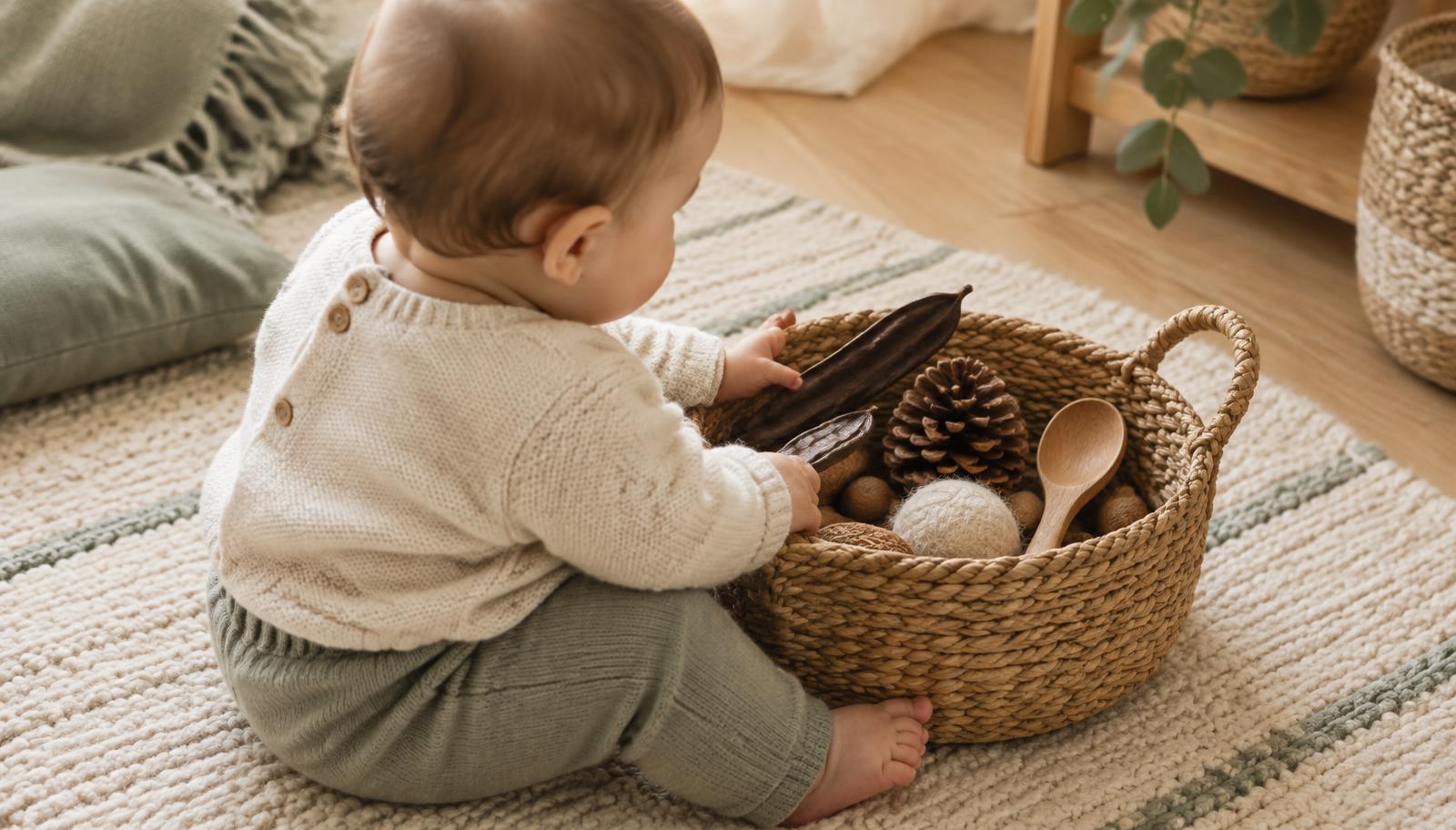
One of the first big ideas a baby discovers is that they can make things happen. Kick the mattress and the mobile shakes. Drop the spoon and it clatters. Push the ball and it rolls away. Understanding cause and effect is a foundation for so much later learning, from problem solving to language.
Toy shops are full of things that claim to teach cause and effect: buttons that sing, lights that flash, animals that dance when pressed. But some of the best cause and effect toys have no batteries at all. They simply let real objects behave in real ways.
Why simple works so well
When a baby presses a button and a song plays, the link between action and result is arbitrary. Pressing a picture of a cow does not naturally produce a tune. When a baby drops a ball into a hole and it rolls out of the bottom, the link is real. Gravity pulled it. The shape of the box guided it. The baby can see the whole journey.
Real-world toys also give more varied feedback. A ball rolls faster down a steep ramp than a gentle one. A block knocked from a height falls further. These small differences invite experiments, which is exactly how children build understanding. Our article on wooden versus plastic toys explores more of the reasons families in Malta choose simpler toys.
Posting boxes and object permanence
A posting box is a wooden box with a hole in the top and a drawer or opening below. The baby posts a ball, it disappears, and then it reappears. This plays with object permanence, the understanding that things still exist when you cannot see them. Many babies begin enjoying posting toys towards the end of the first year, around the time they enjoy peekaboo.
Start with one large ball and a single opening. Later, boxes with several shapes link nicely to puzzles and shape sorters.
Ball runs and ramps
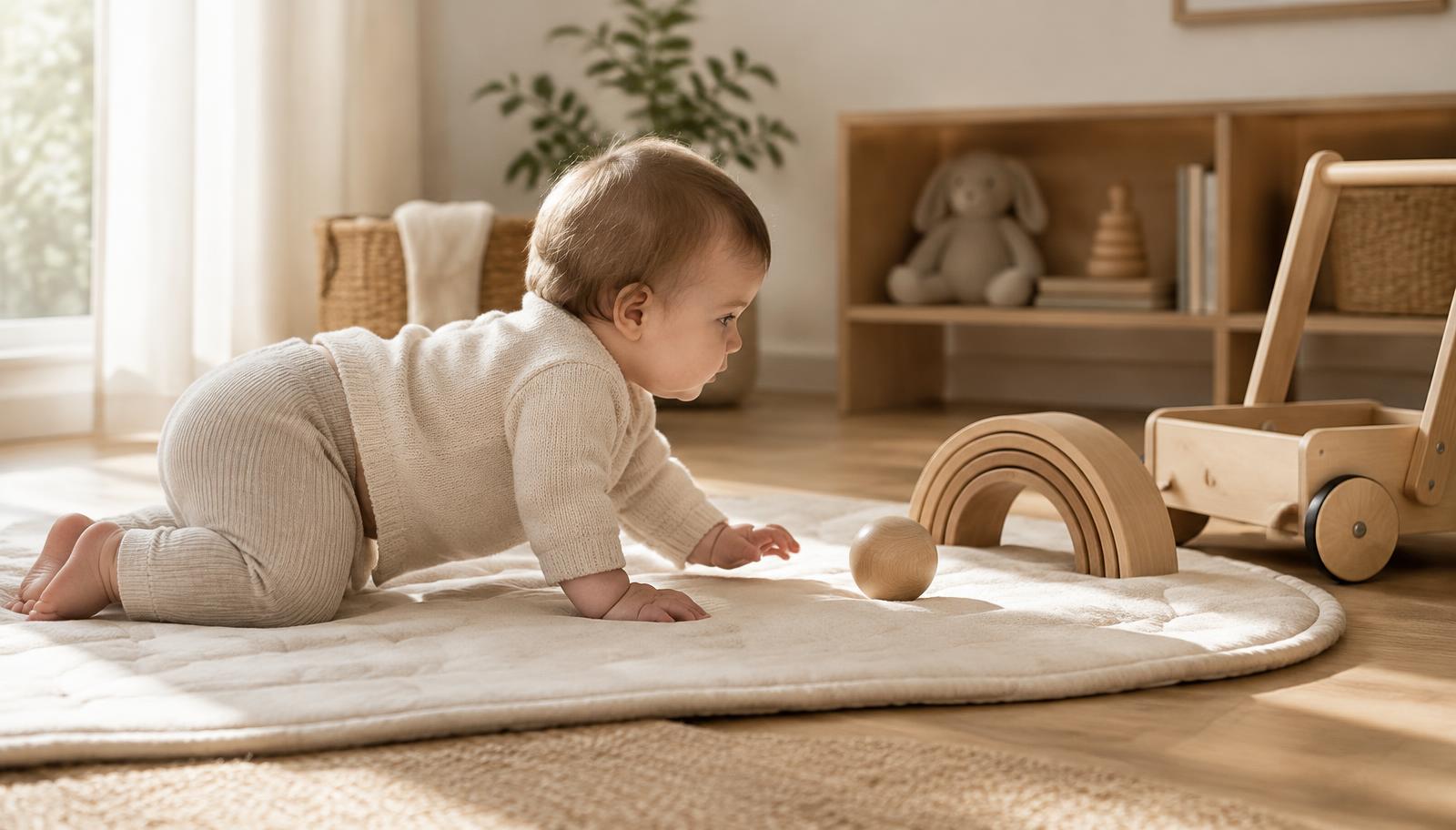
Ball runs are endlessly fascinating for toddlers. A simple zigzag ramp, where a ball or car rolls back and forth down several levels, is perfect for beginners. Older toddlers enjoy building their own ramps from blocks and boards, which adds problem solving to the mix. You can make a basic ramp at home by propping a chopping board or a piece of card against a sofa cushion.
Ramps satisfy children who are exploring the trajectory schema, described in our article on why toddlers love dropping and throwing.
Peg pounders and hammer toys
A peg pounder, where wooden pegs are hammered down through holes and then turned over to start again, is a classic for toddlers. It offers strong feedback: hit hard and the peg moves, hit softly and it does not. It also gives a safe outlet for the urge to bang things, which many toddlers have in abundance. Some versions use balls that roll away when hammered, which adds a lovely surprise.
Stacking and knocking down
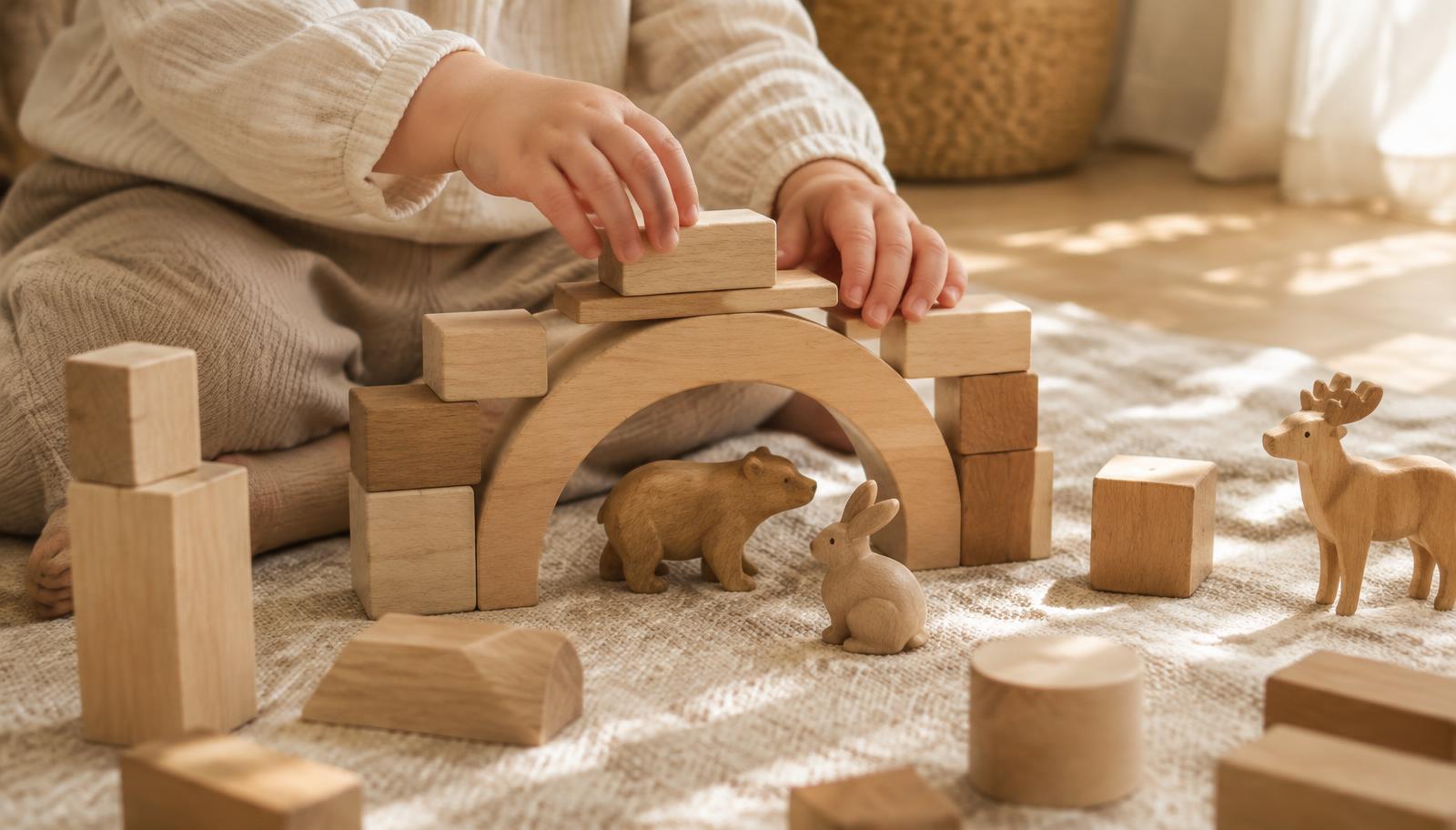
Building a tower and knocking it over is one of the most satisfying cause and effect games of all. Wooden blocks and stacking cups work well. Babies usually enjoy knocking down long before they can build, so you might be the builder for a while. Our guide to open-ended toys for busy toddlers has more on blocks.
Water and sand
Some of the best cause and effect play is not a toy at all. Pouring water from a jug, watching it splash and drain, filling a sieve and seeing it run out. Sand that holds a shape when wet and runs through your fingers when dry. On a Maltese balcony or at the beach, these experiences are easy to offer. See plastic-free seaside play and DIY sensory bins for ideas.
Sound without electronics
Musical instruments are cause and effect in its purest form. Shake the egg and it rattles. Strike the xylophone harder and it rings louder. Our article on acoustic wooden instruments for babies looks at these in more detail.
Choosing well
- Sturdy construction that survives drops and bangs
- Balls large enough not to be a choking hazard
- Smooth, splinter-free surfaces
- Safe finishes
- Simple designs where the child can see what happens
Let them repeat
Toddlers may post the same ball fifty times. This is not boredom, it is research. Each repeat confirms the idea and builds confidence. Resist the urge to show them the next step too soon.
How to play alongside
You do not need to teach cause and effect; children discover it themselves. Your role is to provide interesting things, then watch. When you do join in, describe what you see rather than directing. The ball went in the top and came out at the bottom. You hit the peg harder and it went all the way down. This kind of narration builds language alongside understanding.
Sometimes you can add a small challenge. Two balls instead of one. A steeper ramp. A ball that is too big for the hole. Children love working out why something did not happen as expected, and these moments of puzzlement are where real thinking begins.
For age-specific suggestions, see the best toys for a nine month old and the best toys for an 18 month old. Little Curio is curating wooden toys for families in Malta, and you can see what is arriving soon.
More from the Journal: A Parent's Guide to Wooden Building Blocks: Which Sets, How Many and Why, Ways to Play with a Wooden Rainbow: 15 Ideas Beyond Stacking.