DIY Natural Sensory Bins Using Kitchen Cupboard Staples
A tray, a scoop and a bag of dried pasta can keep a toddler busy for ages. Here is how to make simple sensory bins from your kitchen cupboard.
4 min read
Sensory bins are one of the simplest and most popular activities for toddlers. A container filled with something interesting to touch, scoop and pour can keep little hands busy for a surprisingly long time. And you do not need to buy anything special: most of what you need is already in your kitchen cupboard.
This guide explains how to make natural sensory bins at home, which fillers work well and how to keep them safe and manageable in a Maltese home.
What is a sensory bin?
A sensory bin is simply a shallow container with a filler and a few tools. Children explore it with their hands, scoop, pour, hide and find. It engages touch, sight and sound, builds fine motor skills and encourages concentration. Many toddlers find it deeply calming.
Age and safety first
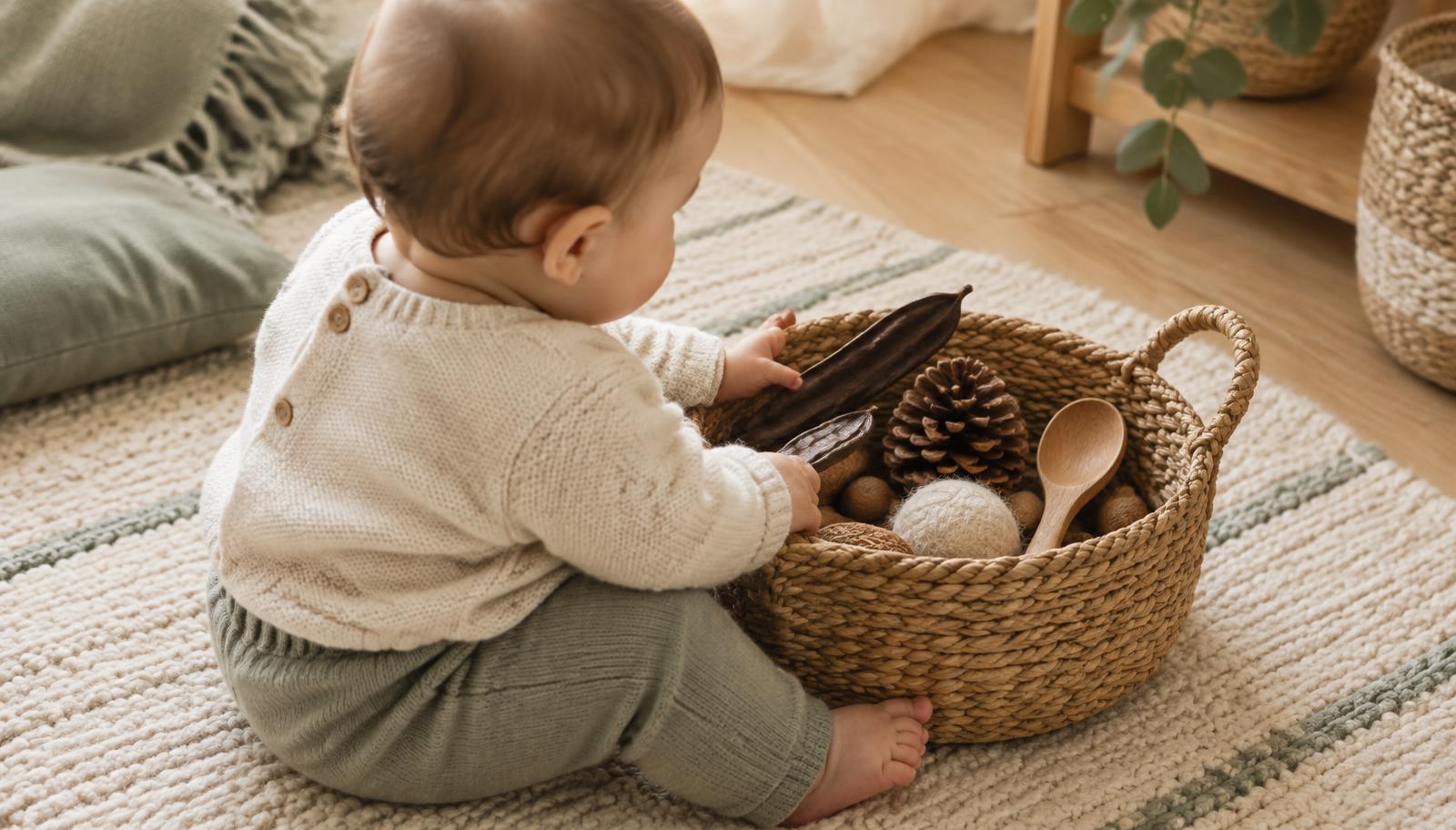
Sensory bins with small dried foods are best for children who have stopped putting everything in their mouths, often from around two or later. Every child is different. Dried beans, chickpeas and small pasta can be choking hazards, so always supervise closely. For younger babies, a treasure basket of larger natural objects is a safer choice. Some dried beans, particularly kidney beans, should never be eaten raw, so choose fillers carefully and keep play supervised.
Choosing a container
A large, shallow tray or plastic-free storage box works well. Wooden trays, metal baking trays or a large ceramic bowl are good options. Place it on a towel, a sheet or a mat to catch spills. On a Maltese balcony, spills are even easier to sweep up.
Kitchen fillers that work well
- Dried pasta in different shapes
- Rice, plain or naturally coloured
- Dried chickpeas
- Lentils
- Oats
- Dried bay leaves
- Cinnamon sticks for scent
- Large dried beans (for older children only)
Each filler has a different feel and sound. Pasta clatters, rice pours like sand, oats are soft and lentils feel smooth. Rotate fillers to keep things interesting.
Tools for scooping and pouring
- Wooden spoons and scoops
- Small cups and bowls
- A funnel
- A sieve
- Small jars with lids
- Tongs for older toddlers
- Measuring cups
These encourage the pouring and transporting that many toddlers love. See our article on why toddlers love dropping and throwing for more about these play patterns.
Adding small treasures
Hide a few larger objects in the filler for children to find: wooden animals, shells, large pine cones or stones. This adds a little treasure hunt to the play. Choose items too large to swallow.
Scented bins
Adding a cinnamon stick, some dried lavender or a few bay leaves gives a lovely gentle scent. Avoid essential oils, which can be strong for young children.
Water bins
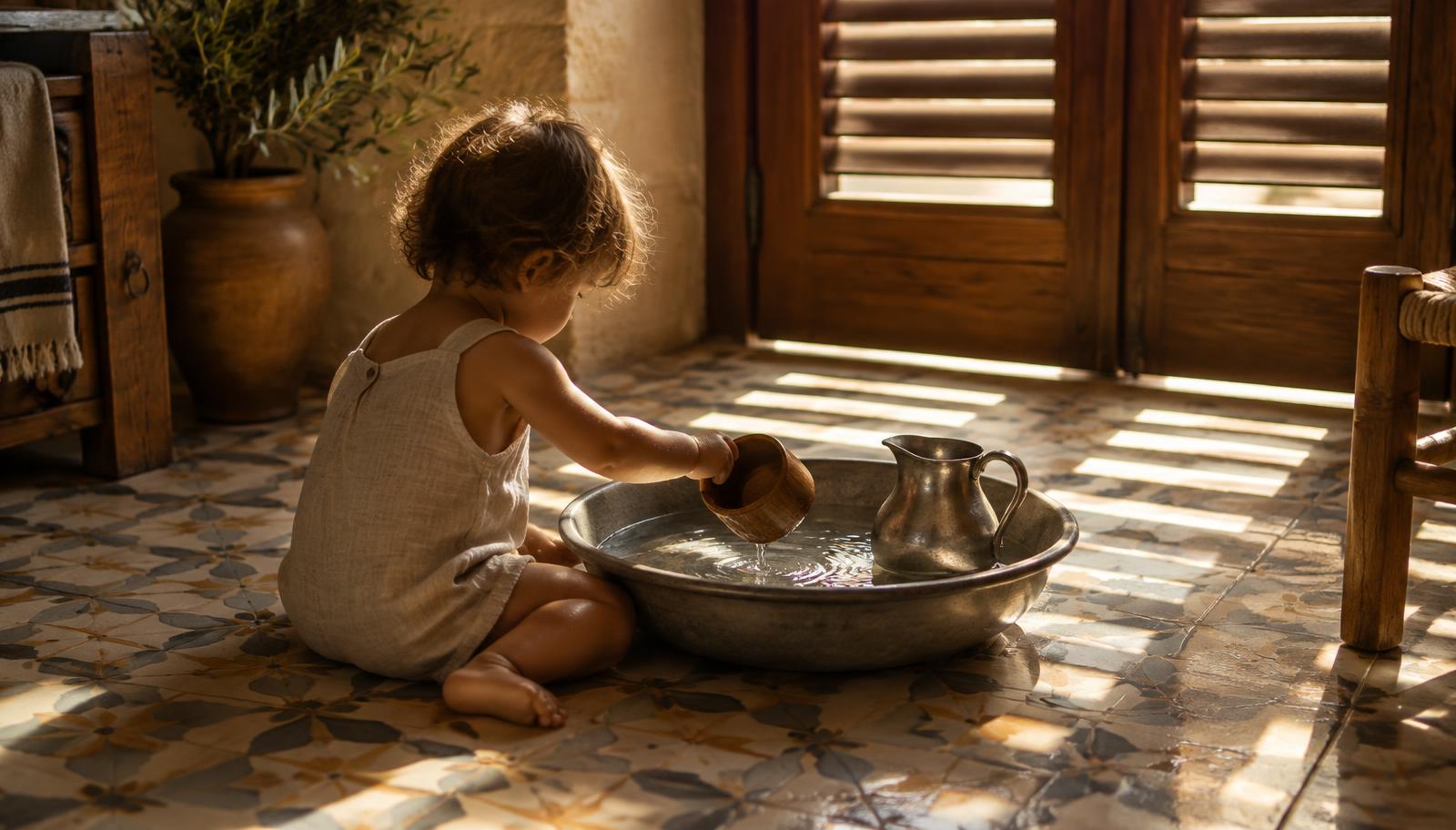
On hot days, a water bin is perfect. Fill a tray with a little water, add cups, a sponge, a sieve and some natural rubber or wooden toys. Always supervise water play closely, however shallow. Our article on keeping baby cool in a Maltese summer has more ideas.
Nature bins
After a walk, fill a bin with leaves, sticks, stones and shells. Children love revisiting their finds. Our guide to spring nature walks in Malta suggests what to collect.
Keeping the mess manageable
Sensory bins do create some mess. A few simple rules help: the filler stays in the tray, and when we are finished we tidy up together. A small dustpan and brush lets toddlers help clean up, which is good practical life practice.
Storing fillers
Store dry fillers in jars with lids, in a cool, dry place. Malta's humidity can make some fillers go damp or mouldy, so check them regularly and throw out anything that smells or looks off. Our guide to caring for toys in Malta's humidity has more tips.
A good quiet time activity
Sensory bins work well during quiet time or on rainy days. They pair beautifully with loose parts play.
Avoiding waste
Some families feel uneasy about using food for play. If this matters to you, keep the same filler for many weeks, store it well and use it again, or choose non-food alternatives like smooth stones, wooden beads too large to swallow or fabric scraps. Many dry fillers can be reused for months if kept dry and clean, so a single bag of pasta can provide a great deal of play.
A simple rotation of bins
You do not need a new bin every day. Many families keep two or three fillers in jars and rotate them weekly, adding different tools or hidden treasures each time. Pasta one week, rice the next, a nature bin after a weekend walk. Small changes keep the play fresh, and children often enjoy returning to a filler they have not seen for a while, discovering new ways to use it.
Little Curio is curating simple, natural toys for families in Malta, including wooden scoops and bowls; see what is coming.
More from the Journal: Play Silks and Scarves: The Simplest Toy with Endless Uses, Dolls and Soft Toys for Toddlers: Why Caring Play Matters.