Gentle Sound: Why Acoustic Wooden Instruments Beat Electronic Noise for Babies
Shake, tap, bang, listen. Simple wooden instruments let babies make their own music, at their own volume.
4 min read
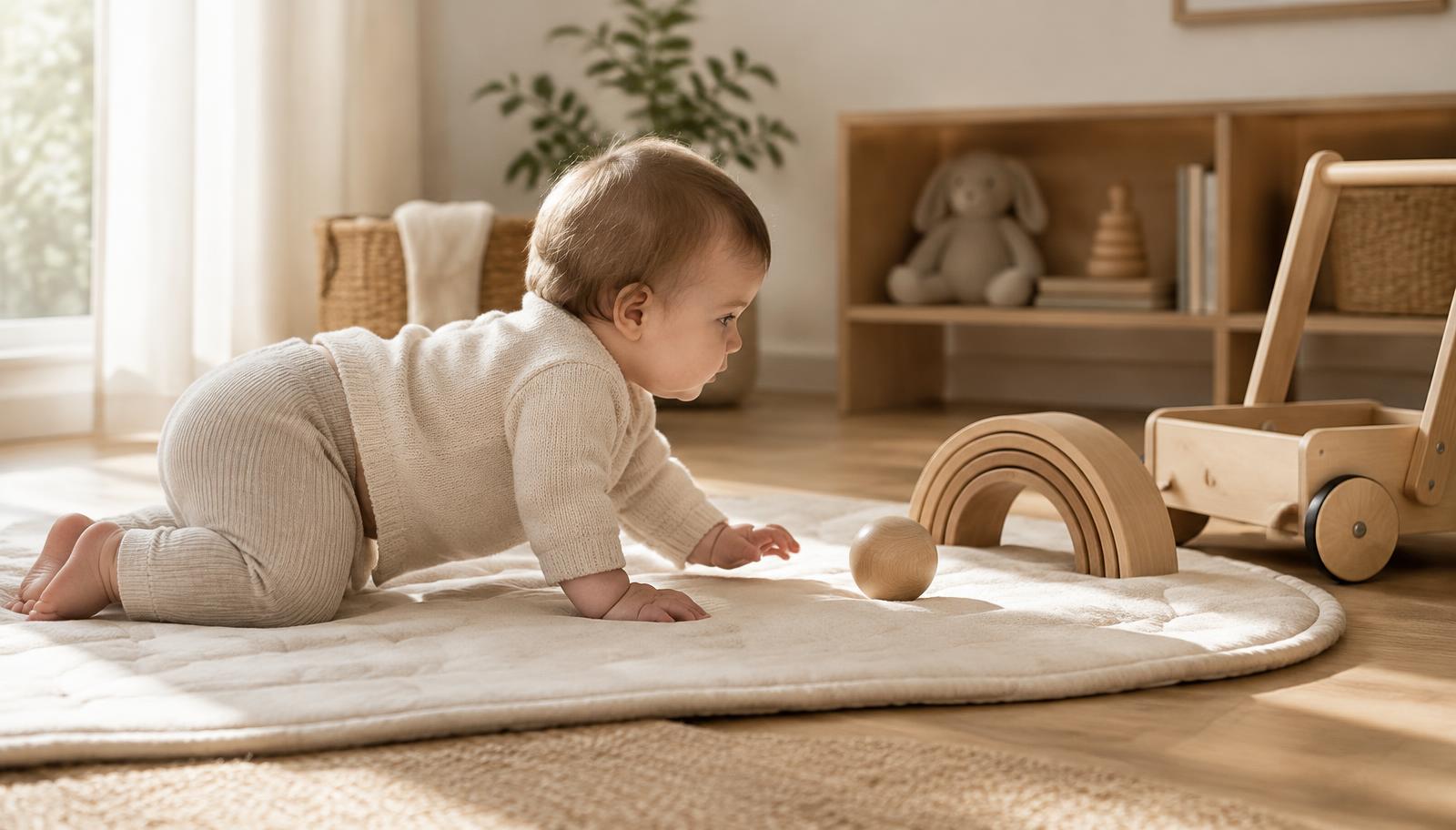
Babies love sound. From the earliest weeks, they turn towards voices, startle at a bang and calm to a familiar song. As they grow, they discover they can make sounds themselves: by shaking, tapping, banging and singing. Music becomes one of the joys of early childhood.
Many baby toys make sounds at the press of a button: tunes, animal noises and voices. But simple acoustic instruments, like wooden shakers, drums and xylophones, offer something different and, we think, better.
Why acoustic instruments are different
With an acoustic instrument, the sound depends entirely on what the child does. Shake softly and the egg whispers. Shake hard and it rattles. Tap the xylophone gently and it rings softly. Hit it hard and it rings loudly. This direct link between action and sound teaches cause and effect, control and listening. Our article on cause and effect toys without batteries explores this idea.
Electronic toys, by contrast, often play the same pre-recorded sound at the same volume however they are pressed. Some can be quite loud. They also tend to play the music for the child, rather than inviting the child to make it.
Gentle on little ears
Babies and toddlers can be sensitive to noise. Acoustic wooden instruments usually produce softer, warmer sounds than many electronic toys. Children control the volume themselves, and they often naturally experiment with soft and loud. If your child is sensitive to sound, our guide to Maltese festa season with little ones has tips for managing louder environments.
Instruments by age
- From a few months: wooden rattles, soft bell toys, shaker eggs too large to swallow
- From around six to nine months: small drums, tambourines, wooden maracas
- From around one: xylophones with attached beaters, rain sticks, clackers
- From around two: simple wooden flutes or whistles, castanets, a set of small percussion instruments
Follow the maker's age guidance, check for small parts and supervise play.
Shakers and rattles
Shakers are often a baby's first instrument. A wooden rattle or a shaker egg is easy to hold and responds to every movement. Our guide to plastic-free teethers and rattles has more on choosing safe rattles.
Drums
A small drum is perfect for toddlers who love banging. Drumming is great for big feelings, too. Pots and wooden spoons from the kitchen work just as well as a real drum.
Xylophones
A wooden xylophone introduces different notes. Toddlers enjoy running the beater up and down, and older children begin to play simple tunes. Look for one with well-tuned notes and a beater that is easy to grip.
Rain sticks
A rain stick, turned slowly, makes a soft sound like falling rain. It is calming and fascinating, and great for quiet moments or winding down before bed. See our screen-free bedtime routine.
Make music together
The best musical experience for a baby is singing with a parent. You do not need a good voice. Sing nursery rhymes, Maltese songs, lullabies and anything you love. Add instruments to keep the beat, march around the room or dance. Many families in Malta pass down songs from grandparents, which connects children to their heritage.
Homemade instruments
A sealed jar of rice, a box with elastic bands stretched over it, or pots and pans make great instruments. Make sure lids are tightly closed and supervise closely.
Storing instruments
A small basket of instruments on a low shelf invites spontaneous music. Rotate them so they stay interesting. See our guide to natural toy storage.
Gifts that make music
Wooden instruments make lovely gifts for first birthdays, Christmas and christenings. See our first birthday guide and Christmas stocking fillers. Our article on wooden versus plastic toys explains more of our approach.
Music in everyday life
Music does not need to be a separate activity. Sing while you change nappies, hum while you cook, clap a rhythm while you walk to the shop. Babies love repetition, so the same few songs every day are perfect. Many families find that a particular song becomes a signal for bedtime, bath time or tidying up, which helps routines run more smoothly.
Listening matters too. Pause on a walk to listen to church bells, waves, birds or the wind. Name the sounds together. These small moments build attention and a love of sound that musical instruments can then build on.
Music with others
Many parents in Malta enjoy baby and toddler music groups, where children can make music with others, hear new songs and watch older children play. Even at home, playing music together as a family, with siblings, grandparents or friends, shows children that music is something people share. A basket of simple wooden instruments brought out at a family gathering can become a joyful, noisy tradition.
Little Curio is curating plastic-free toys for families in Malta, including simple instruments; see what is coming.
More from the Journal: Gross Motor Play Indoors: Climbing, Balancing and Crawling in Small Spaces, Building a Collection of Wooden Animals: A Toy That Grows Over the Years.