Gross Motor Play Indoors: Climbing, Balancing and Crawling in Small Spaces
Toddlers need to move, even when it is too hot, too wet or too late to go outside. Here is how to get them climbing and balancing indoors.
4 min read
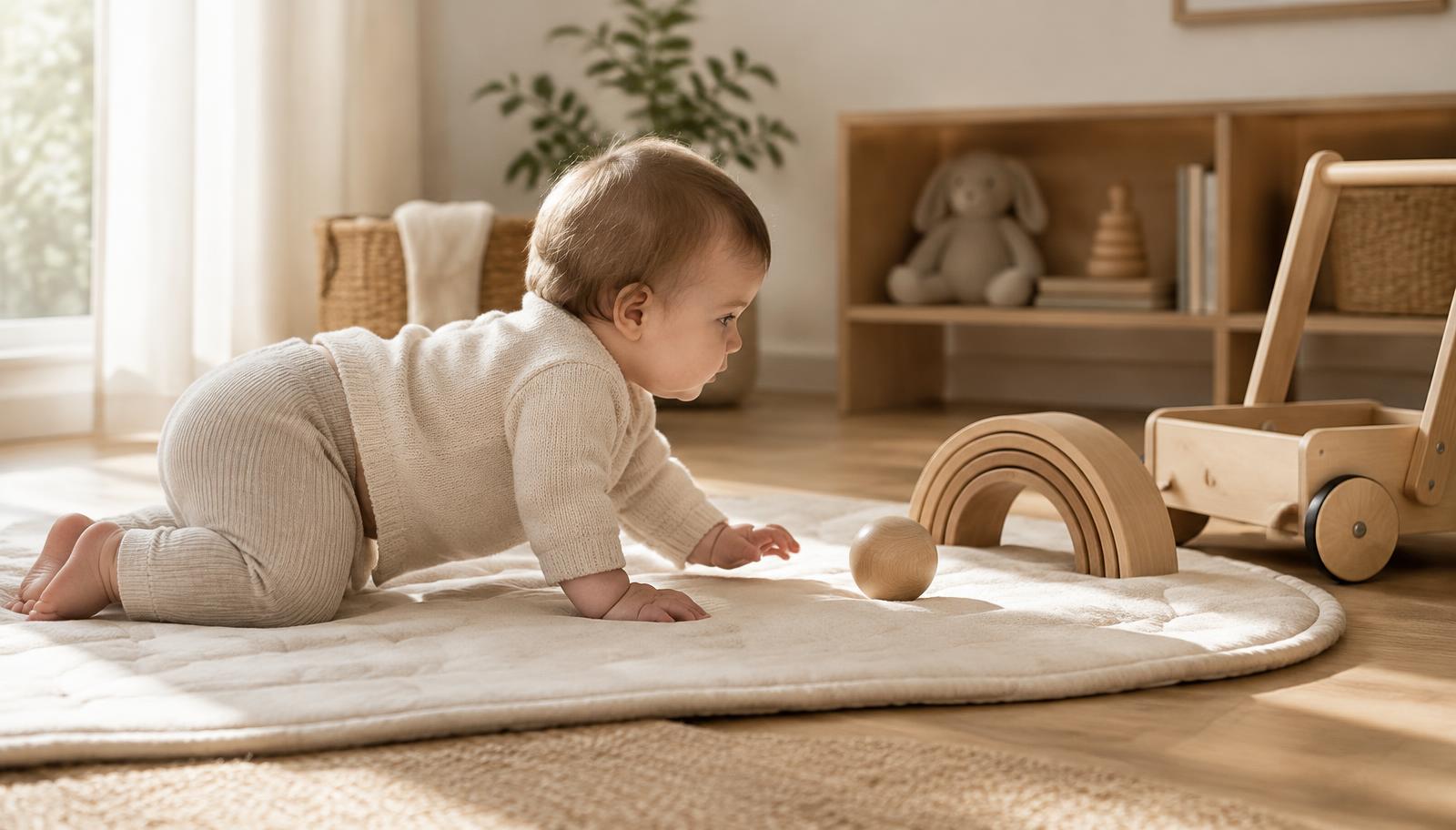
Babies and toddlers are built to move. Crawling, climbing, running, jumping, balancing and rolling are how they build strength, coordination and confidence. Outdoors is the ideal place for this kind of play, but there are many days in Malta when going out is difficult: the heat of a summer afternoon, a winter storm, an evening at home.
This guide offers ideas for gross motor play indoors, even in a small Maltese flat. Always supervise active play, clear away hazards and follow the maker's age guidance for any climbing equipment.
What is gross motor play?
Gross motor skills involve the large muscles of the body: arms, legs and trunk. They include rolling, sitting, crawling, walking, running, climbing, jumping and balancing. These skills develop gradually and form the foundation for later activities like riding a bike or playing sport. Our article on tummy time to first steps covers the earliest stages.
Make a safe space
Clear a space on the floor. Move furniture with sharp corners or cover them. A rug, play mat or folded quilt softens hard Maltese tiles. Make sure heavy furniture is anchored to the wall.
For crawlers
- Cushion mountains to climb over
- A tunnel made from a cardboard box or chairs and a blanket
- A ball to chase
- A low step or a folded mattress to climb
- A wooden rainbow arch to crawl under, if large enough
For new walkers
A sturdy push walker is perfect for practising walking. A clear path down a hallway, with a basket at the end to fill, gives a reason to walk back and forth. Pull toys suit confident walkers.
Climbing
Toddlers love to climb. A climbing triangle, a Pikler-style frame or a sturdy low step can give them a safe place to practise. Follow the maker's guidance and supervise closely. A pile of firm cushions and a low sofa can also provide climbing practice, as long as there is a soft landing.
Balancing
A balance board, a line of tape on the floor to walk along, stepping stones made from cushions or a low beam are great for balance. Older toddlers enjoy walking along a line while carrying something, like a beanbag on their head.
Obstacle courses
Create a simple obstacle course: crawl through a tunnel, climb over cushions, walk along a line, throw a ball into a basket. Change it each time. Toddlers love the challenge and the routine.
Throwing and kicking
Soft balls, beanbags and rolled socks are safe for indoor throwing. A basket makes a good target. A soft ball can be kicked gently down a hallway. Our article on why toddlers love throwing explains why this urge is so strong.
Dancing and music
Put on music and dance. Stop and freeze when the music stops. Wave play silks high and low. March with a drum. These games build coordination and are lots of fun.
Animal walks
Hop like a frog, crawl like a bear, waddle like a duck, slither like a snake, gallop like a horse. Toddlers love animal walks, and they work different muscles. Add sounds for extra fun.
Yoga for little ones
Simple yoga poses, like stretching tall as a tree or curling up small as a mouse, can be calming as well as active. They are a good way to end an energetic session before quiet time or bed.
Rainy days and hot afternoons
Gross motor play is especially useful on days when children cannot go out. Our articles on screen-free rainy days, winter indoor play and quiet time activities for hot afternoons offer more ideas for those days.
Balancing active and calm
After active play, offer a calmer activity: a book, a puzzle or a cuddle. This helps children transition and avoids overexcitement. A calm corner can be a good place to wind down.
Getting outside when you can
Indoor play is great, but nothing replaces time outdoors. Our guides to summer outdoor play, nature play in Malta's parks and balcony and courtyard play suggest ways to get outside.
Moving every day
Little ones benefit from active play every day. Even short bursts, ten minutes of dancing before breakfast or an obstacle course after a nap, add up. Follow current guidance on physical activity for babies and young children, and ask your health visitor if you are unsure how much movement suits your child's age.
Making it part of the routine
Some families find a short burst of active play works best at the same time each day, perhaps after breakfast or before the late afternoon slump. A familiar song that signals dancing time, or a regular obstacle course after nap, gives toddlers something to look forward to and helps them use up energy before calmer parts of the day.
Little Curio is curating plastic-free toys for active play for families in Malta; see what is coming.