EN 71 and European Toy Safety Standards: What Parents in Malta Need to Know
CE marks, EN 71, age warnings. Here is a plain-language guide to what toy safety labels mean when you are shopping for little ones in Malta.
4 min read

When you buy a toy for a baby or toddler, you want to know it is safe. But toy packaging is full of symbols and codes: CE marks, EN 71, age warnings and more. What do they actually mean?
This is a plain-language guide for parents in Malta to the main European toy safety rules. It is a general overview, not legal or technical advice. For official information, the European Commission and Malta's consumer authority, the MCCAA, are the best sources.
Toys sold in Malta follow EU rules
As a member of the European Union, Malta follows EU rules on toy safety. These rules set out safety requirements that toys placed on the EU market must meet, covering physical and mechanical safety, flammability, chemical properties, electrical safety, hygiene and more. The EU has been updating its toy safety legislation, so the exact rules may change over time.
The CE mark
Toys sold in the EU must carry the CE mark. It shows that the manufacturer declares the toy meets the relevant EU requirements. It is not a quality mark, and it is not a guarantee given by an independent body for every product. It is, however, a basic requirement, and a toy without a CE mark is a warning sign.
Be aware that marks can be faked, especially on very cheap toys from unknown online sellers. Buying from trusted shops and brands reduces the risk.
What is EN 71?
EN 71 is a series of European standards for toy safety. Manufacturers often use these standards to show that their toys meet EU requirements. Different parts of EN 71 cover different aspects. Some of the parts most often mentioned include:
- EN 71-1: mechanical and physical properties, such as small parts, sharp edges and strength
- EN 71-2: flammability
- EN 71-3: migration of certain elements, such as heavy metals, from toy materials
There are other parts covering things like chemical toys, finger paints and activity toys. When a product says it is tested to EN 71, it usually refers to one or more of these parts.
Saliva and sweat resistant finishes
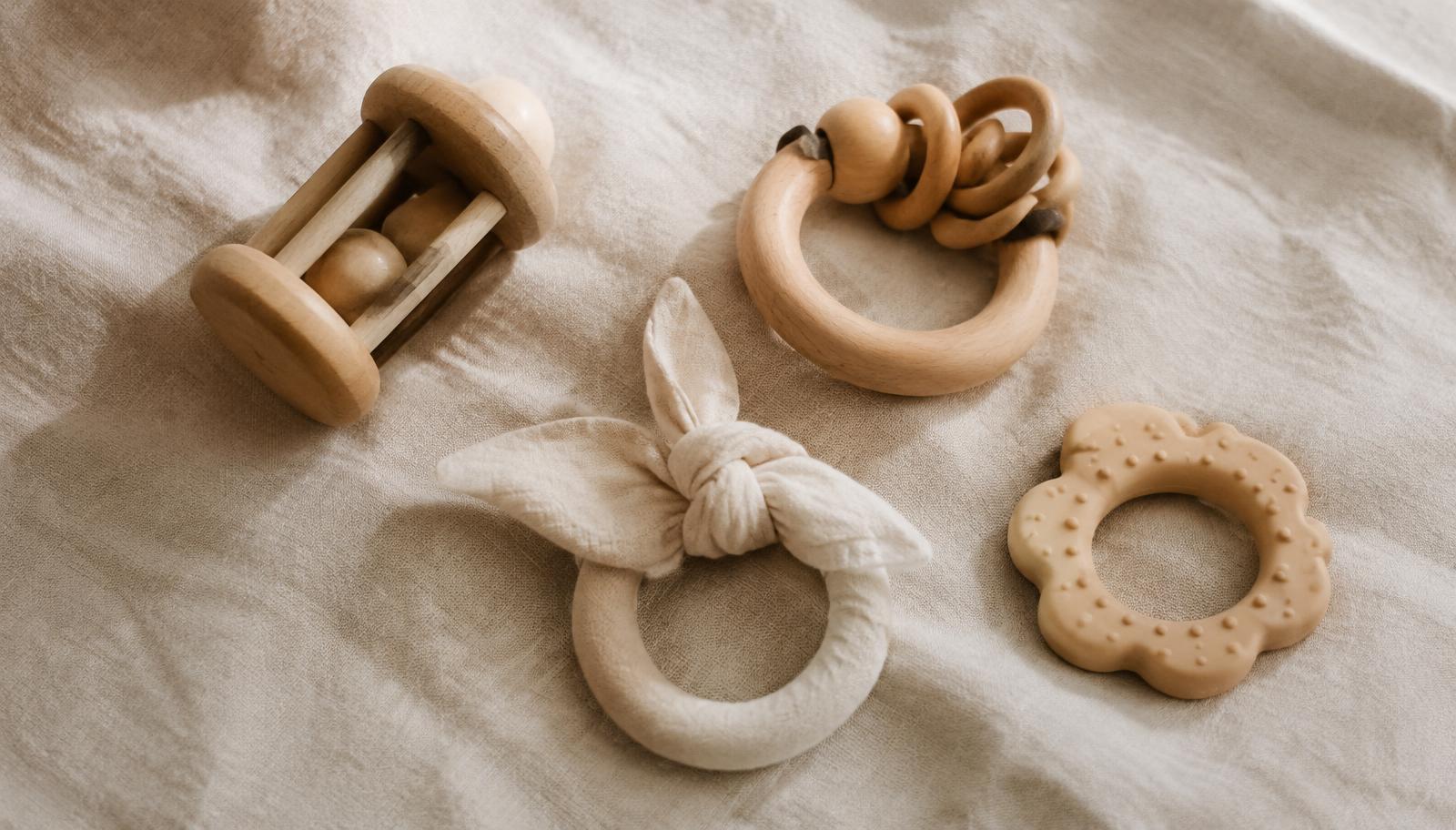
For babies who mouth everything, finishes matter. Many makers of wooden toys use water-based paints and lacquers, or natural oils and waxes. Some describe finishes as saliva and sweat resistant, a property often tested under a German standard (DIN 53160). Our article on natural wood and minimally dyed toys explores materials in more detail.
Age warnings
Toys with small parts that could be a choking hazard for children under three must carry a warning. You will often see a symbol showing a child's face with a line through it and the text 0 to 3. This means the toy is not suitable for children under 36 months. Take these warnings seriously, even if your child seems advanced.
Age recommendations on other toys usually reflect developmental suitability as well as safety.
Button batteries and magnets
Button batteries and small, powerful magnets can be extremely dangerous if swallowed. Toys with batteries should have secure compartments. Many families choose toys without batteries for the youngest children, as described in our article on cause and effect toys without batteries.
Buying online
Toys bought from online marketplaces, especially from sellers outside the EU, may not always meet EU safety standards. Look for clear seller information, a CE mark, safety warnings in a language you understand and an identifiable manufacturer. If a deal seems too good to be true, be cautious.
Second-hand toys
Second-hand toys can be wonderful, and they are a good way to reduce waste. Check them carefully for damage, loose parts, peeling paint and splinters. Older toys may not meet current standards. Our article on when to retire a toy has more on passing toys on safely.
Check regularly
Even safe toys can wear out. Check toys regularly for cracks, loose parts and splinters, especially if they are chewed. Our guide to cleaning and caring for wooden toys helps keep them in good condition.
Reporting a problem
If you are concerned about the safety of a toy bought in Malta, you can contact the seller and Malta's consumer authority, the MCCAA. The EU also runs Safety Gate, a public system listing dangerous products found in member states.
Our approach
A short checklist for shoppers
- Look for the CE mark and a named manufacturer or importer
- Read the age warnings and follow them
- Check for small parts if your child is under three
- Choose secure battery compartments, or toys without batteries
- Inspect finishes and edges on wooden toys
- Buy from sellers you trust
At Little Curio, we are building a small collection of plastic-free, minimally dyed toys for families in Malta, and safety is one of the first things we look at. Read more about why babies put everything in their mouths and wooden versus plastic toys, or see what is coming to the shop.
More from the Journal: Preparing a Toddler for a New Baby: Play, Books and Gentle Routines, A Calm Corner for Big Feelings: Supporting Toddlers Through Tantrums.