Why Babies Put Everything in Their Mouths: Supporting the Oral Exploration Phase
Toys, fingers, feet, keys: everything ends up in a baby's mouth. Here is why mouthing matters, and how to keep it safe.
4 min read
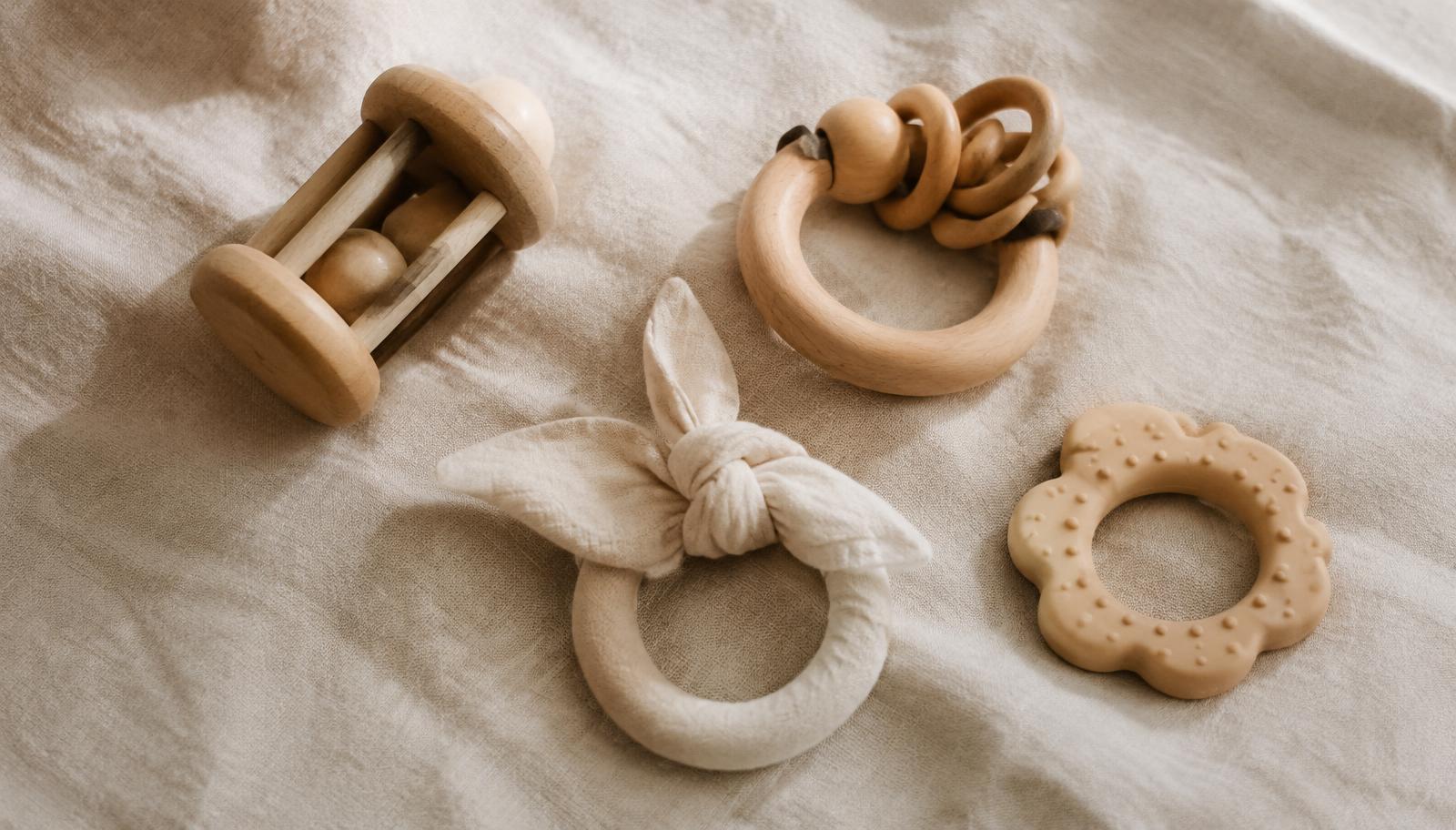
If you have a baby, you will know that almost everything goes straight into their mouth. Toys, fingers, toes, keys, the corner of a book, the dog's ear. It can be alarming, and it is certainly messy. But mouthing is a normal and important part of how babies learn about the world.
This guide explains why babies explore with their mouths, how to support it safely and how to choose toys that suit this stage.
The mouth as a learning tool
In the early months, a baby's mouth is one of their most sensitive and well-developed tools for exploring. Lips and tongue can sense shape, texture, temperature and hardness in great detail. When a baby mouths a toy, they are gathering information: is it smooth or rough, hard or soft, warm or cool, round or square?
As hands become more skilled, babies explore more with their fingers and eyes, but the mouth stays important for a long time. Many children mouth objects well into their second year.
Mouthing and teething
Mouthing is not always about teething, but the two often overlap. When gums are sore, chewing can bring comfort. Our guide to natural teething relief has gentle ideas. If you are worried about your baby's teething, symptoms or general health, speak to your doctor or pharmacist.
Mouthing and self-soothing
Babies also suck on fingers, thumbs and objects to calm themselves. This is a normal comfort behaviour. A soft toy or a familiar teether can be part of a baby's comfort routine.
Choosing toys for a mouthing baby
Because babies mouth everything, it makes sense to choose toys that are safe to mouth.
- Too large to fit entirely in the mouth or be a choking hazard
- No small detachable parts
- Smooth, splinter-free surfaces
- Non-toxic finishes, such as natural oils or water-based, saliva-resistant paints
- Easy to clean
- Durable enough to survive chewing
Our article on why natural wood and minimally dyed toys matter for babies who chew everything explores materials in detail. For safety marks, see our guide to EN71 and European toy safety standards.
Good mouthing toys
- Wooden rings and rattles
- Natural rubber teethers
- Organic cotton or knitted toys
- Silicone or wooden spoons
- Fabric books
- A cold, clean wet flannel
Our guide to plastic-free teethers and rattles offers more ideas.
Keeping the home safe
Babies on the move will find everything at floor level. Get down on your hands and knees and look around. Common hazards include:
- Button batteries in remotes and gadgets
- Coins and small objects
- Medicines and vitamins
- Cleaning products
- Small toy parts from older siblings
- Houseplants that may be harmful
- Cables and cords
Button batteries can be particularly dangerous if swallowed. Keep them well out of reach, and seek urgent medical help if you think your child may have swallowed one.
Older siblings' toys
If your baby has an older brother or sister, their toys may include small pieces. Keep these in a separate space or on higher shelves, and teach older children to tidy away small parts. Our article on gifts for baby number two touches on sharing toys between siblings.
Keeping toys clean
Mouthed toys need regular cleaning. Wipe wooden toys with a damp cloth and mild soap, and dry them well. Do not soak wooden toys. Our guide to cleaning wooden toys in Malta's humidity has step-by-step advice.
Let them explore
It can be tempting to take everything out of a baby's mouth, but mouthing is how they learn. Offer safe, interesting objects, supervise closely and let them explore. A treasure basket of safe natural objects is ideal.
When mouthing fades
Most children gradually mouth less as their hands, eyes and language develop. If you are worried that your child continues to mouth non-food items beyond what seems usual, speak to your doctor or health visitor.
A note on food and mouthing
As babies start solid food, mouthing and eating begin to overlap. Babies explore new foods with their lips, tongue and hands, and this is part of learning to eat. Always follow current advice on safe first foods and choking risks, and stay with your baby during meals. Our guide to Montessori weaning in Malta looks at encouraging self-feeding safely.
Toys for each stage
As babies grow, what they mouth changes. Young babies mouth whatever is placed in their hands. Older babies seek out objects and test them carefully. Toddlers may chew when they are tired, anxious or concentrating. Offering safe options at each stage, and calmly redirecting from unsafe ones, helps everyone. Our guides to toys for three to six month olds and toys for nine month olds suggest age-appropriate ideas.
Little Curio is curating plastic-free toys for babies in Malta, chosen with mouthing in mind; see what is coming.
More from the Journal: Plastic-Free Bath Time: Simple Toys and Calm Water Play, Talking Through Play: Simple Ways to Support Your Toddler's First Words.