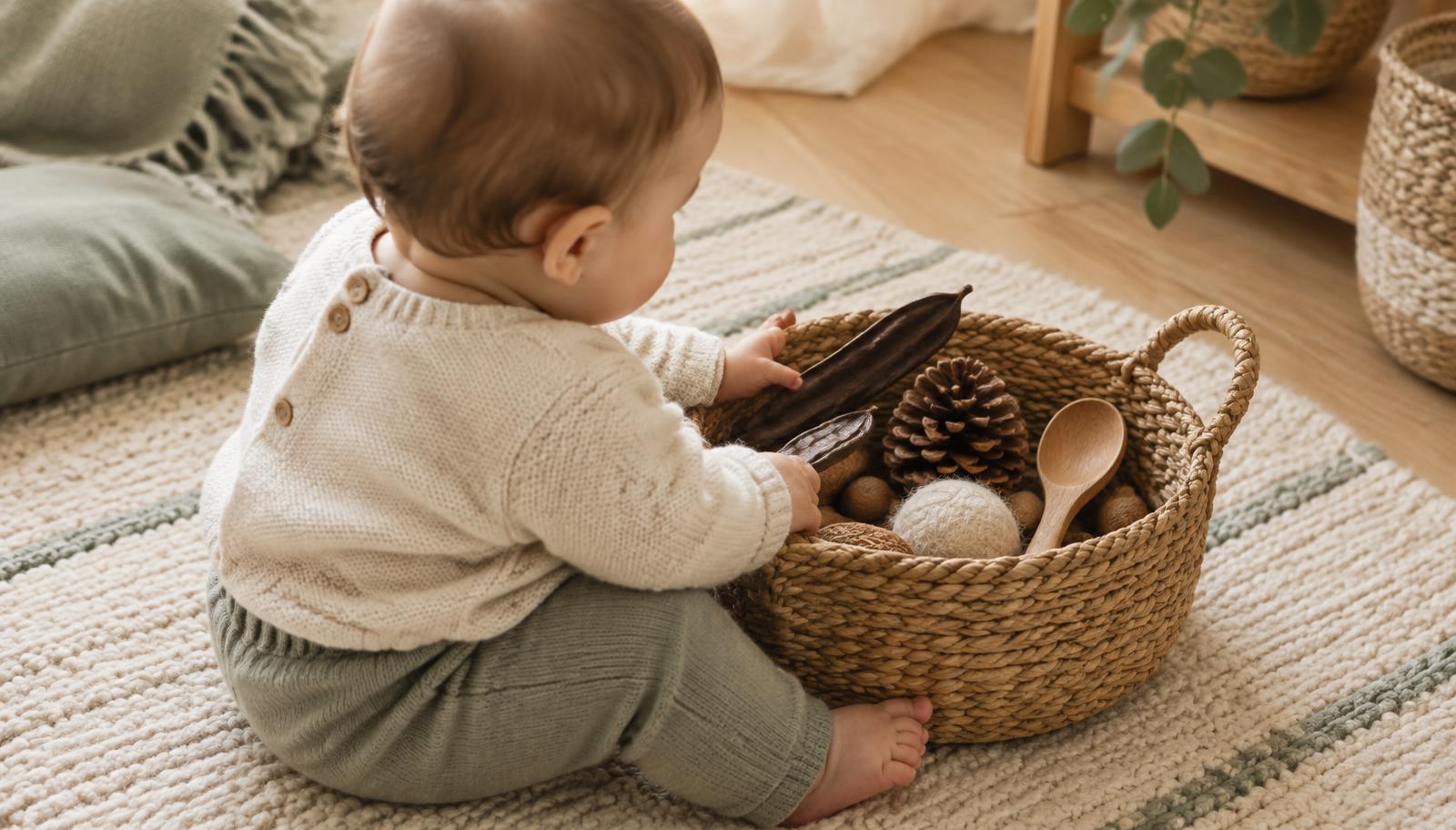
Best Toys for 3 to 6 Month Olds: Grasping, Rolling and First Discoveries
Between three and six months, hands open, eyes follow and everything heads for the mouth. Here is what a baby actually needs at this stage.
5 min read
Somewhere around three months, many babies seem to wake up to the world. The fists that stayed curled for weeks begin to open. Eyes follow a moving face across the room. Hands find each other in the middle of the chest, and then, with great concentration, find their way to the mouth. It is a lovely, busy stage, and it does not need much in the way of equipment.
This guide is written for parents in Malta who want to choose a small number of good things for the months between three and six. Every baby develops at their own pace, so treat these ideas as an invitation, not a timetable. If anything about your baby's development worries you, your doctor, nurse or health visitor is the right person to ask.
What is changing between three and six months
In these months, babies usually gain more control of their heads and upper bodies. Tummy time becomes a little longer and a little less dramatic. They start to reach on purpose, swipe at objects, then grasp and hold them. Many begin to roll, first from tummy to back, later the other way. Everything that can be held is brought to the mouth, because the mouth is one of the most sensitive tools a baby has for learning about shape and texture.
Vision is improving too. Strong contrasts are still easy to see, but babies increasingly notice colour, faces and movement. They love to watch your expressions and will often study an object for a surprisingly long time before trying to grab it.
Grasping toys: light, easy and safe to mouth
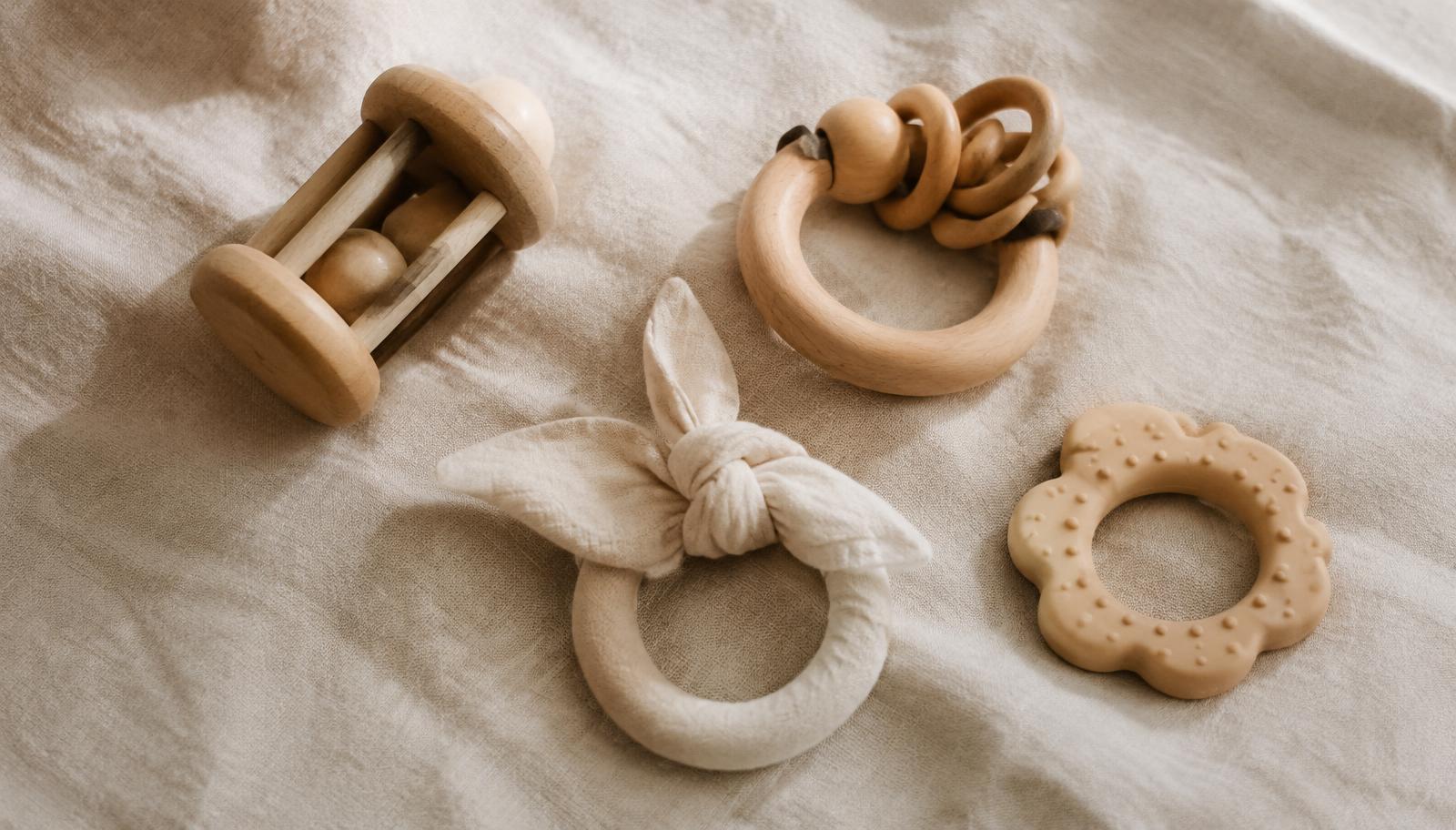
The most useful toys at this age are ones a small hand can hold without effort. A smooth wooden ring, a slim rattle with a narrow handle, or a soft knitted ball all work beautifully. Look for things that are light, too large to be a choking hazard, free from loose parts, and finished with something safe for mouths. Our guide to why natural wood and minimally dyed toys matter explains what to look for in more detail.
Offer one object at a time. Hold it within reach and wait. Babies need time to plan a reach, and the reward of finally closing their fingers around something is part of the learning. If you rush in to place it in their hand, they miss that small triumph.
Tummy time with something worth looking at
Tummy time builds the neck, shoulder and back strength that later supports rolling, sitting and crawling. It is easier when there is something interesting at eye level. Lie down facing your baby, which is the most interesting thing of all. Then try a small mirror, a black and white card propped against a cushion, or a rattle you shake gently to one side.
In a Maltese flat with tiled floors, a folded cotton blanket or a simple play mat on the floor gives a comfortable, washable surface. In summer, choose a cool spot away from direct sun. Our article on keeping baby cool in a Maltese summer has more ideas for the hotter months.
Sound, gently
Babies are fascinated by sound, especially sounds they cause themselves. A wooden rattle that makes a soft clack, or a bell sewn securely into fabric, gives a clear connection between movement and result. That connection, I moved and something happened, is one of the earliest building blocks of understanding cause and effect.
You do not need anything electronic. Toys that flash and play tunes on their own tend to do the work for the baby. A plain rattle only makes a sound when the baby moves it, which is exactly the point. If you want to explore this further, our guide to cause and effect toys without batteries looks at the toddler years.
A simple starter set
- A light wooden or wooden and fabric grasping ring
- A slim rattle with a gentle sound
- A soft ball or knitted toy
- A natural rubber or cotton teether
- A small, baby-safe mirror for tummy time
- Two or three board books with clear, simple pictures
That is genuinely enough. Rotate them every few days rather than offering everything at once. Our toy rotation guide for Maltese apartments shows how to do this without much effort.
What you can skip
Activity centres, baby walkers and large plastic gyms take up a lot of space and do a great deal on the baby's behalf. Many babies at this age are happiest on the floor with a parent nearby and one interesting object in reach. You can always add more later, when they are sitting and ready for a treasure basket.
Everyday life is play too
At this age, your baby is learning just as much from being carried around the kitchen, hearing you talk while you hang the washing, or watching leaves move outside the window as they are from any toy. Narrate what you are doing. Pause and let them respond with a coo or a kick. Those little conversations matter.
A walk along the promenade or through a garden is full of sound and movement too. Our piece on the Malta stroller walk has ideas for making the most of it.
Looking ahead
By six months, many babies are close to sitting with support, and their interest in objects grows quickly. That is when a treasure basket, stacking cups and a few more textures come into their own. Our guide to the best toys for six month old babies picks up from here, and the best toys for a nine month old takes you into crawling.
For now, keep it simple. One beautiful ring, a quiet rattle and your face are a wonderful start. Little Curio is building a small collection of plastic-free baby toys for families in Malta, and you can see what is coming to the shop.
More from the Journal: Talking Through Play: Simple Ways to Support Your Toddler's First Words, Preparing a Toddler for a New Baby: Play, Books and Gentle Routines.