Newborn Sensory Play: Simple, Gentle Ideas for the First Three Months
Newborns do not need toys so much as you. Here are the gentle, simple ways to support their senses in the first three months.
4 min read
In the first weeks with a newborn, it can feel strange to think about play at all. Days blur into feeds, nappies and naps, and many new parents in Malta are simply trying to get through the night. But play with a newborn is much simpler than most people imagine. It is mostly you: your face, your voice, your touch, and a calm world for them to slowly take in.
This guide is not about buying lots of things. It is about understanding what a newborn's senses are ready for, and offering a few gentle experiences that fit naturally into the day. Every baby is different, so follow your own baby's cues and speak to your midwife, nurse or doctor about anything that concerns you.
What newborns can see
Newborns see best at close range, roughly the distance from your arms to your face when you hold them. They are drawn to strong contrast and to faces above all. This is why high contrast black and white cards are often suggested for the early weeks. A few simple cards propped beside the changing mat or held up during a quiet awake moment are plenty.
Your face is still the best picture. Hold your baby close, make eye contact, and slowly change your expression. Many babies will watch intently and, over the weeks, begin to respond.
What newborns can hear
Babies are familiar with your voice from before birth, and it is deeply comforting to them. Talk to your baby throughout the day: narrate what you are doing, sing, read aloud. The words do not matter. The rhythm and warmth do.
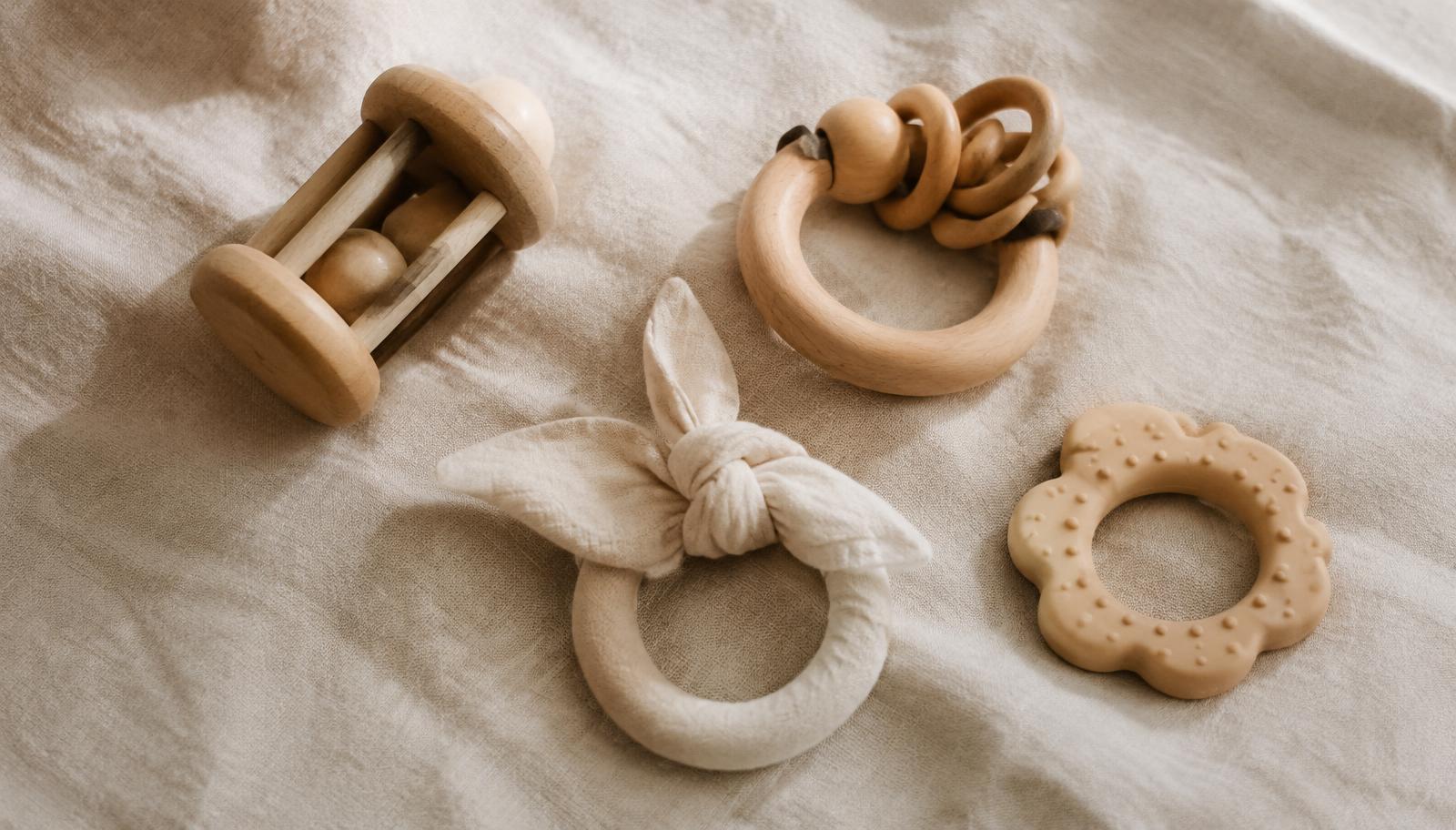
A gentle rattle shaken slowly to one side gives your baby a chance to turn towards the sound. Keep sounds soft and short. Newborns are easily overwhelmed, and loud electronic toys are rarely helpful at this stage.
Touch and closeness
Touch is one of the most developed senses at birth. Skin-to-skin contact, gentle baby massage after a bath, and being carried in a sling or carrier all give rich sensory input. Let your baby feel different textures against their hands and feet: a cotton muslin, a soft wool blanket, a smooth wooden ring.
In the heat of a Maltese summer, keep this light and cool. Our guide to keeping baby cool and calm in summer has practical tips for hot days.
Movement and tummy time
Short periods of supervised tummy time while your baby is awake help build neck and shoulder strength. Start with a minute or two on your chest, or across your lap, and build up gradually. Lie down face to face so they have something interesting to look at. Never leave a baby unattended on their tummy, and always place them on their back to sleep.
For a longer view of how movement develops through the first year, see from tummy time to first steps.
A calm environment
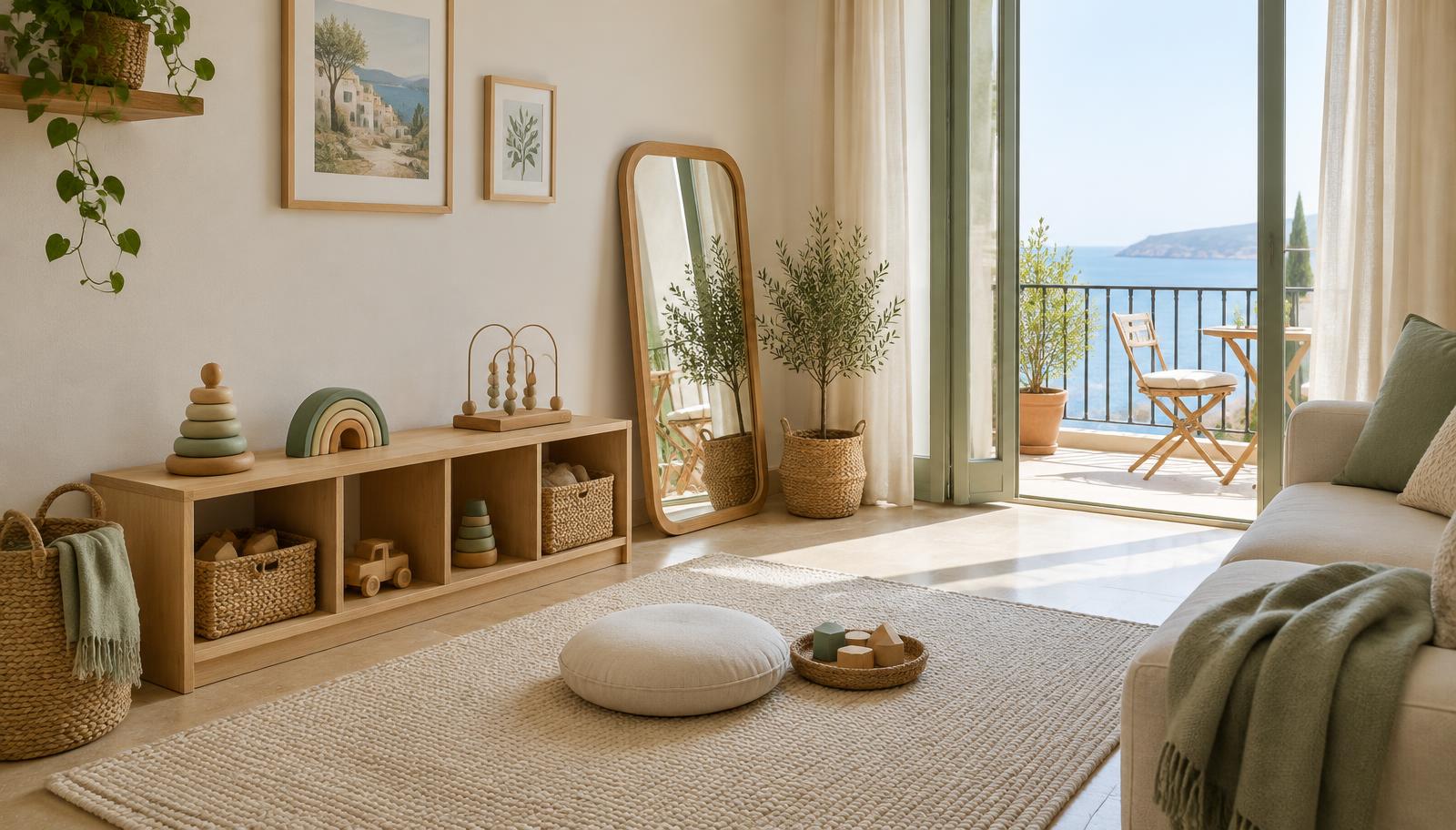
Newborns take in a great deal, and they tire quickly. A calm, uncluttered room with soft natural light helps them settle. Watch for signs that your baby has had enough: looking away, yawning, frowning, fussing. When you see these, it is time to stop, cuddle and rest.
If you are setting up a nursery, our piece on a natural Maltese nursery explores how to create a soothing space without filling it.
Outdoor moments
Fresh air and changing light are sensory experiences in themselves. A short walk in the early morning or late afternoon, when the sun is gentler, gives your baby new sounds, smells and movement. Our stroller walk guide suggests some calm routes and ideas.
What to have at home
- A few high contrast cards
- A soft, gentle rattle
- A muslin and a soft blanket for touch
- A simple mobile hung safely out of reach
- A board book with bold pictures to show and read aloud
That is genuinely all you need. Many families receive far more than this as gifts. It is fine to put most things away until your baby is older and ready for them.
Looking after yourself
Newborn play works best when you are rested enough to enjoy it, which in the early months is not always possible. Be gentle with yourself. A few minutes of eye contact and song during a nappy change is meaningful. You do not need a schedule or an activity plan. You are already giving your baby what they need most.
Looking ahead
From around three months, babies begin reaching, grasping and bringing things to their mouths, and play starts to change. When you get there, our guide to the best toys for a 6 month old and our Montessori-inspired toys for 0 to 18 months are good next reads. Little Curio is a small shop for families in Malta, and you can preview the shop as we prepare our first collection.
More from the Journal: Talking Through Play: Simple Ways to Support Your Toddler's First Words, Preparing a Toddler for a New Baby: Play, Books and Gentle Routines.